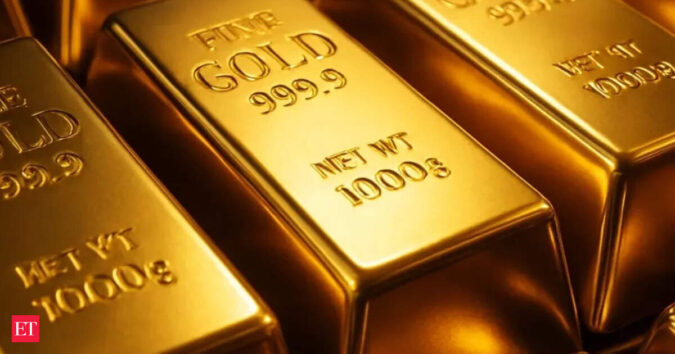
Gold imports stood at USD 53.52 billion in April-February 2024-25.
The rise in gold imports pushed the country’s trade deficit (difference between imports and exports) to USD 310.60 billion during the 11-months of the last fiscal as compared to USD 261.80 billion during April-February 2024-25, the data showed.
Prices of the yellow metal are hovering at around Rs 1,51,500 per 10 grams (inclusive of all taxes) in the national capital.
Switzerland is the largest source of gold imports, with about 40 per cent share, followed by the UAE (over 16 per cent) and South Africa (about 10 per cent).
The precious metal accounts for over 5 per cent of the country’s total imports.
The country’s total imports from Switzerland were up 11.57 per cent to USD 23.5 billion during April-February 2025-26. In February, gold imports from that country surged 719.30 per cent year-on-year to USD 2.71 billion.India is the world’s second-biggest gold consumer after China. The imports mainly take care of the demand by the jewellery industry. The imports have implications for India’s current account deficit (CAD).
CAD inched up to USD 13.2 billion, or 1.3 per cent of GDP, in the December quarter from USD 11.3 billion (1.1 per cent of GDP) in the year-ago period, mainly due to a higher trade deficit, according to RBI data.
However, the current account deficit moderated to USD 30.1 billion (1 per cent of GDP) in April-December 2025, from USD 36.6 billion (1.3 per cent of GDP) in the same period a year ago.
A CAD occurs when the value of goods and services imported and other payments exceeds the value of export of goods and services and other receipts by a country in a particular period.
Silver imports during the 11-month period jumped 142.87 per cent to USD 11.43 billion. Silver has industrial applications. It is used in sectors like electronics, auto and pharma.
To discourage imports, the government last week imposed import curbs on all forms of articles of gold, silver and platinum.