
According to three people in the know, Infosys cofounder Nandan Nilekani’s Fundamentum is in discussions to lead an $18 million financing in Uni Cards, along with participation from existing investors. The round is expected to value the startup at around $95 million post-investment, a drop of more than 70% compared with its previous valuation of about $350 million, these people added.
“Fintechs like Uni have borne the brunt of regulatory changes in the space over the last few years. The valuation cut is largely because of the slowdown in business and severe disruptions in its core lending operations,” said one of the people.
 ETtech
Responding to ET’s queries, Uni cofounder and chief executive Nitin Gupta said the company is currently issuing more than 40,000 credit cards per month. He did not comment on the financing and valuation of the company. Queries sent to Fundamentum went unanswered till press time Wednesday.
Indian banks issue around 850,000 cards per month.
 ETtech
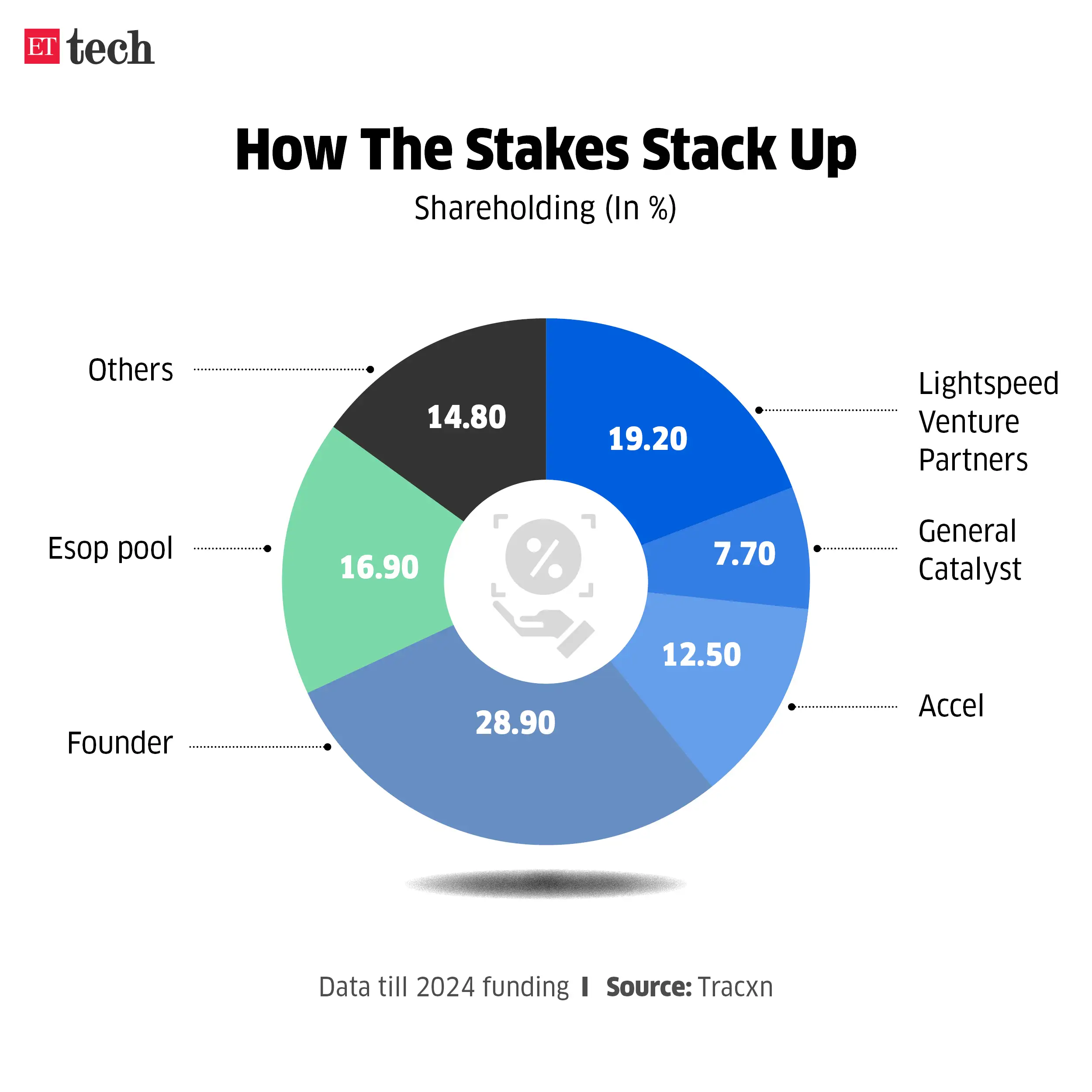
Bengaluru-based Uniorbit Technologies, the parent company of Uni Cards, has so far raised $104 million across multiple rounds from investors. These included $70 million it raised in a Series A round led by General Catalyst during the 2021 go-go funding cycle.
Business pivot
Uni has stopped offering personal loans to its customers and shifted focus to credit card distribution, ET has learnt. The startup offers co-branded credit cards in partnership with Bob Card and Yes Bank. It provides cashbacks and incentives on card spends, which can be converted into gold.
 ETtech
A second person in the know told ET that Uni had been working with large non-banking lenders and peer-to-peer lending platforms such as Liquiloans and Lendbox to offer consumer loans. Uni acquired a P2P lending startup, OmlP2P, in April 2023, but that business did not scale due to central bank interventions in the sector.
“Currently, Uni is just servicing existing borrowers and operating as a loan platform. New loan disbursals have stopped,” the person added.
Regulatory action
In 2022, the Reserve Bank of India banned credit lines on prepaid cards and wallets, impacting players such as Uni and Slice. Multiple buy-now-pay-later platforms operating on mobile wallets had to change their core business models.
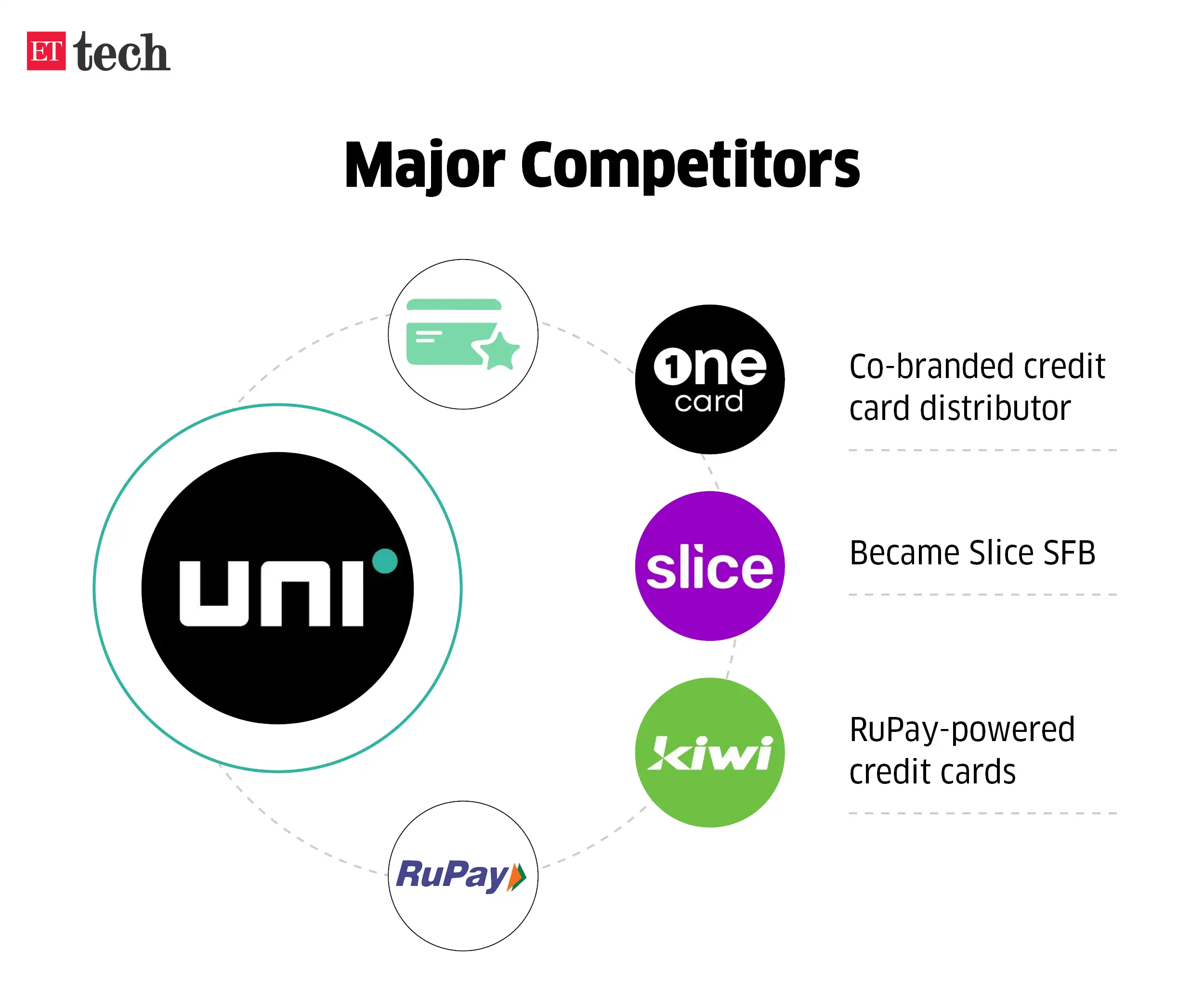
Two years later, the central bank cracked down on data sharing between banks and their fintech partners in the co-branded credit card segment, preventing any backdoor entry into the lucrative but high-risk credit card market. The move impacted players such as Uni and OneCard.
Also in 2024, the RBI tightened rules for the P2P lending sector, bringing the business to a near standstill. Uni, which had acquired OmlP2P, was impacted by the move.
ET reported in December last year that the RBI had asked OneCard’s partner banks to stop issuing credit cards until the regulator scrutinised data-sharing arrangements.
“If there is no data sharing between banks and their co-branded card distributors, the partner effectively becomes a sales channel. This impacts both valuation and business opportunities,” said the founder of a digital lending startup, requesting anonymity.
Founded in 2020 by Gupta, who previously headed the financial services business at ride-hailing startup Ola, along with Laxmikant Vyas and Prateek Jindal, Uni was launched to offer quick credit through cards and buy-now-pay-later services. Jindal quit Uni to start wealthtech startup Powerupmoney in 2024.
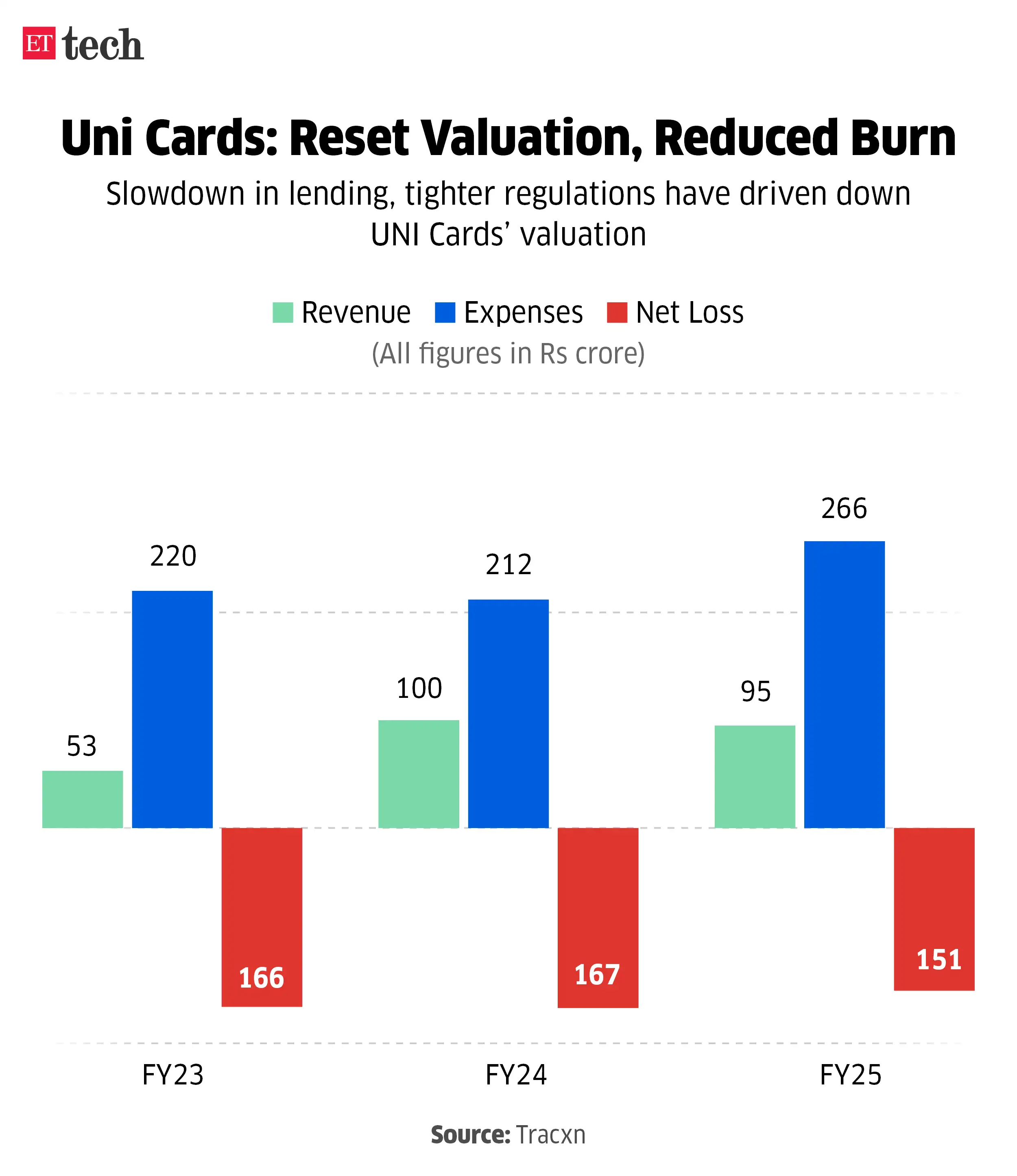
Uni closed FY25 with total revenue of Rs 95 crore and a net loss of Rs 151 crore, broadly flat compared with FY24, when it reported a Rs 167 crore net loss on revenue of Rs 100 crore.