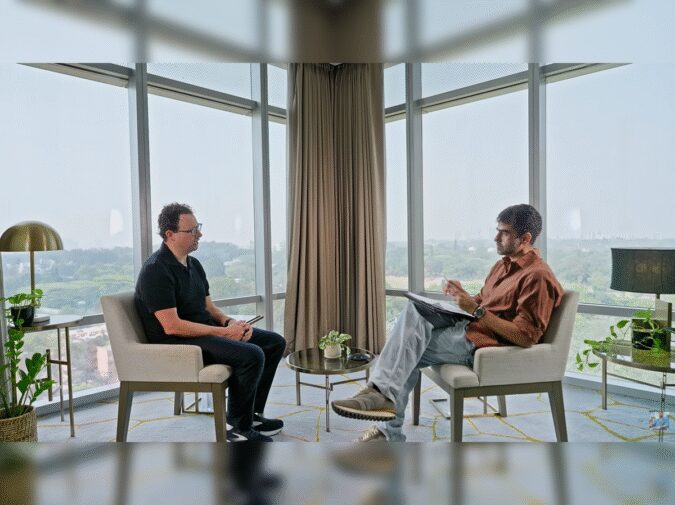
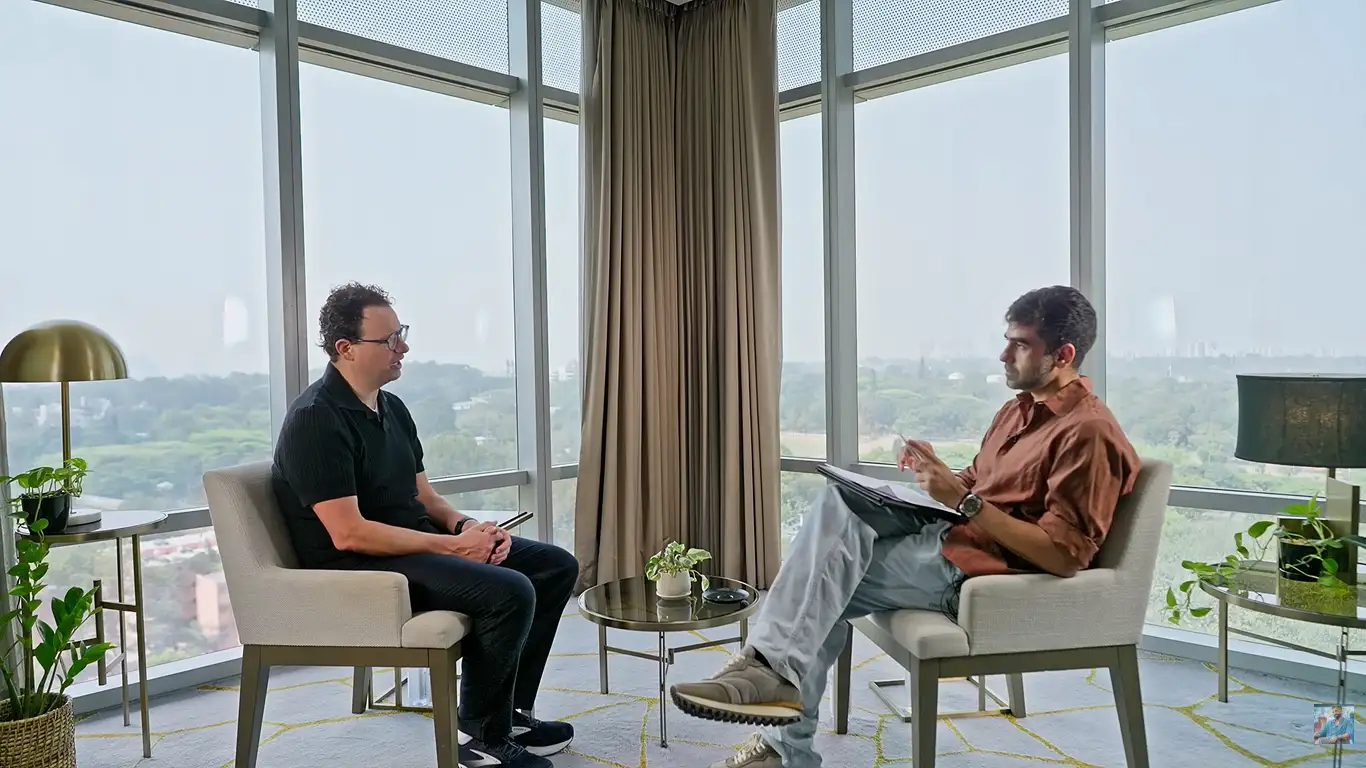
“I would give the advice that a business should establish a moat. You shouldn’t be just a wrapper. I would not advise that you just say, ‘Here’s a way to interact with Claude (and) I’m gonna prompt Claude a little bit,’ or ‘I’m gonna build a little bit of a Ul around Claude that doesn’t have a moat.’ Then, anyone can eat that revenue,” said Amodei.
By wrapper, the Anthropic chief is referring to applications or platforms built on top of AI infrastructure, particularly, the LLM model. Aravind Srinivas’s Perplexity has been in the news for being similar to an AI wrapper, building and serving using other startups’ AI models. Most small-scale startups somewhat resemble LLM wrappers.
Speaking to Nikhil Kamath on the latter’s PeopleByWTF podcast, Amodei specified that in such cases, companies like Anthropic and OpenAI would want to build first-party products, becoming competitors to their very enterprise clients, for the sake of increasing revenues. First-party products refer to applications that directly reach end-users. Consumer D2C platforms are examples of first-party products.
“We’re not gonna promise never to build first-party products, right? That we should be honest about,” Amodei said.
Yet, despite these fears of LLM makers eroding value for startups, Amodei pressed for startups to have dominance in domain expertise, regulatory knowledge, and industry integration for the creation of more durable moats.
Salesforce consulting firm Ascendix estimates there are 90,000 AI startups globally, of which, as per media reports, 70-80% of the companies are AI wrappers that have simply depended on LLMs for their backend processing and white-labelled the output as their own.
Solutions for problems like these, Amodei proposes, lie in startups’ ability to find spaces where LLMs like Anthropic and OpenAI wouldn’t want to exist or would find difficulty in competing. It would be far better to find layers of specialisation in this moat identification, Amodei hinted.
“There’s a lot of stuff in the BioxAl space that builds on our API. They wanna do discovery. I happen to be a biologist, but most people at Anthropic aren’t biologists. They’re Al scientists, or they’re product people, or go-to-market people. So, it’s just really inefficient for us to step in that space and do all that work,” Amodei said. BioxAI or Bio-AI is the domain where AI intersects with biotechnology.
Amodei said financial services as an industry for startups to reconcile with AI models for mutual existence, but he also stated that Anthropic’s Claude has a specific and a highly specialised offering for financial services.
Asked which industry would be impacted the most, Amodei noted that AI will begin by automating niche cognitive tasks such as coding, while tasks like engineering, which require more complex design, relationships, and institutional navigation, will be substituted in the future. “Coding goes away first. Engineering takes longer,” Amodei said.