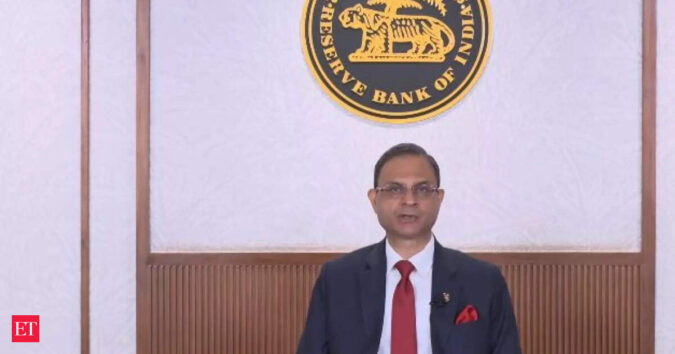
RBI has defined mis-selling in cases where the sale of a product or service, which is neither suitable nor appropriate in view of the customer’s profile even if with his / her explicit consent. Sale of products or services without providing correct or complete information or by giving misleading information or without a customer’s explicit consent and bundling of another product with the one requested are also defined as mis-selling by RBI.
The guidelines follow a post policy announcement last week in which RBI had said that there was a felt need to ensure that third party products and services that are being sold at the bank counters are suitable to customer needs and are commensurate with the risk appetite of individual clients.
“In cases where mis-sell of a product / service is established, the bank shall refund the entire amount paid by the customer for purchase of the product/service and intimate the customer about cancellation of the sale, wherever applicable. Further, the bank shall also compensate the customer, for any loss arising due to mis-selling, as per its approved policy,” RBI said. Comments from the public and other stakeholders have been called by March 4 with the central bank likely to implement the guidelines from July 1.

Before a financial product or service is marketed or sold to a customer, banks have to determine its appropriateness for the customer on the basis of the analysis of the features, risk-return attributes, time horizon, complexity, fee structure, etc. vis-à-vis the customer’s age, income, level of financial literacy, risk tolerance.
Banks must also not fund the purchase of a product by a customer, whether of its own or of a third-party, out of any loan facility sanctioned to the customer without his/her consent. Banks have also been told to ensure that A bank shall ensure that its user interfaces do not deploy any dark pattern.
User interfaces deployed by the bank shall be subject to user testing and periodic internal audit for identification of any unfair features, including dark patterns like creating a false urgency, inclusion of additional items or payments at the time of checkout from a platform and using subscription traps making the cancellation of a paid subscription impossible or complex or hiding the cancellation option of a subscription hare some of the dark patterns identified by RBI.
Customers can lodge complaint regarding mis-selling of a product / service with the bank within the timeline specified by the respective financial sector regulators. In cases where no such timeline has been specified, customers can lodge complaint within 30 days of receiving the signed copy of the terms and conditions / agreement, RBI said.
Banks must also ensure that internal competition and sales targets neither create incentives for mis-selling nor encourage employees or direct selling agents to ‘push’ the sale of products / services. “It shall be ensured specifically that no incentive is directly / indirectly received by the employees engaged in marketing / sales of third-party products / services from the third party,” RBI said.
In cases where the sale of the bank’s own product / service is contingent on purchase of a third-party product /service, the customer shall be provided the option to purchase the same from any other company and shall not be forced to purchase it through the third-party product / service provider with whom the bank has entered into an agreement, RBI said.