Issues related to the impact of the latest US-Bangladesh agreement on India’s textile industry and a similar cotton-forward rule for India, were also taken up, said people in the know.
The minister met various export promotion councils and key industry associations representing India’s major exporting sectors. The meeting was crucial as it followed India’s major trade pacts with the EU and US.
Sectors earlier impacted by high US tariffs including gems & jewellery, textiles and apparel, carpets, leather and footwear, marine products, handicrafts, engineering goods and chemicals, said the tariff rollback has restored business confidence and helped safeguard employment in labour-intensive sectors.
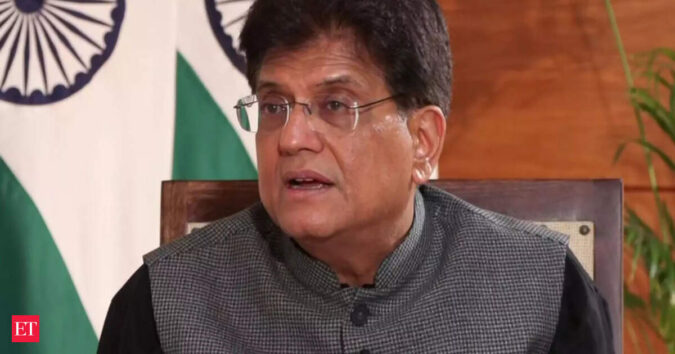
“Industry must now intensify its efforts to penetrate new markets, upgrade quality, and become more competitive to take maximum advantage of trade agreements,” said Goyal. The ministry made presentations on the recently concluded interim trade agreement with the US, outlining market access opportunities, compliance frameworks and export expansion pathways, said an official.
Industry representatives raised concern about the US-Bangladesh reciprocal trade pact which allows tariff-free exports of apparel and textiles to America if the manufacturer uses US-produced cotton or man-made fibre inputs. Under the pact, Washington will lower reciprocal tariffs on Bangladesh to 19% from 20%, a move that halves the tariff differential between New Delhi and Dhaka to 1%.
Bangladesh is the world’s second largest garment manufacturer and India’s key competitor in the US’ textile and apparel market apart from China and Vietnam.Besides impacting India’s competitiveness, the reciprocal tariff deal may also hit New Delhi’s cotton yarn exports to Dhaka due to the advantages announced for sourcing US cotton. “Industry is concerned and sought similar concessions in the trade deal with the US,” said a representative of the textile industry who participated in the meeting. “Officials said the matter is under discussion and the issue is being addressed.”
A second representative said the industry is waiting to see how the US-Bangladesh deal would be operationalised. “Let’s see how it operates,” the person said. “The notification and how it will be operationalised is yet to come. All issues need to be seen.” “How will the cotton content be monitored and what are the various other compliances and costs involved are yet to be seen,” the person said.
The US accounts for about 20% of Bangladesh’s $44 billion annual apparel and textile exports.
“However, they need raw material for exports to the EU also. If they increase imports from the US, there could be a threat to us,” he said.