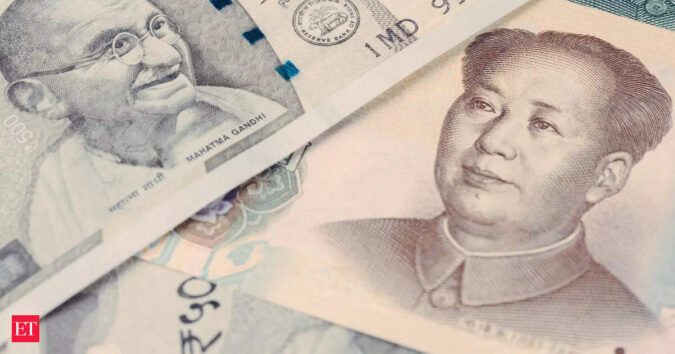
Press Note 3, introduced in April 2020, made prior government approval mandatory for FDI from such countries, a move widely understood to target investments originating from China.
Also Read: India reviews Press Note 3, may ease small FDI entry with de minimis rule
“We are examining whether there could be any openings to make it faster and easier to get a yes or a no on investments into India,” a top government official told ET. “We are also examining whether we could have any de minimis to permit larger funds that have some small element which has come to our attention,” an official told ET.
At the same time, the government has made it clear that Press Note 3 will not be rescinded. While the government might exempt low-value or low-stake investments from the approval route, strong guardrails will remain in place for investments with a critical or strategic angle.
This potential revision in stance will come, if it does, after months of industry demands, market signals, and a broader rethink on how India can balance strategic caution with industrial requirement.
Industry pushes for a 26% JV cap
One of the clearest signals of business sentiment came a few months ago when ET reported that Indian electronics companies had urged the government to permit joint ventures with Chinese firms, provided their equity participation is capped at 26%. The rationale behind this demand is pragmatic. Electronics manufacturers argue that Chinese firms bring capital, technology, and integration with established supply chains that India currently lacks at scale. A minority cap, they suggest, would ensure operational collaboration without ceding control.
The electronics sector is central to India’s manufacturing ambitions. Yet the upstream ecosystem – from components and tooling to process engineering – remains deeply linked to Chinese suppliers. By advocating a 26% threshold, industry is effectively proposing a structured compromise which will allow access to Chinese capital and know-how, but ring-fence strategic control.
The de minimis discussion reported today by ET on Monday fits into this broader pattern of a measured easing rather than wholesale liberalisation.
Also Read: The Japanese are pouring big money into India
Companies are already moving ahead
Even while Press Note 3 approval is pending, some Indian companies are going ahead with Chinese investment plans, highlighting how business realities are already testing the rigidity of rules barring Chinese money into Indian industry. ET reported recently that some Indian firms have proceeded with operational and commercial arrangements even while formal approvals remain pending.
This reflects the friction that has emerged under the current regime. Under Press Note 3, any FDI proposal from entities based in or beneficially owned by citizens of bordering countries (read China) must go through government approval irrespective of size. ET reported that industry executives have complained of delays even in cases involving minor stake purchases or follow-on investments in ventures that were previously cleared. Such delays can carry economic costs. Capital-intensive sectors cannot easily pause expansion while regulatory processes stretch out. The fact that companies are going ahead with their plans despite pending approvals suggests that commercial urgency is outpacing administrative timelines.
The proposed de minimis rule, if adopted, could address precisely these bottlenecks by fast-tracking low-risk, small investments without dismantling the broader guardrails aimed at China.
The case for lowering guards
India should take a fresh look at the government’s curb on FDI from China, economist Sajjid Chinoy has said recently, arguing that allowing Chinese capital into the country will be more useful than placing tariffs on goods coming from the northern neighbour. Chinoy, the chief India economist at JP Morgan and a part-time member of the Economic Advisory Council to the Prime Minister, said at an event in November last year that private capital expenditure has been weak because companies lack demand visibility at a time when cheaper Chinese goods are entering the country in large quantities.
Chinoy argued that India should reconsider an approach that relies heavily on tariffs and restrictions, and instead attract Chinese FDI in a cautious manner. The underlying logic of his argument is that tariffs may protect in the short run, but investment can build domestic capacity. By drawing Chinese capital into India under controlled conditions, India could internalise parts of the value chain rather than remaining dependent on imports. The emphasis is not on indiscriminate openness, but on leveraging FDI to deepen domestic manufacturing ecosystems.
Chinoy’s argument resonates with the broader industrial policy objective of expanding local production under initiatives such as Make in India. If Chinese firms invest and manufacture locally, jobs and capabilities are created on Indian soil, even if capital originates across the border.
Why India needs a cautious opening
India’s need to loosen restrictions on Chinese investment does not stem from diplomatic warmth alone, though ties have eased over the past year with bilateral visits, resumption of flights and stepped-up dialogue. The more compelling reason is structural.
Manufacturing scale demands integrated supply chains. In electronics, electric vehicles and renewable energy, Chinese firms remain dominant players in intermediate goods and production technologies. Excluding their capital entirely can slow India’s climb up the value chain. Also, small-ticket investments often pose limited strategic risk. A de minimis threshold, whether defined by percentage stake or monetary value, would allow automatic clearance of minor investments while retaining scrutiny for larger or sensitive proposals. As ET reported, the government is weighing “all concerns, including security considerations,” before taking a final call.
Moreover, India competes globally for capital. If procedural uncertainty deters investment flows, firms may redirect funds to more predictable jurisdictions.
Why Chinese companies want to put their cash in India
The interest is not one-sided. Chinese firms face slowing domestic growth and rising trade barriers in developed markets. India offers a large, expanding consumer base and an incentive-driven manufacturing policy environment. Chinese firms are seen as valuable partners in scaling production capacity. Minority joint ventures, capped stakes and structured collaborations provide them access to one of the world’s fastest-growing major markets without necessarily seeking controlling positions.
Moreover, local manufacturing in India can help Chinese companies navigate tariff regimes and geopolitical tensions elsewhere. Investing in India becomes both a growth strategy and a diversification hedge.
The security–growth trade-off
However, no argument can negate legitimate security concerns, and the government is mindful of that. Press Note 3 was crafted precisely to guard against risks involving beneficial ownership, links to the Chinese Communist Party or the People’s Liberation Army, and potential vulnerabilities in critical infrastructure. Adverse security reports can stall proposals and ministries of home and external affairs scrutinise such investments.
However, many think security need not require indiscriminate restriction. A de minimis framework would preserve hard scrutiny for substantial or strategic Chinese investments while easing minor inflows that pose no control risk.
“We have a cautious approach about the nature of investments that come into the country as we want to ensure there are no opportunistic takeovers of our critical sectors. And, therefore, Press Note 3 will continue,” an official has told ET. The likely trajectory, then, could be managed liberalisation rather than policy reversal.