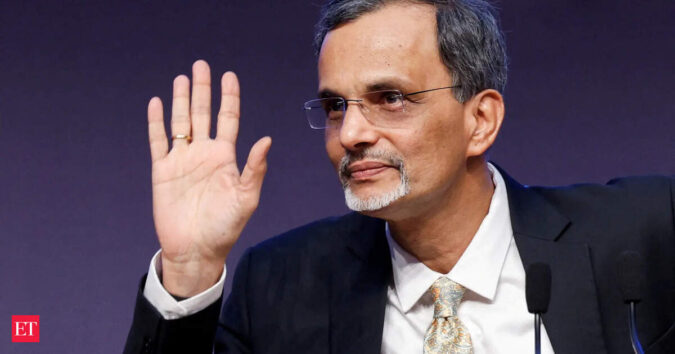
“The important thing is that labour codes also make it very clear that there has to be a balance in terms of the worker’s rights and what the employers have been asking about. Labour codes will also do its own bit to make sure that wage growth and the benefit growth is commensurate with profitability growth. That is an important development that has happened since we wrote the survey last year,” he said.
Responding to questions on the gap between strong corporate profitability and weaker wage and employment growth, particularly at entry levels, Nageswaran said the labour codes clearly seek to balance workers’ rights with employers’ concerns.
He added that the framework is designed to ensure that increases in pay and benefits are broadly aligned with profitability, calling it a significant development since the last Economic Survey.
The Economic Survey also underlines the wider impact of the labour codes, noting their potential to boost female participation in the workforce, improve employment outcomes, support formalisation, and lift productivity at a time when India is seeking to make the most of its demographic dividend.
According to the Survey, the reforms could help bring down the unemployment rate to between 1.9% and 2.9% and lead to the creation of nearly 77 lakh jobs.
“(These) can lead to a reduction in UR (unemployment rate), bringing it down to 1.9- 2.9% and generating nearly 77 lakh jobs. (Also, they) would increase the disposable income of workers and has the potential to boost consumption by approximately Rs 75,000 crore, in turn enhancing economic growth,” the CEA added.They are also expected to raise workers’ disposable incomes and could increase consumption by about Rs 75,000 crore, providing a further fillip to economic growth.
In the previous Survey, Nageswaran had noted that corporate profits had climbed to a 15-year high in FY24, even as wages and job creation lagged behind. He now said available data are encouraging and suggest that this trend may be starting to reverse.