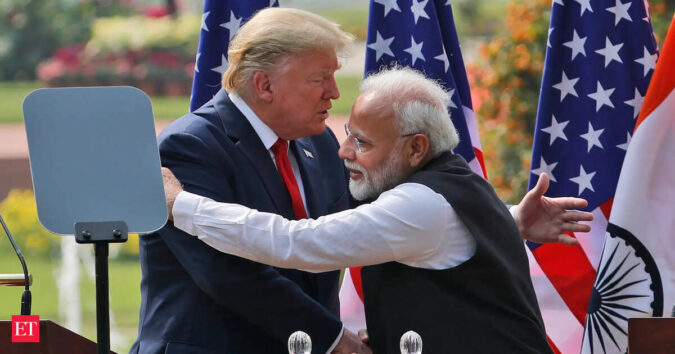
Earlier this month, India and the US released a joint statement announcing that a framework for the interim trade agreement had been finalised. The framework is designed to lower tariffs, strengthen energy ties, and boost economic cooperation. While it sets a clear path forward, further negotiations will be needed to finalise a comprehensive bilateral trade agreement.
Also Read: ‘Stay Tuned’: US Envoy Sergio Gor hints at PM Modi-Trump meeting
The joint statement lays down the contours of the deal, which now need to be translated into a legal agreement to be signed by both sides, expected in March.
The Indian and US teams will start their three-day meeting on Monday, the report said. The Indian delegation will be led by chief negotiator Darpan Jain, a joint secretary in the Commerce Ministry.
Under the interim trade agreement, both countries are expected to extend duty concessions on a range of goods traded between them. The US has said it will reduce reciprocal tariffs on Indian goods from 25 per cent to 18 per cent and has already removed the 25 per cent punitive tariffs on India for buying Russian crude oil.
Key Details of the India-US Trade FrameworkUnder the framework, India has agreed to purchase $500 billion in US goods over five years, including oil, gas, coking coal, aircraft and aircraft parts, precious metals, and technology products such as graphics processing units used in AI and data centres.
India will also reduce or eliminate tariffs on a wide range of US industrial and agricultural products, including dried distillers’ grains, red sorghum, tree nuts, fresh and processed fruits, soybean oil, wine, and spirits.
The US will maintain an 18 per cent tariff on most imports from India, covering textiles, apparel, leather, footwear, plastics, organic chemicals, home décor, artisanal goods, and certain machinery. India will also receive tariff relief on certain aircraft and aircraft parts, along with a lower-tariff quota for auto parts imports. Outcomes for generic pharmaceuticals and their ingredients will be negotiated based on ongoing US tariff investigations.
Also Read: Beyond pulses and ‘intent’, there’s another big change you may have missed
Indian Trade Minister Piyush Goyal welcomed the framework, highlighting opportunities for farmers, fishermen, and micro, small, and medium enterprises to access the $30 trillion US market. He noted that the formal trade agreement could be signed by March, after which India’s tariff cuts on US exports would take effect.
Both countries also agreed to address long-standing non-tariff barriers in agricultural products, medical devices, and communications equipment. They aim to finalise within six months an agreement recognising US or international safety and licensing standards for imported goods. The US has also signalled willingness to consider India’s requests for lower tariffs in future negotiations.
US Revises Fact Sheet
The United States later revised the fact sheet for the India-US trade deal, making changes to key terms of the agreement. Notably, “certain pulses” were removed from the list of American products on which India would reduce or eliminate tariffs.
The updated document now refers to a broad range of US industrial and agricultural goods, including dried distillers’ grains, red sorghum, tree nuts, fresh and processed fruits, soybean oil, wine, spirits, and other products. The earlier fact sheet had mentioned that India would remove its digital services taxes.
This language has been dropped, with the updated version retaining only India’s commitment to negotiate robust bilateral digital trade rules addressing discriminatory or burdensome practices. India’s own agriculture chapter confirms that pulses remain fully protected as a highly sensitive sector under an exemption category, reflecting India’s careful balancing of trade commitments and domestic interests.