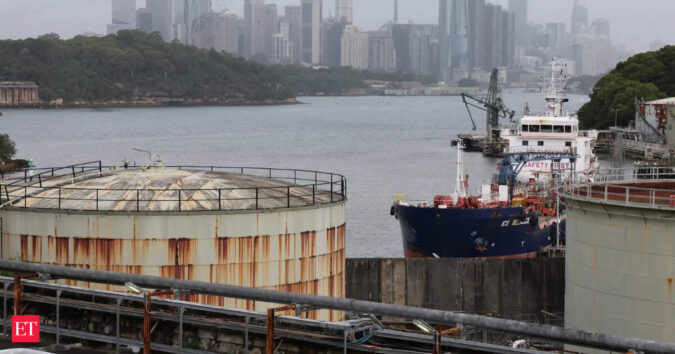
Following the telephone conversation between Modi and Disanayaka on March 24, 2026, a shipment of 38,000 MT of petroleum, of which 20,000 MT is diesel and 18000 MT petrol has arrived in Colombo March 28, 2026, the diplomatic institution said.
Also read: PM Modi says India facing war situation resolutely because of global relations, urges citizens to stay united
Earlier on March 23, External Affairs Minister, Dr. S. Jaishankar had a telephone conversation with Sri Lankan counterpart Vijitha Herath.
Lanka IOC, a subsidiary of Indian Oil Corporation Ltd., had earlier secured fuel supplies for March from the Middle East and Singapore. However, the High Commission noted that suppliers with whom the contracts were placed expressed their inability to deliver the product and invoked force majeure, in view of supply disruptions and vessel unavailability due to the ongoing conflict in the Middle East.
Due to the disruptions in energy supplies through the Gulf region, Sri Lanka requested rescue supplies from India from IOCL.
The latest shipment of 38,000 MT is a part of these supplies. “Government of India, through Lanka IOC, has extended support to Sri Lanka for maintaining continuity of fuel supply,” the High Commission said in a statement.
Sri Lankan President thanked PM Modi for India’s swift support amid the global energy crisis.
Also read: Fuel secure, LPG allocation at 70% as Centre ramps up supply amid West Asia tensions
In a post on X, he said, “Spoke with PM Modi a few days ago about the fuel supply disruptions Sri Lanka is facing due to the Middle East conflict. Grateful for India’s swift support. 38,000 MT of fuel arrived in Colombo yesterday. My thanks also to EAM Jaishankar for his close coordination.”
Sri Lanka’s Member of Parliament (MP) Namal Rajapaksa hailed India’s ‘Neighborhood First policy’ and called for the country’s government to consider a model similar to India’s recent fuel tax adjustment.
“Prime Minister Modi and the people of India once again uphold the Neighborhood First policy through the timely shipment of 38,000 tonnes of petroleum to Sri Lanka,” Rajapaksa said in a post on X, adding that the nation has consistently stood as Sri Lanka’s first responder in times of crisis, from critical supplies to economic assistance, which is a true reflection of its Neighborhood First policy.
As a region, it is key that countries work together as strategic partners for the betterment of the region, he added.
Citing India’s recent change in fuel excise policy, he called upon the Sri Lankan Government to consider a model similar to India’s recent fuel tax adjustment. “India reduced excise duty not to immediately lower prices, but to stabilize the market and prevent further increases during global oil price shocks,” he noted.
“As Sri Lanka moves forward, the government must also strengthen its own economic policies. While fiscal discipline is important, reducing excessive tax burdens, as seen in India’s more growth-oriented approach, could help stimulate investment, ease pressure on citizens, and support long-term recovery,” the MP said.
He further highlighted that the oil shipment is a clear reminder that strong partnerships must be built and protected, not politicised.
Also read: Sri Lanka raises fuel prices by 25 percent as war bites
Sri Lanka energy crisis
Sri Lanka has rationed fuel supplies and has introduced a four-day working week for the state sector as measures for energy conservation.
As India’s southern neighbour island battles an energy crisis triggered by the Middle East war, the citizens got a government-ordered extra day off last Wednesday. Most state institutions, schools and universities have shifted to a four-day working week, leaving rail and bus stations deserted.
Banks operated on shorter hours, while many private firms introduced work-from-home arrangements, industry bodies told AFP, urging members to help curb energy use.
The Sri Lankan government has already raised fuel prices by a third since the United States and Israel began striking Iran, triggering retaliatory attacks that have disrupted global energy supplies. The war escalated in the second week of March when countries rampued up attacks on energy assets, including oil tankers, refineries and LNG facilities.
Amid the ongoing energy crisis, the cabinet has set a target of cutting electricity consumption by 25 percent, ordering street lamps switched off and asking civil servants to use table fans instead of power-hungry air conditioners.
The influential Chamber of Commerce told AFP it had urged members to follow government guidelines or adopt remote work where possible, if “business continuity can be effectively maintained”.
Technology firm WSO2 has made working from home mandatory for its 500 employees on Tuesdays and Thursdays. “This is our way of contributing to the national cause,” WSO2 spokeswoman Zaithoon Bin-Ahamed told AFP.
President Dissanayake urged electric vehicle (EV) owners not to charge their cars overnight, as they would add a surge to an already strained grid. He also asked motorists to plug in during the day, when excess solar power is available.
Officials told AFP that the country’s diesel stocks are sufficient to last until mid-May, while petrol could last a week longer. The government is seeking oil supplies from Russia and hopes to tap Iran for crude oil, MP Nalinda Jayatissa said.
Also read: Sri Lanka announces four-day work week over fears war will drag
Buying oil from Russia
Sri Lanka has began talks with Russia to buy oil from Moscow and to strengthen bilateral energy cooperation, authorities said. The talks were headed by the visiting Russian Deputy Energy Minister Roman Marshavin, the Russian Embassy said.
The talks are to be continued between the Russian deputy energy minister and President Dissanayake to focus on strengthening collaboration between the two nations, including potential partnerships in fuel supply, energy security and long-term cooperation.
Earlier on Thursday, Minister of Foreign Affairs Vijitha Herath held discussions with Russian Ambassador Levan S. Dzhagaryan on the possibility of purchasing Russian fuel to navigate the current energy crisis.
Earlier, Sri Lanka could not buy oil from Russia due to US sanctions.
Amid the ongoing conflict in Middle East that has led to energy transit disruptions, the US has loosened sanctions preventing other countries from buying Russian oil and petroleum already loaded on vessels at sea to try to ease the supply crunch.