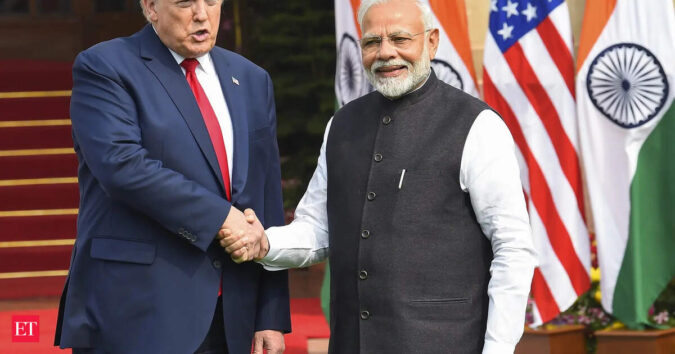
The South Asian nation is not considering backing away from the agreement struck earlier this month, under which it secured lower US tariffs on its exports and signaled intent to buy $500 billion of American goods over five years, they said, asking not to be named because the matter is sensitive.
Also Read: India, China among winners after US court blocked Trump tariffs
A team of Indian negotiators postponed a scheduled visit to Washington to finalize the interim deal after the verdict. India has tapered purchases of Russian oil in recent months, a key Trump demand, but maintained it reserves the right to buy crude based on its energy needs and market conditions, a position officials reiterated.
“India is also likely to reassess its US trade deal, especially as the threat of punitive tariffs with respect to Russian oil purchases is gone – albeit India may choose to continue tapering purchases to maintain relations with Trump,” said Madhavi Arora, economist with Emkay Global Financial Services Ltd., adding that India could seek more favorable terms in talks, with less pressure now to make large concessions.
Also Read: Tariff Turbulence- US policy swings leave Indian exporters racing to adjust
New Delhi is treading carefully after the ruling, balancing its trade interests while seeking to avoid friction with Trump’s administration, which has urged partner nations to honor deals signed. India was among the first to start trade talks with Washington but ended up facing some of the highest tariff rates despite several rounds of negotiations and calls between leaders once seen as close.
Tariff Winners
China, India and Brazil are among those now seeing lower tariff rates for shipments to the US after the court ruled that Trump’s use of the International Emergency Economic Powers Act to impose duties was illegal. While Trump subsequently announced plans for a 15% global rate, Bloomberg Economics calculated that would mean an average effective tariff rate of around 12% — the lowest since his “Liberation Day” tariffs were released in April.
Before the court verdict, the US had agreed to cut reciprocal tariffs on India from 25% to 18% and remove tariffs imposed on the South Asian nation for purchasing Russian oil. The two countries were scheduled to sign the first phase of the deal next month and continue negotiating a comprehensive bilateral trade agreement.
New Delhi is likely to insist on including provisions that safeguard against similar court decisions in the future, people familiar with the matter said. The ruling has significantly diminished Trump’s leverage, one person said.
India should “keep engaging with the US to find out what is on their mind, what are the actions being contemplated by them and to enter into a dialogue with them,” Jayant Dasgupta, former Indian ambassador to the World Trade Organization, told Bloomberg Television’s Haslinda Amin. “We are not clear which way it would proceed.”
Finance Minister Nirmala Sitharaman said it was too early to comment, adding the trade ministry was reviewing the situation.
Farmer groups such as the Samyukt Kisan Morcha, which had been protesting against the deal, will be hold a meeting Tuesday to discuss their next steps in the wake of the court ruling.
Despite the development, uncertainty on tariffs remains, Gaura Sen Gupta, chief economist at IDFC First Bank Ltd, said. While going forward the US’s ability to use tariffs will be restricted, “in the base case we expect the trade deal with the US to go ahead.” she said. “From a certainty perspective it’s better to have a deal with the US , as they will find a way to impose additional tariffs under other acts such as unfair trade practices.”