Under the interim trade agreement between India and the US, New Delhi has agreed to address long-standing barriers to the trade in US medical devices; eliminate restrictive import licensing procedures that delay market access for, or impose quantitative restrictions on, US Information and Communication Technology (ICT) goods.
It will also determine, with a view towards a positive outcome, within six months of entry into force of the Agreement whether US-developed or international standards, including testing requirements, are acceptable for the purposes of US exports entering the Indian market in identified sectors.
The statement said India and the United States will significantly increase trade in technology products, including Graphics Processing Units (GPUs) and other goods used in data centres, and expand joint technology cooperation.
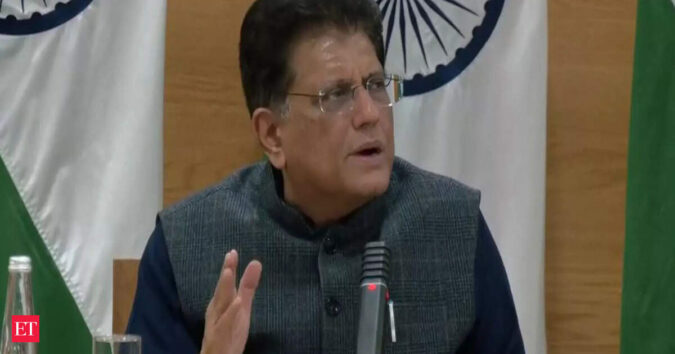
“For our national security, we will certainly need many ICT products for example Nvidia chips, AI equipment, products for data centres. We will need these important ICT products. It is a big win for India that the US has agreed to provide us all these ICT products, which are the need of the hour in our country,” he told reporters here.
He added that the imports will open up a huge opportunity for domestic industries in modern areas like data centres, artificial intelligence, and quantum computing.
He added that India can import equipment, high quality chips, and innovative machineries from America. At present, there is an authorisation regime for imports of IT hardware products including laptops, personal computers (including tablet computers) microcomputers, large or mainframe computers, and certain data processing machines. Most of these imports were coming from China.
This regime, he said, is more directed towards safeguarding India’s interests from countries which are known to do predatory pricing or supply goods at irrational prices which are sometimes lower than the cost of manufacturing in India.
The country has imported personal computers, including laptops, worth USD 5.33 billion in 2022-23 compared to USD 7.37 billion in 2021-22.
China has filed a complaint in the World Trade Organisation (WTO) over New Delhi’s tariffs on information and communication technology (ICT) products.
Last month, Union Minister Ashwini Vaishnaw, in a meeting with senior Nvidia officials, discussed the development of the sovereign graphics processing unit and the manufacturing of high-end data processing devices in India.
Nvidia dominates the graphics processing unit (GPU) market globally with over 80 per cent share.
Its GPUs have been in high demand across the globe to support the development of artificial intelligence technologies.
The government is actively supporting the procurement of GPUs and subsidising their availability for developers of AI technology in the country.
From an initial target of 10,000 GPUs, India has deployed 38,000 GPUs under the India AI Mission. The government has made all GPUs available at a subsidised rate of Rs 65 per hour.
The government has selected 12 startups for the development of native AI engines.
On digital trade, think tank GTRI said America is seeking largely one-sided commitments from India on digital trade by pushing for the removal of barriers to digital commerce and the adoption of clear digital trade rules under the BTA.