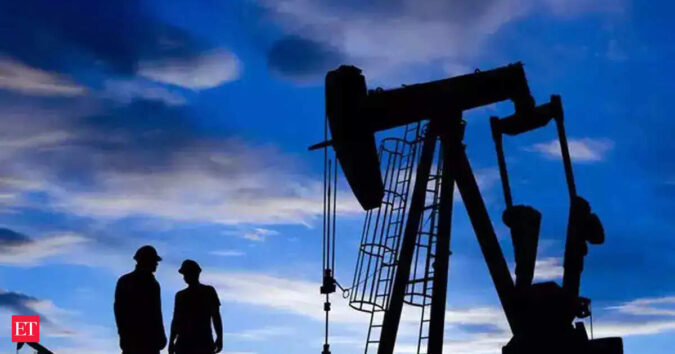
But here is an unfashionable question: what if expensive oil is not a catastrophe, but a correction? Not a breakdown, but a belated alignment of incentives in an economy that has spent decades mistaking cheap energy for sound strategy?
Also Read: Asia is getting crushed between oil prices and the dollar amd Iran war
This is not a new provocation. Economic historian Carlota Perez has long argued that capitalism evolves through waves of technological transformation, each requiring a painful shift from an old paradigm to a new one. In Technological Revolutions and Financial Capital, she maps how steam, railways, steel, automobiles, and digital technologies each followed a predictable arc: exuberant installation, followed by disciplined deployment.
We are, she suggests, at that awkward midpoint today. The digital and green revolutions have been installed—complete with bubbles, platforms, and periodic disillusionment—but not yet fully deployed in a way that delivers broad-based productivity and shared prosperity. The constraint is not technology, but incentives.
And nothing rewires incentives quite like a price shock that refuses to behave.
Click here to track live developments on Iran war
Cheap oil has quietly shaped the economy for long. It made it rational to stretch supply chains across continents, to design cities around cars rather than people, and to manufacture goods that travel more than their owners. It enabled a system where inefficiency could hide inside low input costs, and where scale often meant distance rather than productivity.
India has embraced this model with particular enthusiasm. It celebrates infrastructure by adding lanes to congestion, subsidises fuel while lamenting pollution, and builds business strategies that assume logistics will remain perpetually affordable. Even its version of self-reliance often arrives imported, fuelled, and delicately priced.
Expensive oil disrupts this equilibrium with brutal simplicity. It does not argue. It invoices.
Also Read: BlackRock CEO Fink warns of ‘global recession’ if oil goes to $150
Suddenly, the invisible assumptions behind business models become visible liabilities. Transport-heavy supply chains begin to look fragile. Energy-intensive production starts resembling a luxury. The idea that growth must involve more physical throughput begins to feel less like inevitability and more like habit.
In this sense, high oil prices function less as a shock and more as a signal. They alter relative costs across the economy, nudging behaviour in ways policy papers rarely achieve. Renewable energy, with its negligible marginal fuel cost, stops being a virtuous alternative and becomes a financial inevitability. Efficiency ceases to be aspirational and becomes essential.
The same applies to business models. When energy is expensive, moving atoms becomes costly and moving bits becomes attractive. Software displaces hardware, services displace goods, and proximity begins to compete with scale. The much-discussed “digital transformation” finally acquires meaning beyond expensive software procurement.
There is also an irony embedded in the present moment. Historically, oil shocks have done more to accelerate energy diversification than deliberate climate policy. The crises of the 1970s triggered efficiency gains that reshaped entire industries. They succeeded because they were unavoidable.
Today, the conditions are even more conducive. Renewable technologies are cheaper, digital infrastructure is ubiquitous, and behavioural adaptation is faster. India, with its digital public infrastructure and capacity for rapid adoption, is unusually well positioned to respond, provided it resists the instinct to treat the shock as temporary.
That instinct is strong. The default response to rising oil prices is defensive: hedge exposure, cut discretionary activity, and hope for reversion. But if the shift is structural rather than cyclical, this response merely delays adjustment while compounding vulnerability.
The more useful question is strategic. What becomes viable in a world where energy is persistently expensive? Which parts of the business depend on cheap fuel in ways that have gone unquestioned? Where can value be created with less physical movement and more intellectual input?
Don’t dismiss this as abstract. Past crises have demonstrated that firms willing to rethink fundamentals during periods of stress often emerge stronger. Those that wait for normalcy tend to discover that normal has moved on. Classic example is Kodak and Fuji, and what happened during the silver price crisis.
For India, the consequences extend beyond boardroom strategy. Persistently higher energy prices could nudge the economy toward a more service-heavy, less energy-hungry future. Job growth may drift toward sectors that run on brains rather than barrels… healthcare, education, design, and the ever-expanding IT-enabled services.
Manufacturing would not vanish, but it would shed a few bad habits… becoming cleaner, more automated, and less addicted to sprawling, delicate supply chains. Cities might rediscover the virtues of density and walkability instead of sprawl. Even the informal economy would likely invent new efficiencies under pressure.
Transformations of this sort, unfortunately, demand policy support, institutional stamina and a public willing to tolerate a little short-term irritation in exchange for long-term dividends.
There’s also the inconvenient truth that higher energy prices hurt the 90% Indians, who cannot casually swallow rising bills, and any grand transition must reckon with who actually pays. Yet, for all the disruption, there is a larger perspective worth holding. Economies rarely transform in response to foresight alone. They change when existing models become untenable.
Expensive oil may be doing precisely that… making visible the true cost of a system built on cheap energy, long distances, and deferred consequences. It may be compressing timelines, forcing decisions, and accelerating shifts that were already technically feasible but economically avoidable.
In retrospect, such moments tend to be reinterpreted. What feels like a crisis in real time may be recast as an inflection point… a period when constraints forced clarity, and clarity forced change.
This may be one of those moments. Not the end of an energy system, but the beginning of its replacement.
(Rita McGrath is professor at Columbia Business School and founder of Valize, and M Muneer is Fortune-500 advisor, startup investor and Co-Founder of the non-profit Medici Institute for Innovation)
Source link
https://www.infinitycompliance.in/product/online-company-registration-in-india/