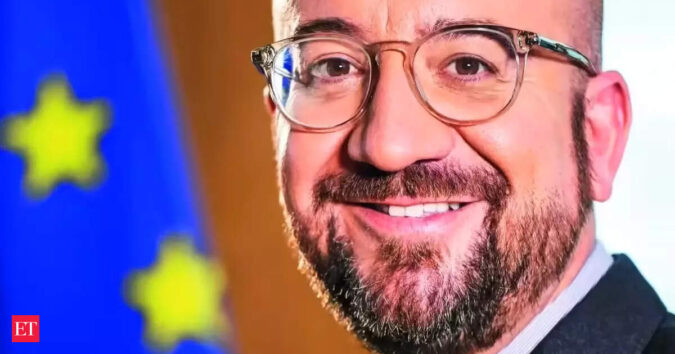
“The EU is a unique project in history, and our political and economic integration has delivered a lot in terms of prosperity and freedom over the last decade,” he said at the summit. “However, we currently face huge challenges, and we have our homework. We are working on the EU side to develop our strategic autonomy, our sovereignty based on better regulation, more investments.”
Michel was addressing a session titled ‘The World in Turmoil-European Perspectives and the India-EU Partnership’.
“We have to use the full potential of the European Investment Bank and of our capital markets. We have also to diversify our partnership with the rest of the world. And here, this trade agreement between EU and India is paramount. That’s a game changer,” Michel said.
He said, “The EU and India, we are making history because we are showing to the rest of the world that we can coordinate, we can cooperate together, we can trust each other, and this agreement is offering a lot in terms of vast potential for the future. Why? Because it’s not only about commerce, that’s more than that, that’s about connectivity, that’s about making sure that our people will get closer, our students, our researchers, and it’s also making sure that in the future, we will work together in the field of defence, in the field of security, to protect the maritime security and to work together to counter some hybrid threats and hybrid attacks.”
Praising the Indian prime minister, Michel said, “We want a better world, more stable, more prosperous, more inclusive. And it’s captured very well in the G20 slogan of Prime Minister Modi – One Earth, One family and One Future. And to get that, we must return to the fundamentals, an international order built on clear principles, anchored in the UN Charter.”
Referring to the rise of middle powers, Michel noted, “We are witnessing the rise of middle powers, countries that assert their autonomy and promote their interest. These nations are swing states of global politics, and their rise is at the heart of multilateralism. They shape alliances and refuse to simply follow the footsteps of a single great power.”