Kolkata: Indian markets are bracing for an extended pause in policy rates, with most economists seeing no immediate tightening as the pass-through of higher global energy prices remains limited.
While a majority do not expect any rate action in FY27, economists say the next move, if any, is more likely to be an increase than a cut, assuming the Iran conflict does not persist long enough to hurt growth.
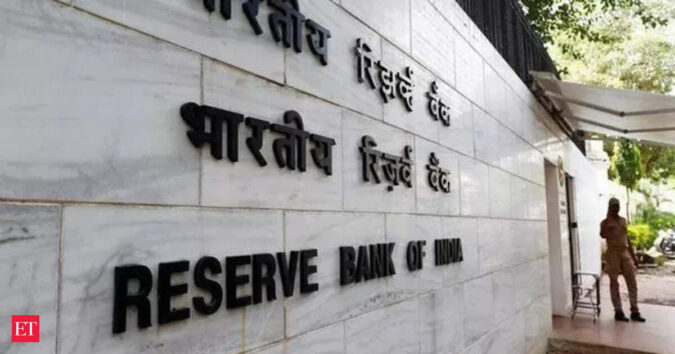
The Reserve Bank of India left the policy rate unchanged in April, marking its second pause this year after a 25 basis points repo rate reduction in December.
“We stick to our view of a prolonged pause, with the repo rate being maintained at 5.25% through FY27. The central bank would continue to focus on preserving financial stability by curbing adverse global spillover risks via the forex channel,” economists at QuantEco Research said.
Also Read | West Asia conflict: Early signs of stress visible across sectors, says FICCI report
Several market participants share this view.
“The governor’s acknowledgement of current real rates being elevated implies no urgency of raising rates in the near term. This along with assurance of proactive liquidity management aided in tempering market expectations of rate hikes,” said Anil Bamboli, fixed income head at HDFC Asset Management Company.
The central bank has projected headline inflation measured by Consumer Price Index (CPI) at 4.6% for FY27, below the upper tolerance level of 6%, comforting the market. RBI also projected core inflation at 4.4%.
IndusInd Bank chief economist Gaurav Kapur holds a different view.
“The baseline assessment of headline and core inflation, with a balance of risks to the upside, suggests there is space for at least 50 basis points repo rate hike over the next 12 months, while continuing with a neutral stance,” he said.
The trajectory of policy rates will depend on how much of the oil price shock is passed on to consumers.
“For now, we think that H1FY27 should not see any tightening of monetary policy while we keep open the chance of a tightening if the war situation persists and domestic inflation is seen getting more entrenched as might be indicated by the household inflation expectations survey,” YES Bank chief economist Indranil Pan said.
Although risks to inflation remain, the impact of higher crude prices is being partly absorbed by the government and oil marketing companies, said Rajani Sinha, chief economist at CareEdge Ratings.
“Given the lingering growth concerns, RBI will not be in a hurry to reverse the rate cycle,” she added.
Before the outbreak of the West Asian conflict, India was going through a ‘Goldilocks period’ with strong growth and low inflation.
Also Read | India has ample buffers to weather headwinds from Middle East conflict: World Bank
Conditions turned adverse in March as the conflict widened and intensified, raising risks of imported inflation and a wider current account deficit due to elevated crude prices.
“The Iran war will drive RBI’s future trajectory. But it will be a wrong conclusion that a long Iran war necessarily means higher rates,” said Sandeep Yadav, head of fixed income at DSP Mutual Fund. “It could also mean lower growth, and thus lower rates. We believe it is too early to even talk about rate hikes.”
State Bank of India’s economic research department described the RBI governor’s April statement as the most hawkish in recent times.
“Out of the eight statements by the current governor, this statement is the most cautious/hawkish in our opinion but this does not mean a rate hike is imminent,” SBI group chief economic adviser Soumya Kanti Ghosh said in a report.