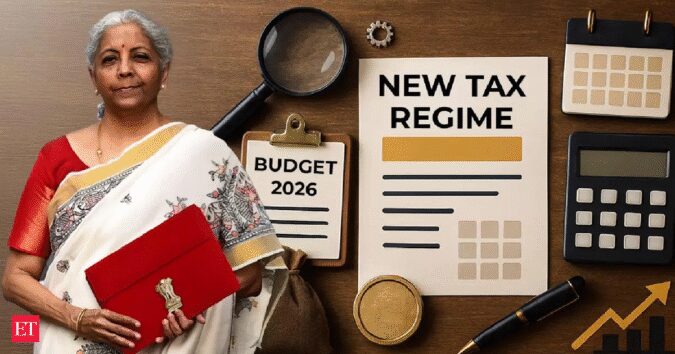
A look at the current system shows that the country has already made meaningful progress towards a simpler, smarter and more user-friendly tax-filing experience.
Progress so far
India’s tax administration has taken significant steps to ease return filing by consolidating data from multiple sources into the Income Tax Department’s database. This has reduced manual data entry and improved accuracy for taxpayers.
Key features of the current system include:
Easy registration:
Taxpayers can register on the e-filing portal using their PAN as the user ID, create a password, and begin filing returns with minimal friction.
Several details now auto-populate in ITR forms, including personal information, PAN and Aadhaar details, bank accounts, salary income, other income and taxes paid.
Carry-forward of prior-year disclosures:Information reported in earlier returns — such as foreign assets, directorships and unlisted shareholdings — is also pre-filled, saving time and effort.
Financial overview statements:
The Annual Information Statement (AIS) and Taxpayer Information Summary (TIS) provide a consolidated snapshot of income, taxes and financial transactions, giving taxpayers a clearer picture of their financial footprint.
Quick online verification:
Returns can be verified instantly using Aadhaar OTP or net banking, eliminating the need to physically mail a signed ITR-V to tax authorities.
While taxpayers are still required to verify and reconcile information appearing in the tax database, these features have significantly reduced errors and made the filing process far more efficient.
Achieving full automation: What next?
The Income Tax Department has already laid a strong foundation through initiatives such as AIS/TIS, pre-filled returns, faceless assessments and a steadily improving e-filing portal. However, true end-to-end automation will require structural changes, not just incremental upgrades.
Some key areas that merit attention include:
Timely and standardised reporting:
All financial institutions and government systems need to share data through common, standardised channels so the tax department can compile accurate and complete information in real time.
More comprehensive pre-filled returns:
Despite improvements, pre-filled ITRs still miss several income components, including detailed interest income splits, capital gains across multiple brokers, rental income, exempt income categories and earnings from digital assets.
Simplifying tax laws to enable automation:
A move towards a single, simplified tax regime, along with rationalisation of capital gains and TDS provisions, would significantly enhance the scope for automated filings, particularly for simple returns.
Continued enhancement of the IT portal:
While the e-filing portal has improved user experience, there is still room for optimisation. Faster AIS/TIS updates, real-time validations and automatic error checks before submission could further ease compliance.
Another idea often discussed is whether employers could file returns on behalf of salaried employees. At present, Form 16 captures salary details, deductions and taxes paid to an extent. However, complications arise for employees with multiple income streams, foreign income or personal financial disclosures that employers may not have access to. While the concept holds promise, it would require careful and comprehensive design to work across taxpayer categories.
The way forward
Complete automation is certainly achievable for taxpayers with straightforward income profiles. However, returns involving tax treaty claims (including Form 67 filings), business income, capital gains, foreign income or foreign asset disclosures will continue to require the existing filing framework, with automation applied wherever practical.
While challenges remain, India’s tax administration is clearly moving towards a more intelligent, seamless and intuitive tax-filing system — one that balances compliance needs with a better taxpayer experience.
(Reddy is tax partner at EY India; Garima Agrawal, senior tax professional with EY, also contributed to the article. Views expressed are personal.)