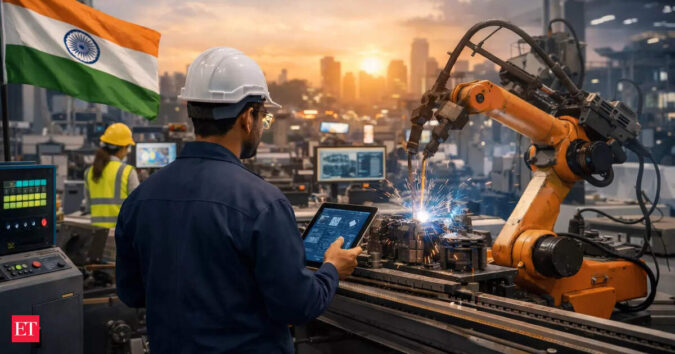
As the Union Budget approaches, the manufacturing sector is abuzz with discussions on reforms and expectations that could potentially redefine India’s industrial landscape. Here’s an in-depth look at what key stakeholders in the sector expect from the upcoming budget, focusing on labour reforms, skilling in the age of AI, cost of capital, infrastructure, core manufacturing technologies, and research and development.
ALSO READ: Not just big guns, the real test of Bharat’s defence will be dictated by its modern muscle
Labour reforms: Predictability and productivity
One of the cornerstones for reinforcing India’s manufacturing scale lies in labour predictability and productivity rather than merely navigating labour costs. Time-bound and uniform operationalisation of the four labour codes needs to be ensured, a significant step to bring consistency across the board. Simplified, digital compliance and inspection regimes feature high on the agenda, aiming to reduce bureaucratic delays and encourage smoother business operations.
ALSO READ: Budget 2026: India’s power shift hinges on fixing a crisis millions complain about
Furthermore, the need for legal clarity on flexible shifts and productivity-linked wages could empower both employers and employees, enabling a more dynamic and resilient workforce. There’s also a push towards promoting Public-Private Partnerships (PPP) to establish ITI-like vocational centers which will play a critical role in equipping the workforce with industry-relevant skills.
Skilling in the age of AI, automation and digital manufacturing
As AI and automation increasingly reshape how manufacturing is done, a national focus on AI-enabled shop floor skills emerges as a necessity. Reskilling programs, co-funded by the government, could ensure that the existing workforce remains competitive in an ever-evolving landscape. Incentives for certified training programs in digital manufacturing, automation, and advanced process control would foster a workforce adept at navigating these modern necessities, positioning India as a leader in cutting-edge manufacturing techniques.ALSO READ: India’s UPI miracle has a money problem; can Budget 2026 fix it?
Cost of capital: A structural competitiveness gap
India’s manufacturing sector continues to grapple with a structurally higher cost of capital compared to peer economies. To address this, access to long-tenor finance, particularly in the range of 10-15 years, is crucial. Additionally, credit enhancement mechanisms specifically tailored for export-oriented ventures and first-of-a-kind technologies would empower businesses to innovate without financial hindrances. Furthermore, broadening access to corporate bond markets can provide manufacturing firms with the essential capital for growth and expansion.
Land, infrastructure, and logistics: Location efficiency matters
In recent years, manufacturing competitiveness has been increasingly driven by location efficiency, logistics, and minimising time-to-market. Developing industry clusters near ports and freight corridors can significantly enhance logistical efficiency. Offering plug-and-play industrial land with clear titles, utilities, and pre-approvals will eliminate red tape, fostering quicker setup times for businesses. Emphasising robust last-mile connectivity through road, rail, and multimodal logistics will also reduce bottlenecks in supply chains, offering smoother operational experiences to manufacturers.
Core manufacturing technologies and process capability
Current reliance on imported process know-how has constrained India’s strategic autonomy in manufacturing. Initiatives aimed at creating and advancing homegrown manufacturing capabilities and process technologies will amplify value capture nationally. Collaboration between the government and private sector in testing and demonstrating new technologies stands as a potentially transformative step. These coordinated efforts aim at reducing dependency on foreign companies for licensing vital industrial processes, thereby strengthening domestic manufacturing sovereignty.
R&D and new product development
Long-term competitiveness leans heavily on design, product, and application capability. Advocacy for stronger support for in-house R&D activities remains vital. Moreover, funding dedicated to product development, prototyping, and scaling up operations will catalyse innovation on a broader scale. Finally, fostering industry-academia collaboration focused on applied manufacturing research could forge groundbreaking advancements, seamlessly integrating theoretical insights with practical applications.
The upcoming Union Budget represents a pivotal opportunity to address critical expectations that could decisively empower the manufacturing sector. By implementing pragmatic reforms across labour regulations, AI and automation skill development, financing, infrastructure, core technologies, and R&D, India could solidify its standing as a global manufacturing powerhouse. These measures promise not only to enhance industrial productivity but also to encourage sustainable economic growth, advancing India’s aspiration to become a leading manufacturing hub on the world stage.
(The author is Partner and Leader – Manufacturing Sector, PwC India)