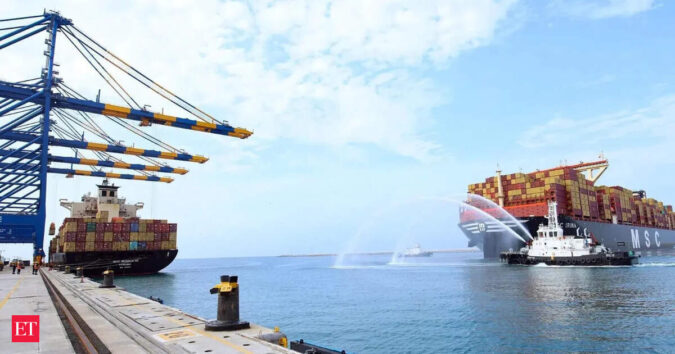
In response, the government has rolled out a set of targeted measures over the past few weeks aimed at cushioning these shocks without resorting to sweeping market interventions. The approach has focused on easing cash flow pressures, lowering key costs and ensuring supply continuity. These steps can form a practical buffer for industry as it navigates an uncertain external landscape.
Export relief package to sustain trade momentum
The government’s most comprehensive intervention has been a multi-part relief package for exporters that combines regulatory flexibility with financial support. A key element is the decision to allow Special Economic Zone (SEZ) units to sell up to 30 percent of their output in the domestic market for one year, from April 2026 to March 2027. These sales are subject to concessional customs duties, with effective rates brought down to roughly 5 to 15 percent depending on the product, compared with significantly higher standard duties earlier.
One battle after another: How India fared in the year of Donald Trump’s tariffs
Alongside this, the government has extended the RoDTEP (Remission of Duties and Taxes on Exported Products) export incentive scheme till September 30, 2026, ensuring continued remission of embedded taxes. It has also introduced a dedicated support package of about Rs 497 crore aimed at offsetting the surge in freight charges and war-risk insurance premiums.
The combined effect is to provide exporters with both an alternative market and financial cushioning. Firms can maintain production levels despite export disruptions, while lower duties and incentives help preserve margins in a period of elevated costs.
RBI eases credit stress for exporters
The Reserve Bank of India has complemented the government’s trade measures by easing financial conditions for exporters. It has extended the maximum period for export credit from around 270 days to 450 days. At the same time, the deadline for realisation of export proceeds has been relaxed from nine months to up to 15 months.These changes directly address the delays caused by rerouted shipping lanes and payment bottlenecks. Exporters often depend on timely payments to service working capital loans, and disruptions can quickly strain liquidity. By extending both repayment and realisation timelines, the RBI has reduced the risk of cash flow mismatches and potential defaults, allowing businesses to operate with greater financial flexibility.
Duty exemption on petrochemical inputs to protect manufacturing
To shield manufacturing from input shortages and price spikes, the government has removed customs duties on select petrochemical feedstocks. This exemption, valid until June 30, 2026, applies to key intermediates used in plastics, pharmaceuticals and chemical industries. The exemption is expected to benefit a wide range of sectors dependent on petrochemical feedstock and intermediates, including plastics, packaging, textiles, pharmaceuticals, chemicals, automotive components and other manufacturing segments. This will also provide relief to consumers of final products.
Endgame or escalation? Trump threatens to bomb Iran ‘back to Stone Age’
The move comes as domestic petrochemical supplies have tightened due to shifting energy priorities and global disruptions. By eliminating import duties, the government has effectively lowered the landed cost of these inputs, helping manufacturers avoid sharp cost escalations. This is particularly important for sectors where raw materials form a large share of total production costs, as it helps maintain price stability and production continuity.
Fuel tax cuts to contain economy-wide cost pressures
In one of the most immediate interventions, the government has sharply reduced excise duties on transport fuels. Excise on petrol has been cut to around Rs 3 per litre, while diesel excise has effectively been reduced to zero.
Given the central role of fuel in transportation and logistics, this measure has a broad impact across sectors. Lower diesel costs reduce freight rates, which in turn ease input costs for industries ranging from agriculture and manufacturing to retail and e-commerce. The reduction also helps contain inflationary pressures, supporting consumer demand and preventing a wider slowdown in economic activity.
Direct fiscal support to stabilise vulnerable sectors
The government has rolled out support measures estimated at about Rs 1,800 crore, as part of its broader response to the crisis. This is not a single direct spending programme but an aggregate estimate that includes steps such as duty exemptions and other cost-relief interventions for industry. While modest in size, these measures help absorb part of the immediate shock faced by businesses and signal the government’s willingness to step in as conditions evolve.
Active monitoring and management of critical supplies
Alongside these targeted measures, the government has put in place an active monitoring system for critical goods and industrial inputs. A list of sensitive items has been identified, and authorities are closely tracking their availability and price movements.
This framework allows for quick intervention if shortages emerge, including steps such as prioritising domestic allocation or adjusting trade flows. While not a single headline policy, this operational mechanism plays a crucial role in maintaining supply chain stability. For businesses, it reduces the risk of sudden disruptions and provides a degree of predictability in an otherwise volatile environment.
No sweeping changes but a measured response
The government’s response to the Iran war reflects a strategy built on targeted, practical interventions rather than sweeping changes. By combining export support, financial relief, cost reduction and supply management, it has created multiple layers of protection for businesses.
These measures do not eliminate the impact of global disruptions, but they significantly soften the blow. As long as the external situation remains uncertain, such measured support will be key to ensuring that India’s industrial and trade sectors continue to function with resilience.