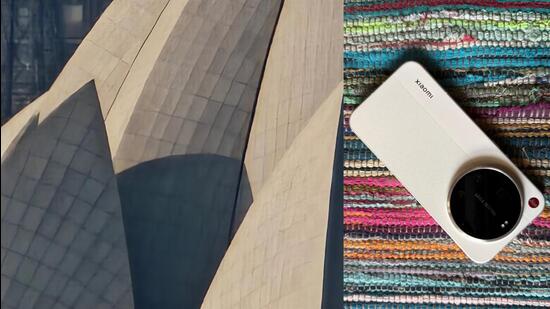
There is a very clear direction of this flagship phone that puts it at odds with the general approach by most cutting edge smartphone imaging systems at this moment in time. While the rest inevitably chase the sharpest details, best accuracy and most realistic artificial intelligence (AI) intervention, the Xiaomi 17 Ultra By Leica is going for something that has typically been its partner Leica’s forte — realism, the essence of the moment photographed, and the emotion of it all. It is absolutely not to say that Xiaomi isn’t chasing the best dynamic range, shadow representation and accurate night photography, but for once, the imperfections of a human in the frame or the creases in the world we photograph, are allowed to shine. To not be ironed by an algorithm. A logical successor for the very impressive Xiaomi 15 Ultra?
Some context about this camera commentary is important. It’s been a handful of weeks since the Xiaomi 17 Ultra series became official, and we wait for the international variants to be released in due course over the next few months. There is the standard Xiaomi 17 Ultra and there’s the one we are discussing here, the Xiaomi 17 Ultra By Leica special edition. Prices start at RMB 6999 yuan (that’s a direct conversion to around ₹93,000) for the Xiaomi 17 Ultra range, while this special edition Xiaomi 17 Ultra By Leica is priced at RMB 7999 yuan for 16GB+512GB and RMB 8999 yuan for 16GB+1TB.
Also Read:From 1914 to now, Leica’s definitive history is Xiaomi’s photography trump card
In the meantime, Xiaomi India shared a Xiaomi 17 Ultra By Leica with Hindustan Times, for an early experience with the camera. This is the Chinese version of the smartphone, powered by the Qualcomm Snapdragon 8 Elite Gen 5 chip, with HyperOS 3 that is tailored for the Chinese market. Typical to this scenario, as you’d expect, is that Google Play Services are missing in action, as are any Google apps that you otherwise identify as part of an Android phone collective. None of that got in the way of the camera experience. And I’ll stick with that, for now.
Foundation of the hardware
The camera specs are nothing short of astonishingly well thought through, and I include the image processing pipeline improvements as well as Leica’s tuning within that ambit. The main camera is the 50-megapixel Light Fusion 1050L, a 1-inch sensor, the type that is fast disappearing from smartphones as phone makers use smaller sensors and then prioritise aggressive AI processing to make for the loss of any hardware driven details. The full well capacity is 6.3x more than the predecessor’s sensor, which means this is capable of handling much higher light levels and thereby you’ll notice better dynamic range in complex (specifically, backlighting too) lighting scenarios.
With zoom up to 120x available, Xiaomi has smartly used Leica 200-megapixel 75-100mm optical zoom telephoto camera with three matched lens groups and a prism. This 1/1.4-inch large telephoto sensor is used throughout this range, and the key takeaways are native 200-megapixel image quality without any digital cropping. The third piece of this troika is the 50-megapixel ultra wide lens which is Samsung’s JN5 sensor.
Also Read:Dario Amodei doubles down on AI risks, and calls out the industry
The difference between the Xiaomi 17 Ultra and the Xiaomi 17 Ultra By Leica is that the latter gets a few additional features that certainly add value. First, is the flaunt value of the iconic Leica red dot logo, the first time on a Xiaomi phone. More than anything else, I’ll see this development as a further strengthening of the partnership between the German camera maker and Xiaomi — more so because Leica doesn’t hand out the red dot privilege, just like that. This at a time when Hasselblad’s exclusivity now remains only with the Oppo phones, and not the sibling OnePlus phones anymore. And I really don’t know if scope has broadened between Zeiss and Vivo, or if they continue on the same parameters as in previous years.
Secondly, the frame has ‘LEICA CAMERA GERMANY’ engraved, and at this point, you’d notice the ribbed texture that is great as a grip. At the back, the dual tone leather (more prominent in this white variant), and everything comes together rather well to replicate the look of Leica’s cameras. Not a mean achievement, in a smartphone.
Most impressive though is the Leica Camera Ring, again drawing from a classic camera operation experience. You may not realise this at first glance, but it is as finely tuned as it is embedded seamlessly into the design — the mechanism can detect even 0.03mm of movement, for precise focus, focal length changes or exposure settings, depending on how you configure it for photo, video, portrait, pro and other modes. Once you get used to the ring to optimise zoom (my advice would be to not look at the digital reading on the viewfinder, just adjust as your eyes judge the frame), it is difficult to get back to other phones.
Also Read:Xiaomi Redmi Note 15 review: Substance and specs move the needle where it matters
One could argue that Xiaomi and Leica perhaps missed out a hardware shutter key on the 17 Ultra By Leica, though that’s very much part of the elaborate Photography Kit which is an add-on (very similar to the one with the Xiaomi 15 Ultra). That, on the phone itself (and the flat frame should’ve allowed that), would’ve completed the attempt to replicate cameras from a simpler time.
The Xiaomi 17 Ultra By Leica also introduces the mobile industry’s first Content Authenticity Initiative (CAI) Photo Authenticity Protection technology, which relies on a dedicated security chip, to help establish a real photo from an AI generation at some point in the future. CAI’s members include Leica (of course), alongside Adobe, Canon, Nikon, and the Universal Music Group, to name a few.
Brilliance of the experience
Xiaomi has managed to deliver exactly what Apple iPhone users have claimed all these years — simply take it out and click a photo, there’s no chance you’ll go wrong. The Xiaomi 17 Ultra with Leica is exactly that, it doesn’t and will simply not go wrong. The more time one spends with this camera, the more jarring is the artificialness of it all when switching to most current Android flagships. Details from the main camera are pristine across photography and lighting scenarios, and the natural tones are never lost. There is no visible algorithmic boosting of shadows, skin tones or subject edges. My only observation here is, perhaps the tuning has erred more on the side of caution, and occasionally, contrast seems like we could have done with a notch more.
Also Read:Xiaomi Redmi Pad 2 Pro review: Tightening fundamentals, for the sake of value
The telephoto is undoubtedly a strong suit, and the Xiaomi 17 Ultra By Leica lets you get the desired results without needing a separate telephoto lens attachment, which has been in vogue off late. It is rare to be saying this, but photos are very much usable up to 60x zoom levels without much editing needed to rediscover the details. At 20x and beyond, you will notice the “AI” overlay show up on the viewfinder — on, auto or off. This will, depending on whether you choose on or off, will have a significant bearing on the photos you click. Preferences are subjective of course, but I say with confidence that 120x photos (stable hands, of course) with AI off can look magical.
Not sure if the image of the Lotus Temple above, at 120x with AI off does justice after having run through the content management system’s compression filters, but you get a fair idea with the crispness, realism of the shadows and an overall sense of a typically foggy winter’s morning in Delhi. The same photo, with AI turned on, will deliver a sharper look at the architecture, the texture and tone down shadows for a more even illumination across the frame. That may seem like an early afternoon photo, not a winter morning one.
That is the key thing about the Xiaomi 17 Ultra By Leica’s camera tuning, and at the risk of sounding repetitive, you can choose to keep the sense of place and time very much front and centre with photos that emerge from the Xiaomi 17 Ultra By Leica. Particularly the telephoto replicating realism, definition and details with AI off too, indicates prowess with hardware and image processing tuning. Put these photos in Lightroom, and you’re essentially embarking on hours of fun editing photos to different tonalities.
Also Read:WEF 2026 – AGI timelines, AI chips, and a race no one can stop
The Xiaomi 17 Ultra By Leica can record videos up to 8K at 30 frames per second, and with 4k up to 120fps on the main camera as well as the telephoto, while the ultra wide will do a maximum of 60fps. With Dolby Vision to boot. Be it daytime or the typically challenging late evening videos, you’ll never really have anything to complain about. Except perhaps sharpness, which could have been a notch higher (but then again, I have a feeling this effect is by design). You could, though, always choose slight edits manually, later. Particular praise for image stabilisation, across all three sensors.
The Xiaomi 17 Ultra By Leica is, as a photography flagship, absolutely remarkable. More so, because it reminds me of a time when photography was all about capturing moments, emotions, a sense of place, the time, and a story behind that. The person holding the camera had as much responsibility to deliver, as the camera did. Over time, AI layers blunted that charm, because even a mindlessly taken photo would get new detail inserts to boost overall appearance. I am not judging the Xiaomi 17 Ultra By Leica as a phone, because that would be unfair (the Chinese market spec HyperOS doesn’t make it a fair evaluation), but purely as a camera one hopes would be launched in India in the coming months. It is the logical successor to the Xiaomi 15 Ultra, and leaves the current Android flagship crop far behind, if realism is your thing.