Why your smartphone will get costlier and ‘dumber’| Business News

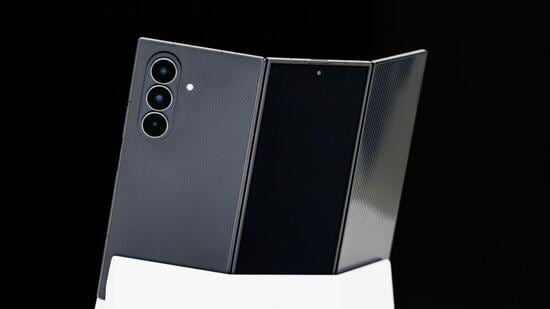
A Samsung Galaxy Z TriFold smartphone on display during a media preview in Seoul, South Korea. (Bloomberg)


If you have a mental sticky note to upgrade your smartphone or laptop in 2026 because your battery is dying, or perhaps that version of Windows 10 is nagging you about its end-of-life, there’s bad news. And you might want to rethink that plan.

A Samsung Galaxy Z TriFold smartphone on display during a media preview in Seoul, South Korea. (Bloomberg)

This is what a report from IDC that landed earlier this week suggests. It is technical stuff, dense with acronyms like DRAM and NAND. But once stripped of the jargon, the bottom line is flashing red: The era of cheap, abundant computing power that we took for granted is over.

What it means is that if you walk into a store next year to buy a gadget, you are going to face a disagreeable reality: You will likely pay significantly more for a device that is barely better than the one you bought three years ago.

Here is why: At the heart of every device you own there is a silicon chip. That chip needs a workspace to “think” (memory) and a filing cabinet to store your photos (storage). For the last decade, the rule was simple: technology gets cheaper and better every year. We got used to more memory for less money.

But that cycle has broken. And the culprit is Artificial Intelligence.

The factories that make memory chips have a finite amount of space. Right now, the companies building the massive “brains” for AI that power companies such as Microsoft, Google, Meta, are desperate for high-performance memory. So, the chip manufacturers have pivoted. They are reallocating their limited factory space to make expensive chips for AI servers instead of the cheap memory that would otherwise have gone into our phones.

It is a classic case of musical chairs. Every silicon wafer used to build a brain for an AI supercomputer is a wafer denied to your next Android phone or Dell laptop.

I wanted to know how this will play out for us, the buyers. Is this just a blip or the new normal? I decided to check with Navkendar Singh, an analyst at IDC.

He didn’t sugarcoat it. “Brands will be forced to raise prices,” he said. And here is the kicker: “Once raised, prices do not come down.”

But it’s not just about paying more. It’s about getting less. Singh predicts that manufacturers will try to nullify their rising costs by “spec-ing down” devices. That means the phone you buy next year might have less memory than the flagship you bought two years ago. We are looking at “shrinkflation” applied to hardware.

To hide the pain, Singh says brands will aggressively push “Buy Now, Pay Later” schemes. They will hook you into monthly payments so you don’t feel the sting of the sticker price all at once.

But the shift goes deeper than just prices. This surfaced upon reaching out to William Kiong, Product Manager for AI at technology consulting firm TwimBit’s Kuala Lumpur office. He believes we are seeing a hardening of the technological class divide.

In 2026, a “premium” device will be defined by its ability to run AI locally. That requires massive amounts of memory. If you can afford it, you get privacy, speed, and a phone that “thinks.” If you are on a budget you get a dumb terminal. Manufacturers will strip out the memory and deliver AI as a “service” via the cloud. Your phone won’t have the brains; it will just be a rental car connecting to a supercomputer somewhere else.

There is a sliver of hope, though. Kiong notes that this hunger for memory creates “whitespace” for new suppliers—scrappy players who can figure out how to deliver power efficiency and lower costs for the mid-tier. But that is the future. We live in the now.

What’s the bottom line then? If you snagged a deal on a laptop or phone during the 2025 holiday sales, pat yourself on the back. You timed the market perfectly.

But if you are waiting for 2026, here is the playbook:

  1. Don’t expect price drops: As Navkendar noted, once prices go up, they stick.
  2. Look at the used market: The “new” budget phone of 2026 might be worse than a refurbished flagship from 2024.
  3. Repair, don’t replace: If your current device still works, the smartest move might be to simply replace the battery and wait out the storm.

This shortage is expected to last well into 2027. Until the supply of silicon catches up to the insatiable hunger of the data centers, we are the ones paying the bill.


Source link

Leave a Reply

Your email address will not be published. Required fields are marked *