The Reserve Bank of India is likely to maintain status quo on repo rate in its first monetary policy decision since the Iran war, as it grapples with a sharply weaker rupee while trying to support economic growth.
All 30 economists surveyed by Bloomberg expect the RBI to keep the benchmark repo rate unchanged at 5.25%, after the central bank signalled a prolonged pause at its last meeting, though the outlook has since clouded.
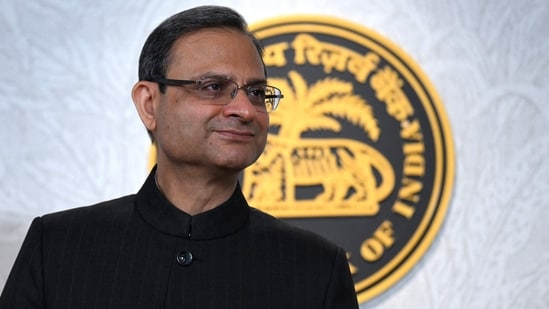
The Iran war has left the six-member Monetary Policy Committee led by RBI Governor Sanjay Malhotra in a tough spot. The rupee’s slide since the conflict began has emerged as a key pressure point, prompting the central bank to take some of its most aggressive steps in more than a decade to curb speculative bets against the currency. The RBI now faces a dilemma over whether to raise the repo rate to support the currency or keep borrowing costs low to cushion economic growth.
Even as economists expect the RBI to focus on calming markets this week, they say it may eventually be forced to raise the repo rate if the Iran war drags on, as costlier energy imports risk fueling inflation. Standard Chartered Plc economists Anubhuti Sahay and Saurav Anand said they see a “risk of a 25-50 basis points increase in the repo rate if a sustained rise in energy prices pushes global rates higher, putting further pressure on the Indian rupee”.
One basis point is one-hundredth of a percentage point.
India, which relies on the Middle East for about half of its crude and most of its cooking gas, has been hit hard by the effective closure of the Strait of Hormuz. The rupee has tumbled 7.6% over the past year, making it the worst-performing currency in Asia. Benchmark yields have surged to near two-year highs as crude prices spike, with any signal of monetary tightening likely to further roil markets.
Sakshi Gupta, an economist at HDFC Bank Ltd., said that markets are looking for “conditioning and reinforcement of the RBI’s commitment to maintaining rupee stability”, adding that the central bank’s view on rupee depreciation will be key to shaping expectations going forward.
Investors will focus on Malhotra’s 10 am speech for cues on the policy path and the RBI’s stance on the rupee. “Communication will be key” this week, said Gaura Sen Gupta, an economist at the IDFC Bank Ltd., as “the April policy comes at a time when it may be too early to react to the unfolding West Asia crisis”.
Iran War Impact on Rupee
The RBI recently has taken some of its most forceful steps in the currency market by cracking down on speculative trading. After the rupee slid past 95 per dollar, the banking regulator capped banks’ daily currency positions at $100 million and barred them from offering non-deliverable forwards to clients. The rupee has since rebounded nearly 2%.
While policymakers will refrain for raising rates just yet, the central bank could consider some additional measures to control the currency. One immediate option is to open a dedicated dollar swap window for oil refiners, who account for $250 million to $300 million in daily demand. It is a playbook the RBI used during the 2013 taper tantrum, when the RBI supplied about $12 billion to refiners as the rupee slid past 60 per dollar—then a record low.
Iran War impact on India GDP Growth
Investors will also watch for any comments from Malhotra on the impact of the Iran war on India’s GDP growth. In February, the central bank had held back from providing full-year growth and inflation forecasts, as the government was in the process of revising the data series. The mood was upbeat then, with policymakers expressing confidence in growth of over 7% following an interim trade deal with the US. The RBI also said inflation would likely remain around its 4% target at least through September.
Those assumptions may now need to be reassessed in light of the conflict, with some economists sharply cutting growth forecasts to reflect India’s oil dependence. Goldman Sachs sees calendar year growth at 5.9%, while Standard Chartered has lowered its forecast for the current financial year to 6.4% from 7%.