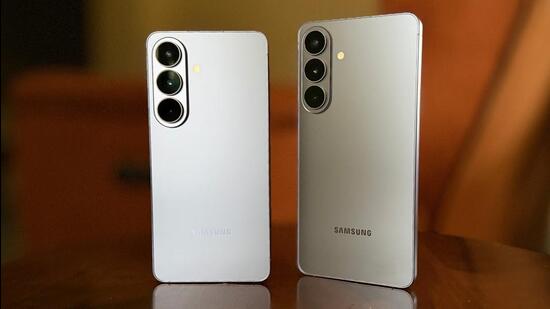
The Galaxy is strong, very much in command of itself. There are clear signs that Samsung is very comfortable with the flagship troika, led by the very impressive Galaxy S26 Ultra, across pricing, the feature set and supposed value proposition. The Samsung Galaxy S26 and S26+ are, unlike the Galaxy S26 Ultra’s leap with the Privacy Display and camera optimisations, are more comfortable with a theme of continuity. Albeit adding Horizon Lock for video recording. Nothing wrong with that, though it remains to be seen how potential buyers perceive refinements but no individual feature or functionality trump card, at price tags of ₹87,999 onwards and ₹1,19,999 onwards. Generational inflation factored in too.
While a Galaxy S25 and Galaxy S25+ user must not rush to upgrade to the Galaxy S26 and S26+, for anyone using an older generation still, this is still a significant step forward. More so because of the optimisations for the Samsung-spec Qualcomm Snapdragon 8 Elite Gen 5 chip — that’s had a positive bearing on performance as well as battery stamina, for anyone spending this much money would expect nothing less. While the Galaxy S26 gets a slight display upgrade from a 6.2-inch to a 6.3-inch canvas, resolution as well as illumination statistics remain the same. The Galaxy S25 also has a slightly larger battery now, at 4,300 mAh, compared to the 4,000 mAh of the predecessor. The Galaxy S25+ makes do with faster wireless charging, a newer Bluetooth standard and an overall performance step up.
The advantage of the Galaxy S26 in particular, with the 6.3-inch display, is that it remains a very viable option for anyone who wants a compact flagship Android phone. There are fewer of those choices than you may immediately imagine, and while there is the alternative of the Vivo X200 FE, Samsung’s proposition is simply superior all things considered. The newer display is, if you’ve also experienced the Galaxy S25’s 6.2-inch screen, sightly taller and that simply works better in many apps.
Size change on the Galaxy S26 aside, and the continuity with the Galaxy S26+ screen size and basic specs, one does wonder why Samsung didn’t add the Privacy Display across the latest flagship range, hinging the final choice for the consumer, on their preference for specs or display size. One could though understand an intent to keep that feature an exclusive for the torchbearer Galaxy S26 Ultra, and I’d expect this to become a range-wide feature next year.
For some strange reason, a glance through Samsung’s India website listing pages for the Galaxy S26 and Galaxy S26+ seems to refrain for many mentions of their own Exynos 2600 processor. I wonder why, because from the experience with these phones, they seem to be leaving no room for complains with performance consistency, thermals are mostly well in check, and there is no inconsistency with battery stamina as well. The intent of this piece is to analyse the Galaxy S26 and Galaxy S26+ and not Samsung’s marketing and communication strategy, but I would be a bit more appreciative of the effort the in-house teams have put in to design the Exynos 2600. And not pander to public perception (which is mostly, incorrect).
The only possible reason for complaining about the Galaxy S26 and Galaxy S26+ is the carry-forward of the camera hardware from last year’s phones. Mind you, the image processing pipeline is completely new, but for these prices, expecting an optical hardware upgrade or two wouldn’t exactly be out of place. Though, one must caveat this by saying software based improvements to photography do have their limits, and that will be most visible in more complex lighting scenarios. However, for most users in the typical point and shoot mode, daytime photos will emerge vivid and well detailed, while low light photos will mostly be just about usable in terms of detailing and colours.
Samsung really needs to up the game on the cameras that succeed the Galaxy S26 and Galaxy S26+ next year, with the context being Xiaomi’s 17 series and Vivo’s X300 series (and undoubtedly their successors too) have move the needle quite a bit on the photography front. The addition of horizontal lock for videos is certainly a step forward, and quite useful to keep your video recording perfectly oriented and aligned even if the phone moves around more than a typical hand shake or movement vibration.
The reality with the Samsung Galaxy S26 and Galaxy S26+ is that these aren’t bad phones at all, and on the contrary, consistency as well as refinement has its own benefits which these two flagship companies fully derive the benefits of. There’s a wide base of utility and reference these two phones cover, and for that reason alone, Samsung should be a bit braver with the successors for the Galaxy S26 and Galaxy S26+. Generational pricing inflation will keep eroding the prospect of value, and Samsung may well be reaching the very end of that elasticity with incremental updates rather than wholesale changes.
The Galaxy S26 and Galaxy S26+ are nevertheless reliable upgrades for anyone using a predecessors that’s from a couple of generations earlier or older. But it is perplexing that a flagship portfolio doesn’t hold anchor with a must-have feature or spec. That must change, sooner than later.