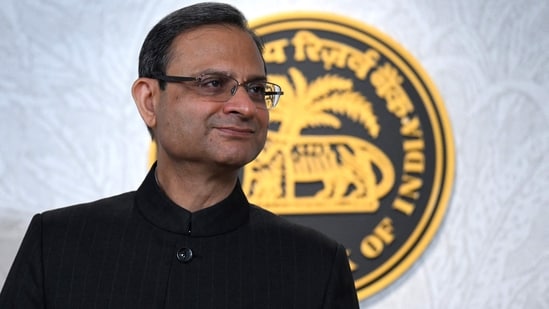
The Reserve Bank of India held the repo rate at 5.25% in its first monetary policy decision since the Iran war broke out, even as a two-week ceasefire announced earlier today cooled crude oil prices and boosted rupee.
The status quo was a unanimous decision by the six members of India’s Monetary Policy Committee, RBI Governor Sanjay Malhotra said in a televised speech on Wednesday (8 April 2026). The policy stance was maintained at “neutral”.
“The high-frequency indicators indicate sustained momentum and economic activity,” the RBI governor said. “The headline inflation remains contained and below central bank’s target of 4%.”
Amid the Iran war, RBI now sees India’s inflation rate at 4.6% in FY27 with core inflation is likely to come in at 4.4%. Here’s a look at the quarter-wise inflation projections by the MPC:
- Q1 FY27: 4%
- Q2 FY27: 4.4%
- Q3 FY27: 5.2%
- Q4 FY27: 4.7%
However, despite the Iran war, India is expected to grow faster at a real GDP growth rate of 7.6% versus 7.4% earlier, Malhotra said.
RBI Monetary Policy amid Iran War
All 30 economists surveyed by Bloomberg News had expected RBI to keep the benchmark repo rate unchanged after the central bank signaled a prolonged pause at its last meeting, though the outlook has since clouded.
The Iran war has left the six-member Monetary Policy Committee led by the RBI governor in a tough spot. The rupee’s slide since the conflict began has emerged as a key pressure point, prompting the central bank to take some of its most aggressive steps in over a decade to curb speculative bets against the currency.
The RBI now faces a dilemma over whether to raise interest rates to support the currency or keep borrowing costs low to cushion economic growth. The Iran ceasefire, however, is set to provide some relief, at least for the time being.