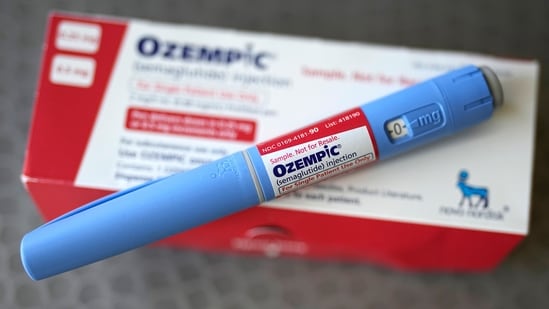
The simultaneous patent expiry of Ozempic’s active ingredient in China and India on Friday is a watershed moment. Until now, the revolutionary weight-loss drugs have been available largely to people with means. The entry of affordable generic versions will be a leveling force in healthcare, with global consequences.
That’s because the world’s two most-populous countries aren’t just consumers. They also have pharmaceutical firms capable of exploiting this moment to reshape the market for metabolic therapies—and affecting the earnings of incumbents Novo Nordisk A/S and Eli Lilly & Co. The process is driven by the demands of large homegrown populations suffering from chronic ailments like obesity and diabetes that can be treated with these new cheap medicines that mimic the effect of the natural hormone glucagon-like peptide-1 (GLP-1), which regulates appetite and blood sugar.
By far the biggest benefits would accrue to public health. According to the Lancet, China had 402 million people living with obesity five years ago. That number will grow 56% by 2050 to nearly half the population. India had 180 million individuals with the disease in 2021, with the figure expected to more than double to 450 million in about 25 years. Obesity is known to increase the risks of diabetes, coronary artery disease, hypertension, stroke, and other health conditions.
While Novo Nordisk has slashed the price of Wegovy—which uses semaglutide, the same ingredient in Ozempic—in China and India in anticipation of the patent loss, its offerings are still too expensive for most people. In China, where weight-loss drugs fall outside insurance coverage, price will be the decisive factor in whether millions begin medical treatment.
Many diabetes patients are managing their condition with older, less effective medications. Switching to generic semaglutide could result in superior glycemic and weight control, reducing the risk of long-term complications, Nadim Anwer, pharma analyst at GlobalData, told me. Competition could bring prices down to $50 a month, compared to hundreds of dollars in the West.
China has more than 10 companies, including CSPC Pharmaceutical Group Ltd. and Huisheng Biopharmaceutical, developing generic versions. Local media say it will take another half year for the medicines to be available. India is expected to have dozens of options within months.
Even if the drugs are a game changer, they’re not a silver bullet. And they can be tricky to get right. The medicines have been associated with loss of muscle mass and even malnutrition. There’s a question mark about depression. Countries need to train health workers to deliver long-term care to support the treatment and invest in prevention by encouraging exercise and proper nutrition, according to Johanna Ralston, chief executive of the World Obesity Federation. China and India’s chronically short-staffed, under-funded healthcare systems may struggle to do that, but they must commit to comprehensive care if the drugs become widely available.
What’s more straightforward about these medicines is potential commercial opportunity. Even though China did not originate GLP-1 treatments, it already dominates the research pipeline, with more than 100 drugs in development, around 40% of the global total, according to Citeline’s Pharmaprojects. Over the past two years, therapies originating from China have comprised the majority of global GLP-1-related dealmaking by both value and deal volume. In fact, Pfizer Inc. will soon enter the market for weight-loss drugs after years of trying—by licensing a Chinese product after its own efforts fell flat.
This is not a surprise for those watching the trajectory of China’s pharmaceutical development. Over the past five years, drugmakers have started introducing experimental therapies and signing multibillion-dollar licensing deals to bring them to global markets. Established companies are looking for shortcuts to expand their offerings—since many are facing an upcoming so-called “revenue cliff” with lucrative patents on blockbuster drugs expiring.
And because the patent for semaglutide has already expired in Canada and is poised to do so in Brazil and Turkey, Chinese and Indian generics could become major players if they receive regulatory approval. With China already the world’s biggest supplier of active pharmaceutical ingredients, the components in drugs that produce the intended therapeutic effects, its suppliers can make money in those markets, too.
Ozempic went viral for helping people lose weight after being introduced as a diabetes injection in 2018. The sheer effectiveness of this class of drugs has advanced the idea that obesity is a chronic disease. Now affordable generics won’t only make them more widely available, but also give Asian drugmakers a bigger slice of the growing business.
This column reflects the personal views of the author and does not necessarily reflect the opinion of the editorial board or Bloomberg LP and its owners.
Juliana Liu is a columnist for Bloomberg Opinion’s Asia team, covering corporate strategy and management in the region. She was previously CNN’s senior business editor for Asia, and a correspondent at BBC News and Reuters.