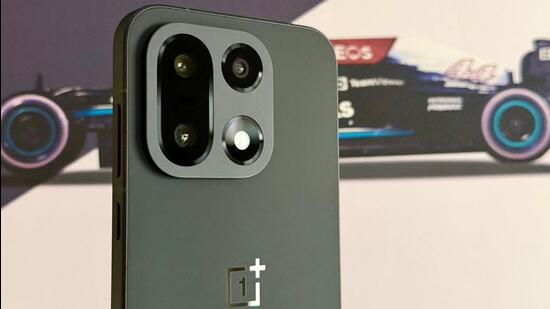
The reports of OnePlus exiting the Indian market, as well as a broader plan to dismantle the brand, have been greatly exaggerated. The company has firmly denied any such plans, calling them “unsubstantiated claims”. OnePlus is owned by Chinese electronics giant BBK Electronics, which also owns Oppo and Vivo, and has largely worked as a sub-brand of Oppo since 2021 though it is categorised more as a strategic partnership with software and hardware synergies. OnePlus has undoubtedly had a fairly challenging last year in India for a number of reasons, but the brand remains a strong player in the premium smartphone space, particularly what’s broadly considered as the ‘Android flagship-killer’ price points.
Robin Liu, CEO of OnePlus India, has in an official statement, urged all stakeholders to verify information in the face of false reports, and insists business operations continue as usual. “I wanted to address some misinformation that has been circulating about OnePlus India and its operations. We’re operating as usual and will continue to do so,” he says.
In reality, it has been a tough last few quarters for OnePlus in India. CyberMedia Research (CMR), in their Q3 report, had noted OnePlus recorded a 13% decline in Q3 2025, compared with the same period a year prior. At that time, the OnePlus 13 series held the flag as the company’s flagship phones, contributing to 40% of the overall phone shipments, with the rest of the share cornered by the company’s more affordable smartphone portfolio, the Nord series.
Yet, data for the same quarter by the International Data Corporation (IDC) pointed out the silver lining in a seemingly dark cloud for OnePlus. They noted that in the mid-premium smartphone space, which is generally the band between $400–$600 (that would convert to between ₹36,000 and ₹55,000), OnePlus figures among the top-three players alongside Samsung and Oppo. It holds 2.4% of India’s smartphone market share as of Q3 2025.
Since then, OnePlus has refreshed the flagship smartphone portfolio, with the additions of the OnePlus 15 flagship (the number 14 was skipped) in November followed by the slightly more value oriented OnePlus 15R in December. The smartphone maker would hope these launches contribute to increasing shipments in the first quarter of this year. Not launching a successor to the foldable OnePlus Open, which was released in 2023, has also dented customer confidence — this at a time when Samsung has made significant leaps in the foldable space with the Galaxy Z Fold7, as well as Huawei which sells the foldable phones in certain countries, and rivals Vivo too who have impressed with the X.
Something OnePlus needs to look at closely this year is the pricing element, particularly with phones such as the OnePlus 15R and the OnePlus 13R, which also faced some overlap from the Nord siblings including the OnePlus Nord 5. The risk of diluting the brand identity in its strongest price band, is real. OnePlus would do well to let its flagship phone portfolio tackle the requirements of customers in this price band, and not confuse matters with the Nord overlap. Nord is perceived as a more “affordable” phone line-up, and not necessarily a powerful flagship-esque experience.
Secondly, quality has become something of a concern in recent months, with a number of users reporting the dreaded ‘green line’ issue with the display, particularly after a software update is installed. That has taken away from the otherwise premium positioning that OnePlus curated for its phones over the years. OnePlus also dropped the Hasselblad partnership from the latest flagship phones, which may have dented confidence of consumers specially weighing the photography capabilities.
At the same time, retailer conflicts in several states in the country, over profit margins and warranty processing delays (this included the green line claims). An inability to find OnePlus phones in store shelves in a number of regions of India put the company on the back foot, at a time when competition was finding every inch of retail space in offline stores as well as on online marketplaces.
For now, OnePlus’ competitors such as Apple, Xiaomi and even its siblings Vivo and Oppo, hold significantly more market share. That’s lost ground which will not be easy to recover, but one that OnePlus must.