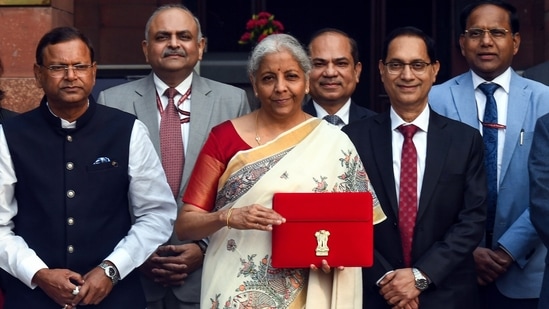
On 1 February, Finance Minister Nirmala Sitharaman will present the Union Budget 2026—her ninth straight budget presentation—amid expectation of an overhaul of customs duty on the lines of GST rationalisation.
The budget is also likely to outline the path of targeting of Debt-to-GDP ratio as India’s fiscal management focus shifts from managing deficit to lowering of debt. For individuals, who last year received a big tax relief by way of higher income tax exception limits and GST rate cuts, are still hoping for higher standard deduction.
Here’s a look at the key budget expectations:
- With the new and simplified Income Tax Act, 2025, coming into effect from 1 April 2026, the industry expects the budget to outline transition provisions, rules and FAQ for better understanding.
- A hike in standard deduction to encourage individuals to shift to new income tax regime from the old regime.
- Rationalisation of TDS categories into fewer rates, slabs.
- Overhaul of customs duty into fewer tax slabs and amnesty scheme to unlock ₹1.53 lakh crore stuck in disputes, and procedural simplification to boost ease of doing business.
- Focus on reducing India’s Debt-to-GDP ratio from FY27.
- Higher defence budget in view of rising geopolitical tensions.
- Outlay for Viksit Bharat—Guarantee for Rozgar & Ajeevika Mission (Gramin) (VB-G RAM G) scheme under which cost will be shared between the Centre and States in 60:40 ratio.
- Provision for 8th Pay Commission, which came into effect on 1 January 2026.
- Tax devolution to states, in line with the recommendations of the 16th Finance Commission.
- Incentives for MSMEs and tariff-sensitive sectors, like gems & jewellery, apparel and leather.
- Funding for exploration and processing of critical minerals such as lithium, cobalt and rare earth magnets.