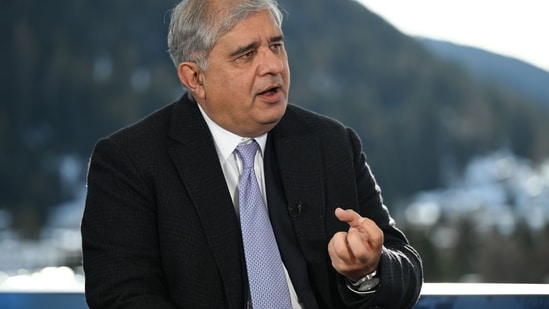
India will need “at least eight to 10” large banks to support economic growth as consolidation gathers pace across the sector, Axis Bank Chief Executive Officer Amitabh Chaudhry said.
“It’s a play across the entire product suite” and “right now we don’t have that” in the nation, he said in an interview with Bloomberg TV’s Haslinda Amin ahead of the World Economic Forum in Davos on Monday.
India is discussing options to create large public-sector banks, which aligns with the government’s need to fund massive infrastructure and industrial projects in Asia’s third-largest economy. Prime Minister Narendra Modi has set a target to transform India into a developed economy by 2047.
India currently has 12 public-sector banks and 21 private banks. Chaudhry said that only five to six lenders in the country are currently set up to offer products across the financial ecosystem.
Currently, only State Bank of India and HDFC Bank Ltd. rank in the top 100 global sector list by total assets. China and the US have rivals among the 10 biggest, according to data compiled by Bloomberg.
Axis Bank Ltd. held assets worth ₹16.76 lakh crore and has branches across 5,976 locations across the country as of end of September.
Smaller banks can choose to serve specific customer segments or product lines, but those aiming to reach a broader base with a wider range of offerings will need to be far larger than they are today, Chaudhry said, adding that Axis Bank is well-prepared to deal with competition.
Either small banks “decide to stay small and just cater to a certain section of the population,” he said. “If they want to be large, if they want to play across the entire spectrum, they need to be much larger.”
Funding remains the key battleground in India’s crowded banking industry, with competition for both assets and liabilities set to intensify as Japanese and other overseas lenders ramp up investments in the industry.
Pressure on deposits is likely to persist amid interest rate cuts by the Reserve Bank of India, Chaudhry said. It could take 18-24 months for deposit growth momentum to return, underscoring the need for liquidity support from the RBI, he said.