Updated on: Jan 31, 2026 11:42:30 AM IST
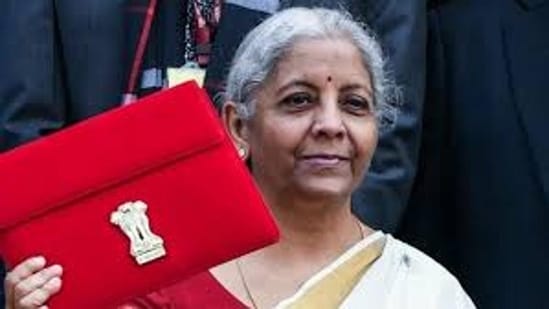
Union finance minister Nirmala Sitharaman will present the 2026-27 budget on February 1, Sunday.
India’s finance minister Nirmala Sitharaman will present the Union Budget for the 2026-2027 fiscal year on February 1, Sunday. This will be the ninth consecutive budget to be presented by Sitharaman, plus one interim budget. The budget will outline the central government’s estimated receipts and expenditures, and feed into its long-term economic planning. Prime Minister Narendra Modi’s BJP-led government has said its goal is to make India a developed nation by the year 2047, ‘Viksit Bharat’.
The budget comes at a time when India is one of the fastest-growing large economies in the world. However, the government faces several specific economic conditions.
Global trade has also become less predictable due to geopolitical tensions triggered mainly by US President Donald Trump’s tariff aggression.
The government must also manage the fiscal deficit. The target is to reduce this to below 4.5% of the Gross Domestic Product (GDP).
In previous years, the government increased spending on infrastructure, or capital expenditure (capex). The 2025 budget saw a significant increase in this area. Many economists are watching if this trend will continue in 2026 too. High capex is usually intended to create jobs, among other targets.
Expectations from Union Budget 2026-27
Business organisations recently shared their views with the finance ministry during pre-budget consultations. The Confederation of Indian Industry (CII) and the Federation of Indian Chambers of Commerce and Industry (FICCI) have submitted lists of recommendations.
One major request was to continue infrastructure spending, reports said. Manufacturing is another priority for the industry, with companies looking for incentives to expand factories in India.
Technology companies and startups have specific requests as well, such as a call for clearer regulations regarding Artificial Intelligence (AI) and renewable energy sources like Green Hydrogen.
The opposition has alleged that the budget could simply serve as an eyewash. Leaders from the Congress, Trinamool Congress (TMC), and Samajwadi Party have said economic growth is not reaching everyone equally. Unemployment is a major theme for the opposition, and the focus is particularly on the repeal of the MGNREGA programme, and its replacement with the VB G-RAM-G rural job scheme.
…Read More
The budget comes at a time when India is one of the fastest-growing large economies in the world. However, the government faces several specific economic conditions.
Global trade has also become less predictable due to geopolitical tensions triggered mainly by US President Donald Trump’s tariff aggression.
The government must also manage the fiscal deficit. The target is to reduce this to below 4.5% of the Gross Domestic Product (GDP).
In previous years, the government increased spending on infrastructure, or capital expenditure (capex). The 2025 budget saw a significant increase in this area. Many economists are watching if this trend will continue in 2026 too. High capex is usually intended to create jobs, among other targets.
Expectations from Union Budget 2026-27
Business organisations recently shared their views with the finance ministry during pre-budget consultations. The Confederation of Indian Industry (CII) and the Federation of Indian Chambers of Commerce and Industry (FICCI) have submitted lists of recommendations.
One major request was to continue infrastructure spending, reports said. Manufacturing is another priority for the industry, with companies looking for incentives to expand factories in India.
Technology companies and startups have specific requests as well, such as a call for clearer regulations regarding Artificial Intelligence (AI) and renewable energy sources like Green Hydrogen.
The opposition has alleged that the budget could simply serve as an eyewash. Leaders from the Congress, Trinamool Congress (TMC), and Samajwadi Party have said economic growth is not reaching everyone equally. Unemployment is a major theme for the opposition, and the focus is particularly on the repeal of the MGNREGA programme, and its replacement with the VB G-RAM-G rural job scheme.
Follow all the updates here:
Jan 31, 2026 11:42:25 AM IST
Ahead of Union Budget 2026, what’s happening to gold, silver prices?
Gold and silver prices are in focus over a significant price surge over the past few days. On Saturday, prices eased slightly after touching record highs earlier in the week. In Delhi, the price of gold on January 31 stood at ₹16,934 per gram for 24 karat gold.
Jan 31, 2026 11:40:31 AM IST
Union Budget 2026 LIVE: Will increase speed, says minister Shivraj Chouhan on Modi govt’s fiscal plans

Union minister Shivraj Singh Chouhan on Saturday asserted that the Union Budget 2026-27 would accelerate the pace towards a developed India under the leadership of Prime Minister Narendra Modi.
The agriculture minister was speaking to the reporters in Chhattisgarh’s Raipur, from where he was set to visit Durg and hold dialogue with the local farmers.
“A prosperous, self-reliant and developed India is being made under the guidance of PM Modi. This budget will increase its speed,” Chouhan said.
Chouhan accused the Congress of opposing development measures, while speaking on the ongoing VB G RAM Act issue, stating that the government had increased employment days from 100 to 125.
“The Congress’s work is to oppose… Every penny will be used for the development of villages,” said Chouhan.
Jan 31, 2026 11:34:21 AM IST
Union Budget 2026 LIVE: Cong’s Jairam Ramesh raises concerns over GDP calculations

Congress MP Jairam Ramesh on Saturday raised concerns over the upcoming Union Budget, questioning whether key figures expressed as a percentage of GDP would require revision after a new GDP series is released later in February.
He flagged possible impacts of changes in inflation measurement on the budget, citing the expected rollout of a new Consumer Price Index series and calling it an issue of policy coordination.
In a post on X, the Congress MP wrote, “First, many of the Budget’s numbers will be expressed as a % of GDP. However, just twenty-six days later on Feb 27, 2026 the new and updated GDP series with 2022/23 as the base is scheduled to be released. Would the Budget numbers then undergo revisions very soon after they are unveiled on Feb 1, 2026?”
He added, “Second, the new Consumer Price Index (CPI) series with 2024 as base is expected to be released on Feb 12, 2026. It is being anticipated that the new series will see a sharp reduction in the share of food prices. If this were to be the case, there will be an impact on the Budget numbers. The Wholesale Price Index too is undergoing revision and presumably that will be made public in the next few months. Either way, it reflects poorly on coordination in policy making.”
Jan 31, 2026 11:31:34 AM IST
Union Budget 2026 LIVE: What are GDP estimates, what Economic Survey said
As finance minister Nirmala Sitharaman gets set present a record ninth consecutive Union Budget on February 1 (Sunday), the Economic Survey released ahead of it estimated India’s potential growth at around 7 per cent.
It also projected that India’s GDP growth in FY27 is likely to remain in the range of 6.8 per cent to 7.2 per cent, reflecting the economy’s medium-term strength supported by reforms and macroeconomic stability.
The survey noted that while global economic conditions remain uncertain and fragile, India’s overall outlook continues to be positive. It highlighted that India’s growth is holding up better than expected compared to many other economies, although risks remain elevated due to global uncertainties, news agency ANI reported.
Jan 31, 2026 11:29:52 AM IST
Union Budget 2026 LIVE: Experts says welfare schemes ‘not properly identifying the truly needy people’
Speaking on expectations from Union Budget 2026, Osmania University Professor M Ramulu spoke of the need for a more targeted approach to welfare schemes.
“In the name of welfare schemes, benefits are often reaching those who are already economically stable. We are not properly identifying the truly needy people,” Ramulu said.
“While 70-80% of the population may be receiving benefits, when poverty is taken into consideration, less than 20% of the poor are actually benefiting,” he claimed, speaking to ANI.
“My request is to correctly identify needy individuals and exclude others. Welfare is important, but welfare should not be limited to free rice alone; education and healthcare are being neglected. Identifying the needy will reduce unnecessary expenditure. This saved expenditure can be converted into productive investments, benefiting people more effectively,” he further said.
Jan 31, 2026 11:27:04 AM IST
Union Budget 2026 LIVE: Economists expect focus on jobs, agriculture, MSMEs, green economy
As the Union Budget 2026 approaches, economists are weighing in on the government’s priorities and potential announcements.
“The present Indian economy plays a vital role, and for sustainable growth, we can look forward with optimism. The government of India is prioritising areas such as job creation, agricultural development, inclusive manufacturing, digital transformation, rural-urban integration, and the green economy,” Osmania University Professor Satish Raikindi said, speaking to news agency ANI.
“By focusing on these priority sectors, India can achieve sustainable growth nationwide. Every common man is looking forward to relief in tax slabs, affordable housing, healthcare, employment and education,” he added.
Osmania University Professor M Ramulu emphasised the need for investments to percolate to small sectors such as startups, small-scale industries, and area-based industries.
Prof Ramulu said, “Most capital is flowing into capital-intensive industries where growth rates and profits are high, particularly in industrial and manufacturing sectors. These investments should also percolate to small sectors such as startups, small-scale industries, and area-based industries.”
He added, “Currently, most investments are concentrated in capital and metropolitan cities, which creates environmental issues, pollution, and excessive population concentration. I expect that in this budget, investments should be distributed across all states, especially toward agro-based industries, small startup manufacturing units, and decentralised industries, rather than focusing only on large industries.”