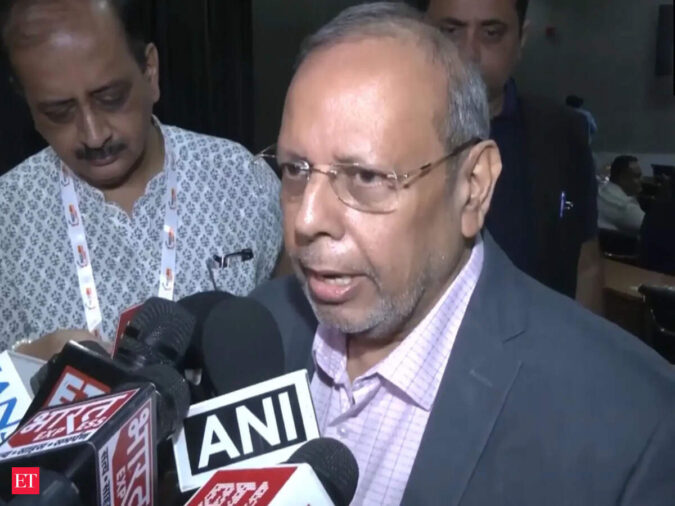
Addressing an event organised by the Institute for Studies in Industrial Development (ISID), Dev said that there is a need to strengthen the competitiveness of all firms because Atmanirbhar Bharat does not mean India is going back to the pre-1991 era.
“And the second is to support both job-creating and frontier industries. Textiles, apparel, footwear, and food processing can create employment on a large scale, while semiconductors, electronics components, advanced materials, and clean technologies can build India’s technological strength,” he said.
Read more: EAC-PM paper suggests consolidation of banks of equal size without compromising market competition
Dev further said it is basically the competitiveness and the quality of the products that “we should increase”.
“Support for these industries should be well-designed, linked to clear goals, and reviewed regularly so that public resources achieve the greatest impact,” he said.
Dev pointed out that land availability is one of the big constraints for industrialisation in India.He noted that due to tariff changes and geopolitical tensions, global supply chains are being redrawn, companies that once relied on a single location are diversifying.
Read more: EAC-PM member Sanjeev Sanyal suggests ending population control policies amid falling fertility
“So they are looking for partners that are large, stable, and trusted. So this is also an opportunity for India,” Dev said.
The EAC-PM chairman observed that India is already benefiting from the shift in global production.
“In just one year, India’s share of smartphones shipped to the United States rose from about one in eight to more than four in 10. So electronics exports have grown more than eightfold in a decade, and are now among our top three merchandise exports,” he said.
The question now is, Dev said, how to turn these early successes into broad-based industrial transformation.
“Global buyers go to production systems that offer scale, competitive cost, and consistent quality. The good news is that the areas where we can improve are well understood, and reform is already underway in each of them,” he said.
Dev pointed out that India does not have middle-sized firms like China and others (firms having 500- 1000 employees).
“The other thing, of course, credit and skills, which we all know, which have to improve, but also the employment question, the manufacturing, because they are becoming capital intensive and skill intensive,” he said.