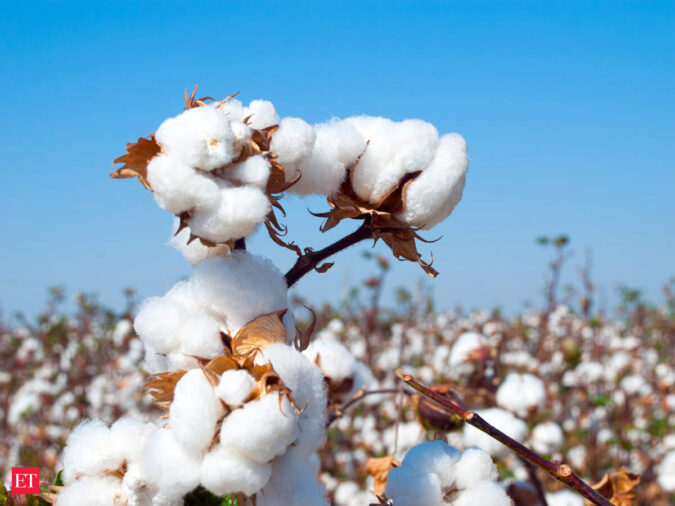
The impact of El Nino weather conditions could further hurt domestic production, expected to fall by 3.4% to a new low in the 2026-27 crop year ended September.
Cotton imports hit a record high in 2025-26 to an estimated 7.1 million bales of 170 kilograms compared to last year’s imports of 5.74 million bales. Prices have also risen more than 7% in the past month.
Industry leaders said prices have climbed ahead of the October 31 deadline for the end of the cotton import duty exemption.
India has given exemption on the 11% import duty on raw cotton for June 1 to October 31. The earlier exemption was given during August 19 to December 31, 2025.
As the new cotton year started on October 1, cotton prices increased by ₹4,500/candy to ₹68,500/candy for the benchmark Gujarat 29-millimeter cotton, showed spot prices data.
India’s cotton imports touched a new high of over 7 million bales in 2025-26. “In 2025-26, the country consumed around 34 million bales and imported about 7 million bales,” said The Southern India Mills Association (SIMA) in a recent letter to finance minister Nirmala Sitharaman. “However, uncertainty in raw material availability continues to cause price instability and industrial unrest.”With the industry seeing signs of increase in export demand from new markets due to the FTAs, cotton consumption is expected to increase in 2026-27. The gap between cotton demand and supply is expected to widen to more than 9 million bales from last year’s 7 million bales.
“We have seen an increase in export demand from the UK in the last couple of months,” said K Selvaraju, secretary general, SIMA. “Cotton demand for the forthcoming season may exceed 36 million bales due to FTAs, including the UK FTA.”
“El Nino and drought have affected the cotton crop in several regions and production may fall below 28 million bales,” he said. “This could trigger shortages of quality cotton. Cotton demand will rise further if the EU FTA is implemented in 2027.”
Domestic cotton prices have surged above the minimum support price levels in recent weeks due to expectation of a lower crop and uncertainty about extension of the import duty exemption, said industry veterans.
“Ginning has become challenging as yarn prices haven’t increased in proportion to the increase in cotton prices,” said Pradip Jain, president, Khandesh Ginners’ Association. “Farmers are holding the crop expecting prices to rise further.”
Industry leaders observed that many farmers have opted for taking only one picking this year and cleared their fields for alternative crops due to lack of moisture. Cotton yield is also likely to fall this year.