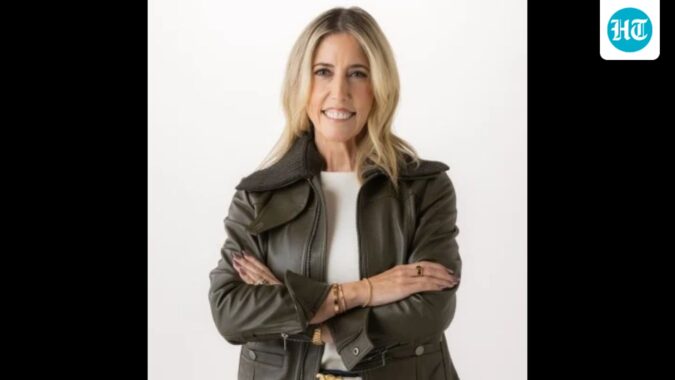
Business leaders who boast about working 14-hour days while surviving on just 4 hours of sleep are setting a “terrible example” for their employees, according to ServiceNow president and chief financial officer Gina Mastantuono.
Speaking at the Fortune Most Powerful Women Summit in Santa Barbara, California, Mastantuono said some senior executives continue to take pride in working long hours and sleeping less, believing it demonstrates their dedication.
“There’s always been this—if you have to work 14-hour days and you get four hours sleep, and that shows that you’re working the hardest and you deserve the most. And in fact, that is such a terrible example for the people around us,” she said.
‘Recovery is part of the performance’
Drawing a comparison with physical training, Mastantuono stressed that rest is essential for sustained performance and should not be treated as an afterthought.
“Recovery is part of the performance; it’s not secondary. Muscle doesn’t grow when we pump out at the gym. It grows when we’re sleeping at night and letting the muscles recover,” she said.
Mastantuono also shared that she has experienced the benefits of better work-life balance herself, noting that taking care of oneself can improve decision-making, listening skills and the ability to remain calm under pressure. These qualities, she added, help teams execute more effectively.
“When we do focus on taking care of ourselves, then we are much better bosses, much better colleagues, much better parents,” she said.
(Also Read: Founder of $60 billion AI company says his team doesn’t work overtime, reveals why)
Business leaders divided over work-life balance
In recent times, business leaders have shared contrasting views on sleep, productivity and work-life balance. While some advocate flexible schedules and adequate rest, others believe success demands long hours and intense commitment.
United Airlines CEO Scott Kirby recently offered a glimpse into his schedule, which includes 8.5 hours of sleep, early-morning workouts, three hours of reading and a four-hour cap on meetings. The 59-year-old executive described himself as “probably the least stressed person you’ve ever met”, despite running a major airline and travelling frequently.
Hardik Jagda, 35, founder and CEO of San Francisco-based Proximity Works, also described a routine inspired by Olympic athletes, balancing focused work with rest and recovery. Jagda generally works six days a week, but he said that he does not expect his employees to follow the same schedule. Jagda’s approach challenges the so-called ‘996’ work culture, which requires employees to work from 9 am to 9 pm, six days a week, arguing against measuring productivity simply by the number of hours spent working.
Meanwhile, former Google CEO Eric Schmidt recently argued that succeeding in the tech industry requires trade-offs. He stated that winning in high-tech industries requires hard choices and high-intensity, in-office collaboration rather than a primary focus on comfort or working from home.
Similarly, Zomato founder Deepinder Goyal has also previously argued that building a successful startup requires more than a conventional 9-to-5 approach. He emphasised that founders and senior leaders must be deeply invested in their work, particularly during the early stages of a business, when the pressure to build, scale and compete is intense.