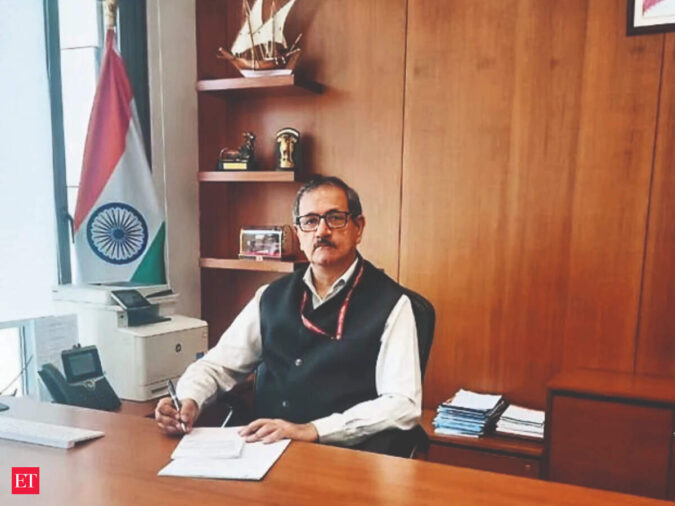
“The opportunity does not automatically translate into growth,” he said on Tuesday, underlining the need for enterprises to build greater trust through quality and become globally cost-competitive. Speaking at the CII Global MSME Business Summit, Khera said government schemes aimed at promoting exports would need to be complemented by practical assistance and handholding, particularly for first-time exporters.
The goal, he said, is to make MSMEs more productive, innovative, resilient and globally confident. “One that creates more employment, contributes much more to exports, strengthens the manufacturing and supply chain,” he said. The secretary highlighted the five priority areas for the government to enhance MSME competitiveness: formalisation, access to finance, technology and quality, export competitiveness, and entrepreneurship and enterprise development. These five key points are closely interconnected, according to Khera. “Formalisation improves access to finance, technology and quality upgrades support productivity, and stronger export capabilities create opportunities for sustainable growth,” he said.
The MSME sector accounts for 30% of the gross domestic product (GDP) and around 49% of exports. Khera said that in this environment, boosting the competitiveness of Indian MSMEs is essential for economic growth and achieving the vision of Viksit Bharat. He noted that consistent quality, competitive pricing and reliable delivery schedules are crucial for Indian suppliers seeking to expand their presence in global markets.
Additionally, he called for upgrading the country’s testing infrastructure to ensure that products manufactured by Indian enterprises conform to international standards. Certification remains another area requiring attention; while participation in bronze-level certifications has improved, the uptake of silver and gold tiers remains low, leaving significant scope for progress.
As per a CII and Indian School of Business study, 32% of the surveyed MSMEs held recognised certification. Among non-certified respondents, 50.9% said their customers did not require certification, while 30.4% cited a lack of awareness.