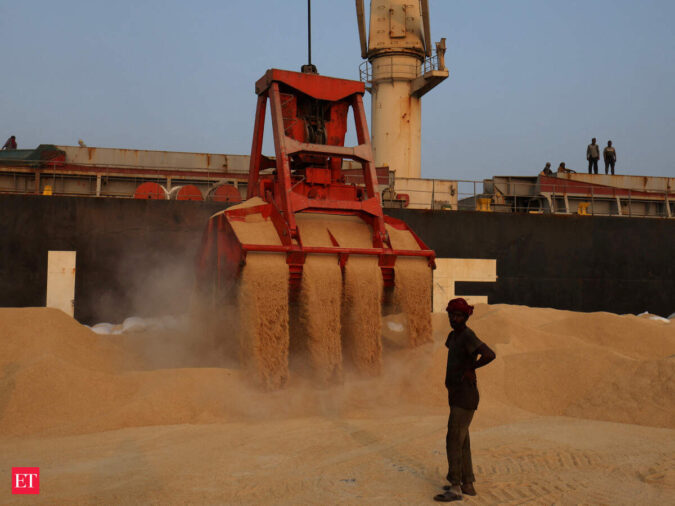
Niger was the biggest declared supplier of soybeans to India in the first seven months of this year, trade ministry data showed, despite producing no significant quantity of the oilseed.
India allows duty-free imports from countries categorised as least-developed, such as Niger, which produces less than 100 metric tons of soybeans a year, according to assessments within Africa’s soybean milling industry.
Neighbouring Nigeria, by contrast, is Africa’s leading producer and exporter of the oilseed, although it ranks much lower globally.
Customs authorities are asking importers to prove that soybean shipments declared as originating in Niger qualify for duty-free treatment, two government and two industry sources aware of the matter said.
Importers would have to pay the full 45% import tariff if the cargoes are found to have been mislabelled, the sources said.
IMPORTS ‘EXCEED USUAL LEVELS OF PRODUCTION’ IN NIGERThe development highlights India’s reliance on imported soybeans after a hit to domestic production from dry conditions following last year’s floods. It could create an opportunity for Togo and Benin to expand soybean exports to India through official channels.
India’s soybean imports surged to a record 909,606 tons in the first seven months of 2026 from just 1,996 tons a year earlier, while shipments declared as originating in Niger rose to 380,868 tons from zero, trade ministry data showed.
“The production data of soybeans in Niger is very much less. Therefore, it appears that import quantity exceeds the usual levels of production and export capacity of Niger,” the customs department said in notices sent to importers and seen by Reuters.
Indian customs authorities had cleared the consignments after importers submitted documents required for duty-free clearance, including certificates of origin and phytosanitary certificates issued by Niger, the sources said.
Niger is landlocked, and soybean shipments from the country can be routed through neighbouring Nigeria.
Customs authorities have asked importers to provide details of inland transportation, including transit permits issued for cargo moving from Niger.
‘NOT POSSIBLE FOR US TO PHYSICALLY TRAVEL TO AFRICA’
Indian importers said they did not have some of the details sought by customs and had asked their overseas suppliers to provide the records.
“We imported the soybeans after suppliers told us they originated in Niger and provided all the necessary documents,” said an importer who received a customs notice.
“It is not possible for us to physically travel to Africa to verify the origin ourselves,” the importer said.
Indian importers began receiving the notices late last month and have since stopped purchasing soybeans declared as originating in Niger, a Dubai-based exporter said.
Goods that have landed at ports and are now in transit are likely to get stuck, as neither importers nor exporters want to pay the 45% duty, the exporter said.