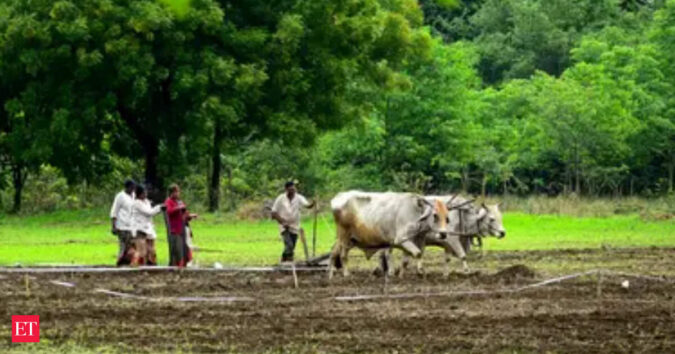
The total area under summer-sown crops stood at 1,107 lakh hectares (as of September 25), according to the latest acreage data. While this represents a decline of just over 1% from last year’s 1,121 lakh hectares, it remains 3 lakh hectares above the normal acreage of 1,104 lakh hectares.
The data, which came as kind of a pleasant surprise, is worth taking note of, given that monsoon rainfall between June 1 and September 26 was 12% below normal. The corresponding period in 2025 had received 8% more than normal rainfall, yet kharif acreage was only marginally higher.
Going by the sowing pattern, farmers may be adjusting cropping decisions when rainfall risks are flagged ahead of the season, ToI’s report (by Vishwa Mohan) said.
Also read | Karnataka announces Rs 2,500 input subsidy for drought-hit farmers
The full picture, though, is a little while away: the impact of the deficient and uneven monsoon will become wholly clear only after crop yields are assessed and the numbers released, which is expected shortly.
Paddy acreage: A fall, but remains above normal
Paddy, the country’s most widely grown kharif crop and among the most water-intensive, covered less area this year. Its acreage was 3.6% lower than last year, but remained 4.6% above the normal level.Sugarcane also recorded acreage above its normal area. The trend indicates that farmers continue to favour crops that offer the prospect of stronger returns, even when their cultivation requires greater dependence on groundwater.
Such reliance, however, can raise input costs, particularly when rainfall is inadequate and farmers have to compensate through additional irrigation.
The agriculture ministry is expected to release the first estimates of crop yields shortly. These figures will provide a clearer indication of how the rainfall deficit has affected production.
Pulses, oilseeds to be under pressure?
The production outlook for several other kharif crops remains a concern because rainfall was not only deficient but also unevenly distributed.
Pulses, particularly pigeon peas, along with oilseeds such as soybean and groundnut, could be vulnerable. Cotton and coarse cereals, including bajra and maize, are also being watched closely.
Also read | Indian agriculture enters new phase as diets, incomes and climate reshape farming
The monsoon core zone, covering a large part of central India and Bihar, is particularly exposed because farming there depends heavily on seasonal rainfall amid inadequate irrigation coverage.
Weather-related disruptions have also been uneven across regions. Flooding in parts of Bihar and Assam and drought conditions in some areas of Maharashtra and Karnataka could weigh on overall crop output.
Rabi season: A fresh challenge
The concern is now extending beyond the kharif harvest to the upcoming rabi season.
A deficient monsoon could leave lower moisture in the soil and limit the availability of water for irrigation, potentially affecting winter-sown crops.
Against this backdrop, the agriculture ministry will hold a meeting to discuss contingency measures for the rabi season. The meeting comes as policymakers assess whether the relatively resilient kharif sowing numbers can translate into stable production despite the season’s uneven rainfall pattern.