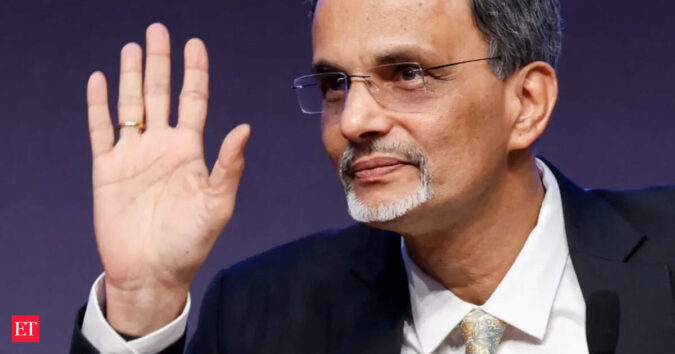
The CEA said that trade has been weaponised well beyond the US, pointing to export licensing, supply-chain chokepoints and similar moves by China and the EU.
At an event organised by the Public Affairs Forum of India, he said that unsettled relations with the US and the absence of an AI-play pose near-term headwinds to foreign capital flows into India but hailed India’s ability to attract foreign capital with its broader manufacturing and overall reforms, stressing that the most important thing for the industry is global competitiveness.
Also read | RBI fixes H2 Ways and Means Advances limit for government at Rs 50,000 cr
The global environment in which investment decisions are made has shifted, he said, making it important to assess India’s foreign direct investment performance in that context.
“Given India’s location, size and geography, India cannot afford to choose. The answer is therefore hedging… and hedging will have a significant cost. And that has to be factored in in our decision making, both in the public and the private sector,” Nageswaran said, adding that rising bond yields in advanced economies will make investors less willing to send capital to emerging markets, and “there will be pressure on capital mobilisation for a while.”
He added that the narrowing gap between Indian and American bond yields, though welcome, could itself deter investors, who still expect a premium of 200-300 basis points, and that markets will take time to recognise that rich-country debt has become riskier.Also read | India, 17 others reserve rights to join Russia’s CBAM dispute with EU as third party at WTO
Cautioning that India cannot count on its demographic dividend, he cited pressures on young people’s mental and physical health, along with changing skill needs, meaning that the 1.5-2 percentage points a year that demography typically adds to growth “cannot be taken for granted”.