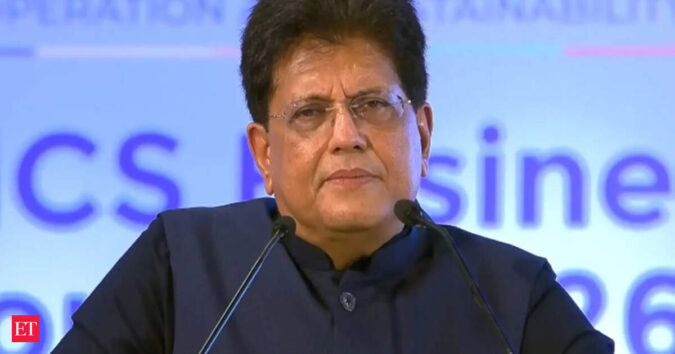
Reuters reported on Monday that Goyal said India was examining the details of the US tariff provisions, days after the US House of Representatives passed a sweeping sanctions and tariffs bill aimed at increasing economic pressure on Russia over its war in Ukraine.
US President Donald Trump has since signed the Lindsey O. Graham Sanctioning Russia and Iran Act of 2026 into law, giving his administration the power to impose tariffs of up to 100% on countries that continue to buy Russian oil and gas. The measure could expose major buyers such as India and China to higher duties on their exports to the US.
The legislation, signed on September 18, expands sanctions on Russia’s energy and defence sectors and targets its so-called “shadow fleet” and other entities accused of helping Moscow evade sanctions. The law takes effect within 30 days.
Under the new framework, Trump can impose duties of up to 100% on goods imported from the five biggest buyers of Russian crude oil or natural gas, based on purchase volumes during the 12 months before the law was enacted. It also covers countries that knowingly make new purchases of Russian oil or gas after the law takes effect, as well as the top five countries helping Russia evade sanctions.
India and China are among the biggest buyers of Russian crude, putting them at the centre of the potential tariff risk. However, the legislation does not name the countries that will ultimately be targeted, leaving the Trump administration to determine which nations qualify and what tariff rates they could face.
For India, the measure adds another layer of uncertainty to its already closely watched trade relationship with the US. New Delhi has defended its purchases of Russian oil on energy-security grounds, arguing that access to affordable crude is important for keeping domestic fuel costs under control.
The potential tariff threat also comes as India continues to rely heavily on imported crude to meet its energy needs. Russian oil has become an important part of the country’s import basket since Moscow’s invasion of Ukraine, as Indian refiners increased purchases of discounted Russian crude after Western sanctions disrupted traditional trade flows.