Sen. Angela Alsobrooks was wrapping up her holiday break this January when she noticed a message on her phone. It was a voicemail from Coinbase Chief Executive Brian Armstrong, and it was about three minutes long.
The Maryland Democrat was a key negotiator over a landmark bill meant to usher digital assets into wider use. The two had been talking for months. When conversations with Alsobrooks and other lawmakers grew tense, the CEO could speak in a tone that some people working on the bill felt was inappropriate when talking to U.S. senators.
Armstrong, crypto’s highest-profile advocate on the Hill, admonished the senator for changes she was pushing that could have hit the brakes on Coinbase’s ability to pay interest-like rewards on digital tokens. Banks, fearing it would lure away customer deposits, were fighting furiously to ban the practice.
His message to the senator in the voicemail, according to people familiar with it: If you give banks an inch, they’ll take a mile.
Less than two weeks later, the Coinbase CEO shocked his own industry by pulling his support for an early version of the bill just as it was poised to advance. “We’d rather have no bill than a bad bill,” he posted on X before a key Senate vote on Jan. 15.
That bill, called the Clarity Act, collapsed this week after months of protracted negotiations when senators officially voted it down. It marked a spectacular choke by an industry that had just recently begun reveling in its new lobbying clout, with President Trump in its corner.
The blame game began immediately. Some crypto executives and lawmakers pointed to Democratic resistance after Trump’s massive crypto profits, disclosed in June, raised fresh ethics concerns about the president’s businesses. The war in Iran, inflation and the backlash against data centers and rogue artificial-intelligence agents all became bigger priorities for lawmakers as 2026 dragged on. Others said the industry squandered its chance to close the deal earlier in the year, before any of those forces gathered steam.
Armstrong, the CEO of the largest U.S. crypto exchange, was at the center of it all and exercised the crypto industry’s sway over the bill as its de facto leader in the Washington fight. Few other people, aside from Trump, had as much influence as Armstrong, according to people involved in the negotiations. He visited Washington 13 times from the 2024 election to the September vote, and his lobbying team for months held multiple weekly calls with industry members to discuss tactics on the bill, an extraordinary level of engagement for the company and its CEO.
The 43-year-old billionaire could effectively veto portions he didn’t like, and did, the people said, frustrating an already complex process. Some in the industry backed his hard-line stance.
“We had a lot of momentum in January,” said Brad Garlinghouse, CEO of Ripple, which supported the bill. “Then one group in our industry kind of shot ourselves in the foot.”
Coinbase has said Armstrong’s decision to pull his support in January was in the best interest of the crypto industry, and that it had identified multiple parts of the bill that were problematic.
“We repeatedly took compromises in order to keep the coalition together and move the legislation forward,” said Faryar Shirzad, Coinbase’s chief policy officer, in a statement.
A power broker emerges
Armstrong, who co-founded Coinbase in 2012, emerged in 2024 as a major political fundraiser and donor for Republicans, helping make crypto a constituency to be reckoned with.
After Trump’s inauguration, Armstrong quickly carved out a role for himself lobbying on crypto legislation.
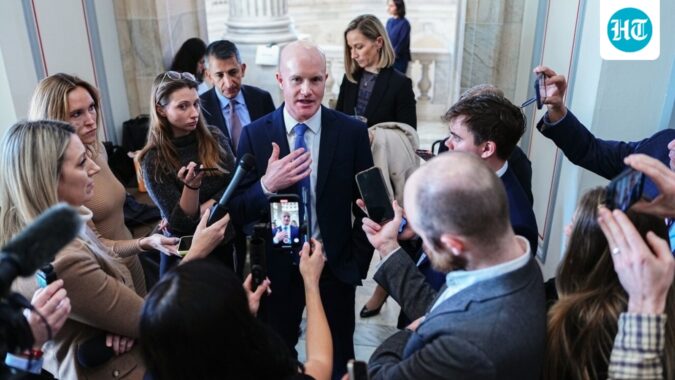
His first test was the Genius Act, a bill to regulate stablecoins—a type of digital asset pegged to real-world currencies, like dollars. The Coinbase chief cut a striking figure, bald and dressed in navy suits, when he visited lawmakers on Capitol Hill to push for the bill. It ended up garnering significant Democratic support, and Trump signed it into law last summer.
It was a major victory for the industry, and showcased Armstrong’s new status as a crypto power broker.
Then came the Clarity Act.
The bill was intended to be a sister to Genius, but far more ambitious in scope, addressing crypto’s many subindustries. After facing regulatory crackdowns and prosecutions during the Biden years, crypto companies wanted a permanent framework on the books to ensure they could roll out new products without fear that when the political winds changed, bureaucrats would come down hard on them once again. A new law would also move crypto further into the mainstream of the financial system.
For the banking industry, it was another chance to stamp out a feature of the crypto ecosystem it viewed as akin to paying interest on deposits—and a competitive threat. Stablecoin issuers were already banned from paying yields on their tokens, but banks also wanted to stop partnerships they felt got around the prohibition.
Coinbase provided the most high-profile example. The company has a lucrative revenue-sharing agreement with Circle, issuer of the popular USDC stablecoin, based on the amount of USDC on its exchange. Separately, Coinbase recently advertised rewards of 3.75% annually for USDC.
The banking industry’s advocates argued that arrangements like Coinbase’s could lead to a massive deposit flight, jeopardizing their ability to lend and keep the economy humming.
As discussions over Clarity ramped up, Armstrong became an aggressive opponent of restrictions that would prevent Coinbase from continuing its rewards program. When negotiations grew difficult, he could become inflexible, leaving even the bill’s staunchest allies in the Senate feeling slighted, people involved in the process said.
Armstrong didn’t hesitate to bypass congressional staff or speak sharply to senators—including ones who were ultimately trying to help him pass the Clarity Act, the people said.
The fight over stablecoin yields blew into public view in January. A messy early attempt at drafting the bill had left Armstrong and others unhappy with Clarity’s direction, according to people involved with the negotiations.
In a statement, Coinbase’s Shirzad said Armstrong has strong relationships with senators on both sides of the aisle, and that he approaches those conversations with respect.
“These were high-stakes negotiations and there were certainly moments of disagreement, but disagreement should not be confused with disrespect,” he said in the statement.
A spokeswoman for Alsobrooks said she doesn’t comment on private conversations, but has had positive and productive conversations with Armstrong and other digital asset and banking leaders. “Senator Alsobrooks’ goal remains regulating this billion-dollar emerging technology,” the spokeswoman said.
A 15-page peace offer
Soon after the Senate committee vote was scrapped, Armstrong was on TV, accusing banks of giving away consumer deposits without their consent—a reference to their long established lending practices. His remarks angered top Wall Street executives. At the World Economic Forum in Davos later in January, JPMorgan Chase’s Jamie Dimon stuck a finger in Armstrong’s face and called him “full of s—,” The Wall Street Journal reported.
The ensuing hard feelings led to five months of negotiations over stablecoin rewards. Some in the crypto industry began to feel they were losing ground on more central matters.
In May, Sens. Alsobrooks and Thom Tillis (R., N.C.) announced a compromise that wouldn’t flat-out ban rewards on stablecoins, but would force Coinbase to change its program. Armstrong signed off on it, with the company saying it was a significant concession. The banking industry said it didn’t go far enough.
Senate negotiators turned to a slew of outstanding issues. Securing at least a handful of Democratic votes was key to the bill’s passage. In late June, Republicans made a push to re-engage with their counterparts, presenting Democrats on the Senate Agriculture Committee with a 15-page list of potential compromises, according to people familiar with the negotiations. By the next day, Democrats said they were ready to accept many of the proposals, the people said.
Then Armstrong objected.
Republicans were forced to shelve a number of their proposals after learning the Coinbase CEO didn’t support some of them, the people said. Democrats were flummoxed.
Shortly after, the politics around the bill became far more fraught. Trump revealed $1.4 billion in income from his family’s meme coin and crypto businesses in 2025, an unprecedented windfall for a U.S. president.
Democrats pounced on the disclosure as an issue to hammer home heading into the midterms. They also doubled down on ethics provisions in the Clarity Act that would ban public officials from owning crypto, and wanted it apply to Trump and his family, so that the president and his sons would be forced to divest themselves from their vast crypto holdings.
The Trump factor
By late summer, the Clarity Act had sprawled to more than 600 pages.
Republicans and Democrats were growing increasingly frustrated with the process and the number of negotiators on both sides of the aisle, according to people familiar with the negotiations. The banking industry used the time to chip away at the bill, with community bankers traveling to Washington to speak with their representatives about what they viewed as an existential threat.
Meanwhile, Senate aides in both parties were exasperated with the crypto lobby and especially with Armstrong and his team, who continued to wield their influence to extract concessions they viewed as good for Coinbase and the industry.
Talks got so heated that, earlier this year, staff for Sen. Cynthia Lummis (R., Wyo.)—a key architect of the bill and one of crypto’s biggest allies in Congress—began refusing to meet with a member of Armstrong’s lobbying team, the people said.
A spokeswoman for Lummis said she wouldn’t comment on private meetings, but that she has maintained “a great relationship with Coinbase and is grateful for their continued dedication to getting the Clarity Act across the finish line.”
The Senate had left for August recess without a vote on the bill when the president called top crypto executives, including Armstrong, to a meeting at the White House that was streamed online. The president told jokes and later showed executives around the Oval Office.
Last weekend, Senate Republicans released a version of the bill with new concessions from Trump, including language that would require the president to put his crypto holdings in a blind trust. Democrats weren’t satisfied.
A White House official said the Trump administration agreed to the most comprehensive and wide-ranging ethics provision in history.
On Tuesday, the bill failed to draw the 60 votes needed to advance it over one of its final procedural hurdles. Shares of Coinbase closed down more than 10%. Two days later, the industry regained momentum when the Securities and Exchange Commission cleared the path for tokenized stocks to trade in the U.S. Coinbase shares jumped 12% on Friday.
Early Saturday morning, Armstrong said the final bill was an improvement on earlier drafts, even as he acknowledged that it failed. “I’m proud to have done it, and would do it again, because it helped create a better bill. One step of many along the way,” he wrote on X.
Write to Dylan Tokar at dylan.tokar@wsj.com, Kevin T. Dugan at kevin.dugan@wsj.com and Vicky Ge Huang at vicky.huang@wsj.com