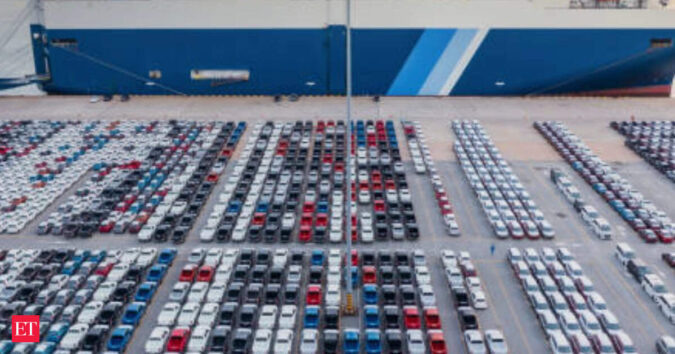
The Directorate General of Foreign Trade had earlier invited applications for the allocation of 2026 import quotas for fully-built passenger cars and goods vehicles under the tariff rate quota (TRQ) provisions of the India-UK Comprehensive Economic and Trade Agreement (CETA). The pact came into effect July 15.
Also Read: Car sales jump over 30% in August as festive demand builds
Applications were sought for an annual quota of about 5,000 vehicles. “The directorate had received applications from eight companies,” the official said. “We have approved applications of seven. Quota has been approved for 642 cars,” the official said, adding one applicant received a deficiency certificate.
The approvals have been given for the remainder of this year as the pact was implemented from July. The official said the number of applications was significantly lower than the available quota, emphasising that only companies applying and meeting the criteria secured their vehicle allocation approvals.
Also Read: PVs drive auto sales to record August high as India gears up for festive season
Under the CETA, New Delhi has permitted imports of 378,000 fossil fuel-powered passenger cars, including those in the mass segment, from the UK at concessional customs duty in the first 15 years of its implementation.
Tariffs on such car imports will drop to 10% from about 110% with quotas on both sides. Only original equipment manufacturers (OEMs), dealers and channel partners duly authorised by the OEMs of vehicles originating in the UK are eligible to apply for the TRQs. Under the FTA, the first-year TRQ is 20,000 cars, divided across three engine capacities with quotas of 10,000, 5,000 and 5,000 units.