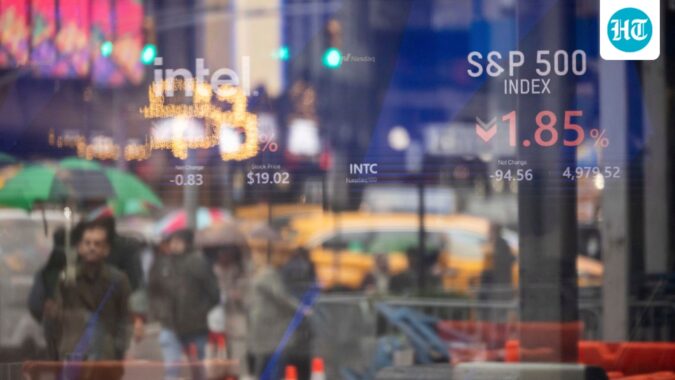
The S&P 500 fell on Tuesday as government bond yields rose sharply. The rise in yields increased fears about higher inflation and borrowing costs. The S&P 500 fell 0.5%. The Nasdaq Composite fell even more, dropping 1.1%. Semiconductor stocks saw heavy selling, putting more pressure on the index.
Semiconductor stocks were among the biggest losers. Western Digital fell nearly 7%, while Sandisk dropped about 8%. Marvell Technology and Seagate Technology also fell around 8% each, adding to pressure on the technology-heavy Nasdaq, according to CNBC.
The Dow Jones Industrial Average also ended lower, falling 77 points, or 0.1%. Home Depot helped limit the Dow’s losses. Its shares rose about 1% after the home improvement company reported better-than-expected second-quarter earnings.
Bond yields hit fresh highs
Investors were increasingly concerned about a surge in government bond yields across major economies. The US 30-year Treasury yield climbed to a fresh 19-year high on Tuesday, reflecting growing demands from investors for greater returns to hold long-term government debt.
Also read: Why are Russians pulling billions from banks? Fears of Putin’s asset grab grow
The rise in yields was not limited to the US Japan’s 10-year government bond yield reached its highest level in three decades, while Germany’s 30-year yield rose to its highest since 2011. France’s 30-year government bond yield also reached its highest level since 2008.
Higher bond yields can weigh on stocks by raising borrowing costs and making fixed-income investments more appealing relative to equities. Investors are also concerned that yields could stay elevated for longer as inflation remains a lingering pressure across major economies, according to CNBC.
Oil prices add to inflation fears
Rising oil prices are another major concern for investors. Higher oil prices can increase costs for businesses and consumers and make it harder for inflation to cool. Oil prices have climbed as investors worry that crude could remain expensive for longer because talks between the US and Iran have stalled.
US crude rose on Monday and gained nearly 1% on Tuesday, trading above $85 a barrel. The rise in oil prices has increased concerns that inflation could remain high, which could make it harder for central banks to cut interest rates.
Iran tensions keep markets nervous
Hopes for an end to the Middle East conflict weakened further on Tuesday after President Donald Trump said the US was not currently holding talks or conversations with Iran. Trump said in a Truth Social post that there were also no talks with Iran currently scheduled, according to CNBC.
Also read: Anthropic IPO could beat SpaceX for biggest IPO of 2026 as revenue nears $65 billio
Trump also said the US naval blockade remains in full force and effect, adding to concerns about continued tensions in the region. The latest comments came after Trump said on Monday that he would attack Oman if it gets in the way of US efforts to negotiate with Iran.
The lack of progress between Washington and Tehran has increased uncertainty over the conflict and raised fears that oil supplies and prices could remain under pressure. For the stock market, the combination of higher bond yields, elevated oil prices, inflation fears and falling semiconductor stocks created a difficult trading session.
The S&P 500’s 0.5% decline showed that investors are becoming more cautious even as corporate earnings and the AI boom continue to support parts of the market.