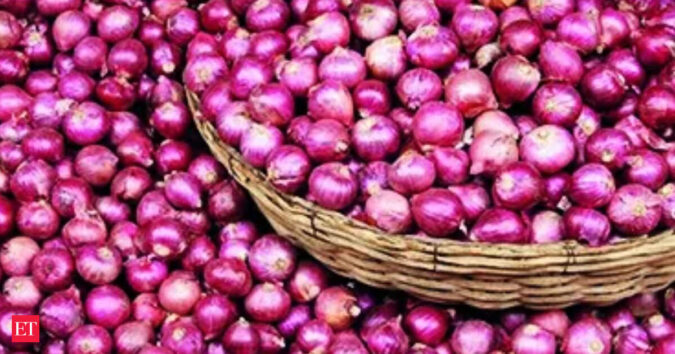
Traders said prices are expected to rise further, following a delay in the arrival of the kharif onion crop from southern India due to late sowing.
The government is expected to start selling buffer stock onions from the first week of September. This year, onion procurement is estimated to be about 25% lower than the targeted 200,000 tonnes despite the government increasing the minimum assured procurement price seven times for the season.
Also read: Onion, chicken prices make home-cooked meals costlier in July: Report
Average onion prices touched ₹27 per kg on Wednesday, up about 25% from ₹21.50 per kg on August 5, at the Lasalgaon Agricultural Produce Market Committee. Prices of the best quality onion jumped to ₹30 per kg from ₹24 per kg during this period.
Onions from the rabi harvest, which go into the storages in March and April, are the main source of the commodity for the country till October. They get supplemented by a small kharif crop from Karnataka, Telangana and Andhra Pradesh, followed by the main kharif harvest arriving from October from key states such as Maharashtra and Madhya Pradesh.
“Onion prices will remain firm in the coming weeks. However, the critical factor that will decide the price trajectory in the coming months will be weather during September,” said Danish Shah, a veteran onion exporter from Maharashtra. “If rainfall damages the new crop from south India, it can exert an upward pressure on prices. However, if we get good quality new crops, then prices will remain under control.”Also read: Govt raises onion procurement price by 13% as buffer stock buying struggles
Kharif sowing in Maharashtra has been delayed due to the late onset of monsoon in the state, which is expected to delay the kharif harvest from Nashik region. This increases the importance of the southern crop for price stability, said traders.
Although there was no decline in the production and storage of the rabi onions, the quality of the crop is not good, according to traders.
“This year, the onion quality suffered not only in India but also globally due to erratic weather,” said Shah.