The global semiconductor supply chain is notoriously unforgiving. Over the past twelve months, the broader tech industry has watched a component conundrum ripple across supply chains worldwide. PC makers scrambled for stocks of RAM, storage, and processors from both Intel and AMD. For consumers, this translates to wild price fluctuations and often vanishing inventory. Yet, amid this macroeconomic turbulence, Acer India quietly surged to the number two spot in the country’s PC market in Q1 2026, capturing a formidable 21.3% market share. That is, according to research firm IDC’s India Quarterly Personal Computing Device Tracker for the period.
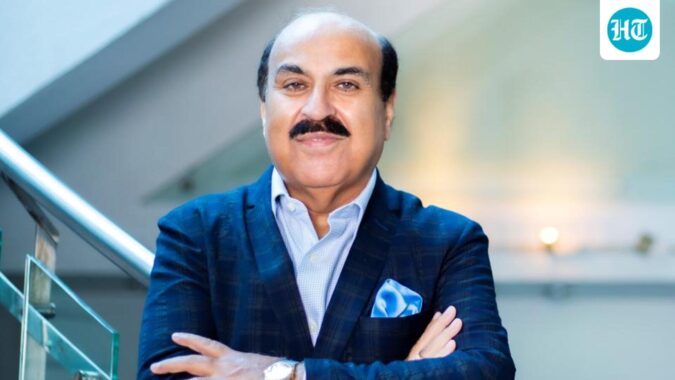
“It all started to go wrong around this time last year. The first few months are bad because you’re not prepared. But experience starts to teach you. The way forward was very, very clear — it has to be planning, planning, and planning,” says Harish Kohli, president and managing director for Acer India, in a conversation with HT, reflecting on the geopolitical and supply chain shocks.
Kohli isn’t speaking in platitudes. As chipsets became scarce, Acer faced a dilemma: whether to downgrade specs from DDR5 memory to DDR4 to maintain volume. However, mismatched chipset availability across Intel and AMD platforms threatened to further fragment choices. Instead of jumping between technologies to chase short-term shipments, Acer focused on standardisation.
By budgeting pricing based on calculated delivery windows, the company shielded its channel partners from erratic price hikes that plagued competitors trying to pad their market share numbers. “We managed it to a very large extent by doing a lot of homework to determine when delivery is likely to happen and budgeting the pricing based on that — whether a price will be valid for 30 days or 45 days. We avoid dramatic month-to-month price jumps that confuse channel partners and customers. Some brands inflate prices by 20% to chase shipment numbers, but we don’t do that globally or in India,” Kohli says.
The strategy paid off, allowing Acer to execute massive, time-sensitive orders. “Thankfully, we have come through the last nine difficult months unscathed, even executing large, time-bound transactions — like supplying notebooks for ELCOT before the Election Commission declared the election schedules,” he says. The Tamil Nadu government had earmarked ₹2,000 crore for distribution of laptops for college students for the financial year 2025-26. In a revised order in October last year, Acer was given an order for 5,50,000 laptops, alongside HP India (3,50,000 laptops) and Dell India (1,00,000 laptops)
This Q1 shipment milestone stands in stark contrast to Acer’s global positioning, where the brand is heavily anchored in the consumer space. In India, however, Acer’s operational DNA is built differently. To understand how the Taiwanese tech giant navigated the silicon shortage — and where it plans to take the Indian smart ecosystem next — Kohli says we must rewind 27 years.
Commercial roots in a consumer world
Acer completes 27 years in India this September. When the company first entered the subcontinent in 1999 via a joint venture with Wipro, India’s PC market hovered at roughly 3.4 million devices. A massive 88% of that market was commercial at the time. Consequently, Acer India built its entire logistical backbone and customer support framework to serve enterprises, not just retail shelves. That expansion came much later
“In 2001, State Bank of India had 8,000 branches undergoing automation,” Kohli recalls, quipping that they had critical footprint. “Acer supplied 88% of those servers. We used to joke internally that if Acer shut down, we’d affect the banking sector so much they wouldn’t let us die,” he recalls.
Selling to businesses including public sector banks as well as oil and gas conglomerates meant Acer had to deliver, and service, hardware in the most remote corners of the country. Long before seamless GST networks and modern e-commerce logistics, Acer was navigating a labyrinth of state-level octroi ‘nakas’ and requirements for local entry permits. They pioneered a hub-and-spoke logistics model out of necessity, partnering with localised transport fleets to clear regional tax hurdles.
Today, while Acer globally leans heavily on retail consumers, Acer India maintains a unique 53% commercial and 47% consumer split. It is this enterprise-grade backbone that allows the brand to punch above its weight in the retail sector today.
“I have been trying for 27 years to flip our Indian mix to 51% consumer and 49% commercial, but I still do about 53% commercial and 47% consumer! Because of that foundation, we cater to the full market—enterprise and consumer alike—rather than focusing on just one,” Kohli says.
Make in India, since much before
“Manufacturing is in our DNA,” says an uncompromising Kohli. While the ‘Make in India’ became a major national talking point over the last few years, Acer set up their first factory in Pondicherry within the first three months of beginning operations in India in 1999.
“Today, 100% of our desktops and nearly 70% of our notebooks are made in India, alongside interactive flat panels, all-in-ones, displays, and even servers. Over the last two and a half years, we’ve also brought our consumer electronics — like televisions and air conditioners — into the Make in India initiative,” says Kohli.
It isn’t just products that draw on localisation. Over the last three years, Acer has expanded into several new companies in India — Acer Pure, Altos, High Point India, and Acer Apparel. “We used to be just Acer India for our first 24 years, but now we have registered four more entities here. Acer Pure handles consumer electronics; Altos takes care of workstations, servers, and school robotics labs; and High Point India is a public-listed services company handling multi-brand, multi-product repairs and facility management,” says Kohli.
The latest entrant is Acer Apparel, which brings in smart, solution-oriented luggage where 99% of the materials are recycled from post-consumer waste. “We are even working to move that luggage manufacturing locally to India,” he says. Kohli confirms to HT that in the next year, two or three more companies will join, and by the end of 2027, there may be as many as ten companies under the Acer India umbrella. The intent is an operational model for these new companies, which Kohli describes, as similar to that of a mother and child.
To anchor this expansion, Acer recently invested ₹150 crore in a massive new corporate hub in Bengaluru.
“Acer India acts as the mother company. One of our senior management team members — most of whom have been with me for over 25 years — oversees the new entity. Everything we built over 27 years — our reverse logistics, channel relationships, and operational efficiencies — is immediately made available to them. This allows a new company to build trust and scale at a competitive price point much faster than if they had to learn it from scratch,” he explains.
Ecosystem expansion and the ‘Acer House’ dream
Acer no longer wants to just be a PC company. There are plans to actively cater to the entire life of a consumer. In previous months, the company’s Acer Pure entity has expanded focus to cover smart air conditioners, air purifiers, Google TV based smart televisions, beauty devices as well as kitchen appliances. Kohli’s vision doesn’t just include a broad product line-up, but key service experiences.
“For instance, through High Point India, my dream is to solve the consumer pain point of appliance repair. When an air conditioner or air fryer fails, dealing with traditional customer service or waiting days for repairs is frustrating. Why shouldn’t we offer an app-based service — as seamless as Flipkart or Amazon — where we repair all electrical and electronic items on a per-call basis without requiring expensive Annual Maintenance Contracts (AMCs)? We are working toward testing this model in initial pin codes and scaling it nationwide,” he says.
This disruptive play from the newly minted multi-brand servicing arm, has Kohli envisioning transformation of a notoriously frustrating appliance repair industry. “When an air conditioner fails in the peak of summer, it’s a pain point,” he explains. A tech executive can surely dream. “My dream for 2030 is the ‘Acer House’,” Kohli notes. “Since we are already reaching the homes of consumers for their personal computers, why shouldn’t we cater to everything around the life of that person or professional at home?”
The Bharat dilemma: Entry level pricing, reconfigured
While Acer looks toward premium ecosystem plays, a distinct friction point is emerging in India’s Tier-2 and Tier-3 towns. The silicon shortage has really limited stocks of entry-level processors like the good old Intel Celeron, radically raising the pricing floor for first-time buyers. A standard entry-level notebook, which once retailed comfortably under ₹25,000, now starts at around ₹45,000, powered by the Intel Core i3 or the AMD Ryzen 3 silicon. For families looking for a shared home PC, this 35% price hike is a daunting barrier.
Consumers are increasingly caught in a dilemma — settle for an Android tablet that may cost less than ₹30,000, or stretch the budget for a laptop that will likely survive the next five years of family use? The result has been a massive spike in EMI-based purchasing, Kohli notes. But the catalyst isn’t just entertainment — it’s education.
When the government announced that NEET medical entrance exams would transition from paper to a fully digital format starting 2027, the calculations for rural students changed overnight. “It is no longer just a learning of the syllabus. It’s the art of handling the keyboard and the mouse, because that’s where the test happens,” Kohli points out. To bridge this gap, Acer partnered with Intel and edtech firm Infinity Learn in July, offering laptops such as the Acer Aspire 3 that bundle the Infinity Learn NEET PRO Course for preparation.
An AI PC reality check
Beyond hardware access, a broader technological pivot of the decade is the AI PC. After a year of intense industry hype, is the narrative finally shifting from abstract marketing to tangible utility? Kohli views AI adoption through the lens of pure efficiency. “With any new technology, it takes time for consumers to understand and adopt the applications. If you compare the last three to six months with last year, we have moved significantly. Consumers and IT departments in enterprises are finally getting a real hang of what AI brings to the table,” Kohli says.
He predicts that by 2027, AI PCs will transition from a premium niche to capturing a formidable 20% of the overall market. “Today, our mid-to-premium products are all AI-ready because a consumer buys a PC for a three- to five-year lifespan; if they want to use AI a year from now, they shouldn’t feel cheated by hardware limitations,” is the approach.
As Acer India approaches its third decade, it finds itself uniquely positioned. By manufacturing 70% of its notebooks and 100% of its desktops locally, it has largely insulated itself from the worst of the geopolitical hardware shocks. If Kohli’s vision holds true, the brand that once quietly automated India’s banks in the early 2000s may soon be powering, cooling, and automating Indian homes too.