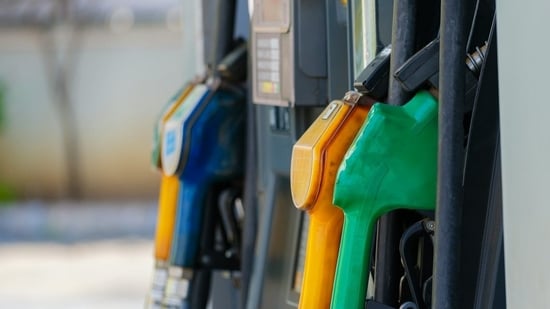
Union petroleum minister Hardeep Singh Puri said on Thursday that any move to E25 petrol — a blend of 25% ethanol with petrol — remains under evaluation, and that the government has not taken a decision on its rollout.
Speaking in New Delhi, Puri said ongoing tests would need to be completed and their findings discussed with vehicle manufacturers and other stakeholders before any shift beyond the current E20 blend was considered, ANI reported.
The clarification comes amid a sustained backlash against E20, the 20% ethanol blend that has become India’s default petrol grade. Commuters and opposition politicians — including Karnataka Congress chief BK Hariprasad and Aam Aadmi Party convenor Arvind Kejriwal — have said the fuel has reduced mileage and pushed up repair costs, and have questioned why pump prices have not fallen despite a blend that is supposed to be cheaper to produce than pure petrol.
The government has maintained that E20 is safe for compliant vehicles, citing extensive testing by the Automotive Research Association of India (ARAI) and carmakers.
What are biofuels?
Biofuels are made from biomass, typically crops such as corn, sugarcane, soybeans and palm oil, rather than fossil fuels such as oil. In the transport sector, they are blended into fuels as a cleaner-burning alternative, though they can also be used for power generation, heating and aviation.
Ethanol is made by fermenting sugars or starches from corn and sugarcane using yeast, before being distilled to fuel-grade purity.
Where has India reached in its ethanol blending programme?
The Centre achieved its target of 20% ethanol blending (E20) in petrol by the end of 2025, five years ahead of its original schedule. It started out with 1.5% in 2014. Since April 1 this year, India rolled out E20 at all pumps in the country.
Also read: Ethanol blending in fuel: What Brazil does, and where other countries stand
What does E20 petrol actually mean?
E20 means petrol that contains 80% petrol and 20% ethanol. Similarly,
- E10 = 10% ethanol, 90% petrol
- E85 = 85% ethanol, 15% petrol
- E100 = Nearly 100% ethanol
Does E20 reduce mileage, damage cars?
Higher ethanol content is slightly less energy-dense than fuels, which means the vehicle may run fewer miles per gallon. The decline in mileage depends on the percentage content of ethanol, for instance, E5 may have a lower impact on mileage compared to E15, E20, E85, and so on.
The government has maintained that the decline in mileage is slight, India’s ethanol blending programme is tried-and-tested, and E20 does not damage compliant vehicles.
Can a commuter get 100% petrol instead of E20?
There is currently no retail option to buy completely ethanol-free petrol across India.
Which cars in India are E20 compatible?
All cars manufactured in India from April 1, 2023, are required to be E20 compliant, in line with government norms. But there may be some that are assembled in India that may not be equipped to run on E20.
How can you check if your vehicle is E20 compliant?
Most manufacturers print E20 compatibility on a sticker near the fuel tank cap, and list it under the fuel specifications section of the owner’s manual. Where neither is available, dealerships and authorised service centres can confirm compatibility using the vehicle’s registration number or chassis number.
As a general rule, cars manufactured from April 2023 onwards are supposed to be E20 compliant.
Also read: ‘Will company compensate if…’: Kejriwal’s letter to Maruti, Toyota and Hero on E20 fuel policy
Which cars can run on E85 or E100?
Only flex-fuel vehicles (FFVs), specifically designed for higher ethanol blends, can use E85 or E100.
There are few vehicles in India that are FFVs. These include some models by Hero MotoCorp, Maruti Suzuki’s flex-fuel WagonR. Toyota, Hyundai, MG and Suzuki are expected to introduce more E20 compatible models.
What are the benefits of using biofuels?
The government says the programme improves India’s energy security by reducing dependence on imported crude oil. It also says the programme has cut carbon emissions, boosted farmers’ incomes by creating a new market for crops such as sugarcane, maize and surplus rice, and saved foreign exchange.
According to a Press Information Bureau (PIB) statement on July 5, the programme has so far saved over ₹1.90 lakh crore in foreign exchange and generated over ₹1.6 lakh crore in additional farmer earnings since 2014-15, while cutting an estimated 930 lakh metric tonnes of CO2 emissions.
The government also points to ethanol’s higher octane rating — about 108.5, against 84.4 for petrol — which it says improves combustion and acceleration in compliant vehicles.
Is ethanol-blended fuel environmentally friendly?
The picture is mixed. Ethanol is broadly considered a relatively cleaner-burning fuel — it can lower carbon monoxide emissions, and its lifecycle carbon footprint is partly offset by the CO2 that sugarcane and other feedstock crops absorb as they grow. But independent experts have flagged trade-offs.
Anumita Roychowdhury, executive director at the Centre for Science and Environment, has said that while some pollutants fall, others such as nitrogen oxides and toxic carbonyl compounds can increase with higher ethanol content. For this, Roychowdhury called for India to adopt emission regulations similar to Brazil’s. Producing ethanol is also water- and fertiliser-intensive, and higher ethanol blends can increase evaporative emissions that contribute to smog in warmer weather.
What are some of the concerns about widespread use of ethanol-blended fuel?
Beyond the mileage and corrosion complaints from motorists — with reported drops in fuel efficiency ranging from the 2-6% recorded in ARAI’s controlled tests to as much as 12% in some real-world accounts — economists and environmental groups have raised broader concerns.
The Council on Energy, Environment and Water (CEEW), an energy think tank, has said the programme’s real public cost, once feedstock subsidies and tax concessions are included, runs well above what oil companies actually pay for the ethanol they procure. It has warned that rising electric vehicle adoption could eventually leave new ethanol production capacity underused.
Using food crops such as sugarcane, maize and rice for fuel has also revived the long-standing ‘food versus fuel’ debate, with some experts warning it could strain water and land resources, particularly in water-stressed regions.