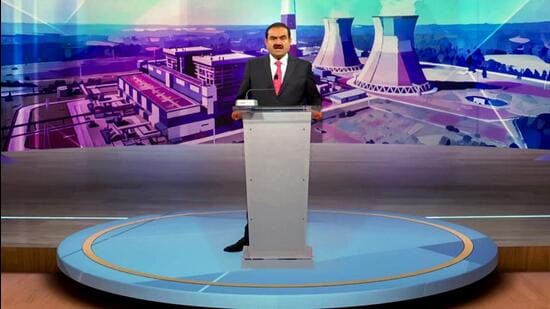
Adani Group chairman Gautam Adani on Wednesday announced the group’s entry into nuclear energy, setting a target of 10 gigawatts capacity by 2035 as part of its long-term clean power strategy.
Addressing shareholders at the annual general meeting in Ahmedabad, Adani said, “Our entry into nuclear energy through Adani Atomic Energy is another confident step towards securing India’s long-term energy future. With land identified and a 10 GW targeted capacity by 2035, we are positioning ourselves early to serve the growing national demand for clean, round-the-clock power.”
The announcement comes alongside a broader expansion plan in the energy sector. The group is implementing a ₹2 lakh crore capital expenditure programme in thermal power with a target of 45 GW capacity over five years. It has also partnered with Bhutan’s Druk Green Power Corporation to jointly develop 5,000 MW of hydropower projects.
Adani said the group invested more than ₹1.5 lakh crore in infrastructure in 2025-26, which accounts for over 30% of India’s private sector capital expenditure during the year.
In digital infrastructure, the group plans to build a 3 GW data centre platform by 2030 and has signed a binding agreement with Google for a large-scale data centre project in Visakhapatnam.
The chairman said the group’s ports business handled over 500 million tonnes of cargo in 2025-26 and is targeting 1 billion tonnes by 2030. In aviation, the Navi Mumbai International Airport began operations in December 2025 with a planned capacity of 90 million passengers.
The group reported consolidated revenue of ₹2.92 lakh crore, up 7.4 per cent year-on-year, with profit after tax rising 13.9 per cent to ₹46,376 crore.
Adani said the group will restructure operations into a three-layer system to reduce bureaucracy and improve execution, while also focusing on workforce welfare across its nearly four lakh employees and contract workers.
He said the group’s strategy is centred on integrating infrastructure and digital intelligence, with investments spanning energy, transport, logistics and data systems to support India’s economic growth.