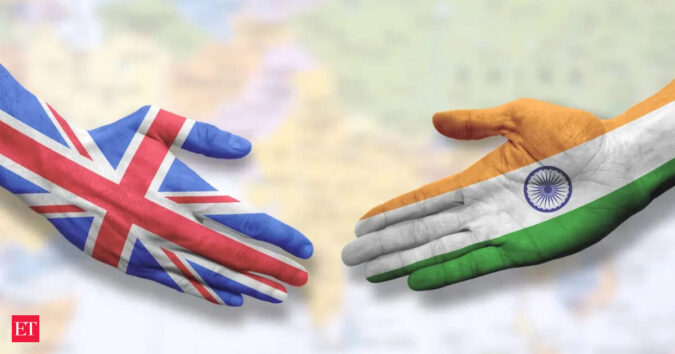
Businesses now have 28 days to prepare for the entry-into-force, after which they will be able to trade under the terms of the deal from July 15, the UK’s Department for Business and Trade said. The deal is projected to boost UK GDP by £4.8 billion (roughly Rs 51,000 crore) annually in the long run.
Also read: PM Modi holds ‘very fruitful’ meeting with German Chancellor Merz at G7, discuss trade, defence
The UK exported £19 billion of goods and services to India in the year to September 2025, while UK imports from India stood at £28 billion. The FTA is projected to significantly expand that relationship. The UK government estimates the deal will increase bilateral trade by £25.5 billion and boost UK GDP by £4.8 billion annually in the long run.
Prime Minister Narendra Modi, posting on X from the G7 Summit in Evian, called it “a historic milestone for India-UK relations,” saying the agreement will significantly boost bilateral trade and investment and unlock opportunities for Indian farmers, workers, MSMEs, startups and innovators. He added that the deal will contribute meaningfully to the realisation of Viksit Bharat 2047.
Commerce Minister Piyush Goyal also took to X to describe the simultaneous enforcement of the FTA and the Double Contribution Convention as “a major stride for India’s global economic engagement.” He said the deal opens significant new opportunities for India’s exports, providing a level-playing field for textiles, leather, marine, engineering, and processed food sectors, and leverages India’s manufacturing and service capabilities into “one of the world’s premier consumer markets.”
The road to July 15The UK-India FTA was the result of over three years of negotiations. Trade ministers Piyush Goyal of India and Jonathan Reynolds of the UK formally signed the agreement on July 24, 2025, at British Prime Minister Keir Starmer’s Chequers estate in Aylesbury, England, during Prime Minister Narendra Modi’s two-day visit to the UK.
Prime Minister Modi described the agreement as marking a historic day in India-UK bilateral relations, saying it paves the way for shared prosperity across trade and other sectors. Prime Minister Keir Starmer called it the biggest and most economically significant trade deal the UK has made since leaving the EU.
The Commons Business and Trade Committee described the FTA as “the UK’s most economically significant bilateral free trade agreement since leaving the European Union.”
What the deal covers
Central to the FTA are sweeping tariff reductions. India has agreed to reduce or eliminate tariffs on 90% of product lines for UK exports, with 85% of those becoming fully tariff-free within a decade. This includes staged reductions on Scotch whisky duties falling from 150% to 75% on day one and to 40% over 10 years, as well as significant cuts for automotive products, medical devices, cosmetics, aerospace components, and food and drink.
Automotive tariffs will drop from 100% to 10% under a quota, and cosmetics will see tariffs of up to 22% eliminated either from day one or after 10 years.
The United Kingdom, in turn, will eliminate tariffs on 99% of Indian goods, including clothing, footwear, processed foods, jewelry, and a wide array of manufactured products.
The UK government estimates the agreement will reduce tariffs on UK exports to India by up to Rs 3,400 crore a year when it comes into force, potentially increasing to Rs 7,650 crore after 10 years.
The deal also includes a social security provision. The benefit period for UK nationals moving to India for work during which they continue to build National Insurance Contributions without paying social security in India has been extended from 36 months to 60 months. The arrangement is reciprocal for both British and Indian professionals and will apply to highly skilled professionals on pre-existing visa routes.
What’s next
To benefit from the tariff reductions, businesses must register with HMRC. The UK government has encouraged businesses to use the next 28 days to register and ensure they are fully prepared. A UK-India Roadshow will also travel across all four nations of the United Kingdom this week to promote the deal’s opportunities to exporters.
India has never implemented a deal of this size, meaning UK exporters will have an immediate competitive advantage over those from other markets when the agreement takes effect next month.