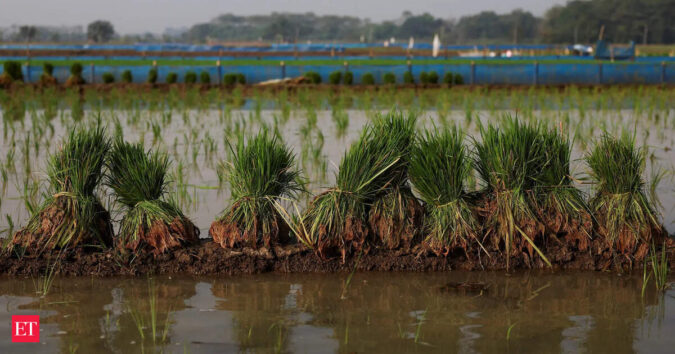
“The agri-GDP growth is likely to be almost zero or even negative depending upon the spatial and temporal spread of rains,” said Ashok Gulati, distinguished professor at the Indian Council for Research on International Economic Relations and former chairman of the Commission on Agricultural Costs and Prices. “Given that IMD has forecast a strong El Nino and rainfall is likely to be 90% of the Long Period Average, it is going to be a pretty bad year for agriculture, and of course, for farmers who derive much of their income from it,” said Gulati.
Gulati is worried about 2026 emerging as a near-drought year. “This will surely hit farmers’ incomes adversely and thus have a dampening effect on the overall economy.” The rural economy is a vital driver of consumption, accounting for 30-40% of sales for most consumer goods.
The projected 94% rainfall in the core monsoon zone will expose crops such as soybean, tur, urad and cotton to significant moisture stress, said Ashok Dalwai, former chairman of the Committee on Doubling Farmers’ Income and presently chairman of the Karnataka Agricultural Price Commission.
“Prolonged dry spells can directly reduce yields and farm incomes,” he said. “Higher fuel costs are increasing the operational expenses of land preparation, mechanised farm operations and irrigation pump sets powered by diesel.”
Gulati believes an increase in Consumer Price Index inflation is inevitable. “The production of pulses, oilseeds, cotton, millet and vegetables is likely to be hit adversely, and their prices are going to rise,” he said. “I would expect food inflation to rise and so would overall CPI inflation, going above 5%, almost hitting 6% by October-November.”
Rising costs of fertilisers, pesticides and other inputs are also likely to weigh on farmers’ incomes.