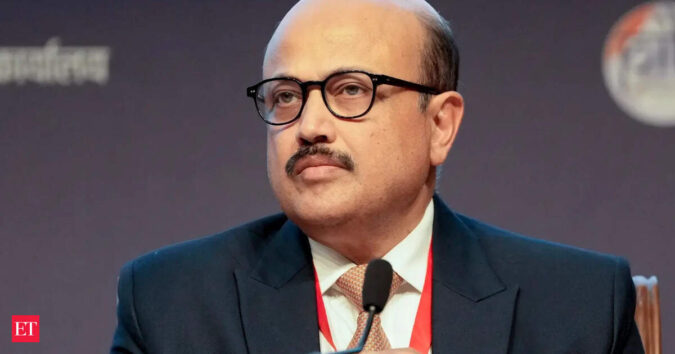
The secretary said that the track record of the country fully utilising and leveraging FTAs is “not great”.
He also said that the country’s industrial policy should complement its trade policy, as trade is also a function of how India invests and produces.
“…FTA utilization is something we are questioned again and again. What is the benefit that FTAs are actually leading to?,” he said here while addressing a session on free trade agreements.
India has implemented trade pacts with a number of countries and groupings including Singapore, Japan, Korea and Asean.
Agrawal said these pacts have led to increase in bilateral trade, but India’s exports have grown at a slower pace than imports.
Talking about the trade pacts with Mauritius, the UAE, Australia, the EU, UK, EFTA, New Zealand and Oman, he said these are “modern” agreements and have gone beyond tariffs.He added that all the stakeholders including the industry and the government need to take steps to make these pacts useful for the country.
Dissemination of information and capacity building is important for increasing utilisation of these FTAs, he said adding “If you are able to do that, I think we will create the right vibrancy, right ecosystem at least to work towards leveraging these FTAs”.
He asked the industry to include these pacts in their long-term business strategy.
“Indian companies will need to look at more and more opportunities to becoming a part of global value chains,” he said.
Further he said that the new FTAs of India are with developed economies, which are complementary in nature, and which can bring investments into India.
“We are expanding beyond tariffs, talking about services in greater manner, talking about harmonisation of regulations because at the end of these FTAs, we want to provide a very predictable trade, tariff and regulatory environment to our investors and industry,” he said.
These pacts, he said, would not just help increase trade but also create a right foundation for getting the right investments both domestic and FDI.
“…Because trade is also a function of how we invest and how we produce. If you do not invest enough, you do not produce enough and trade will not take place,” he added.
He said these agreements provide a framework and a pathway, but would remain mere papers if they are not leveraged effectively.
“The potential that it creates, needs to be leveraged and that leveraging will happen by stakeholders of both sides,” he said.