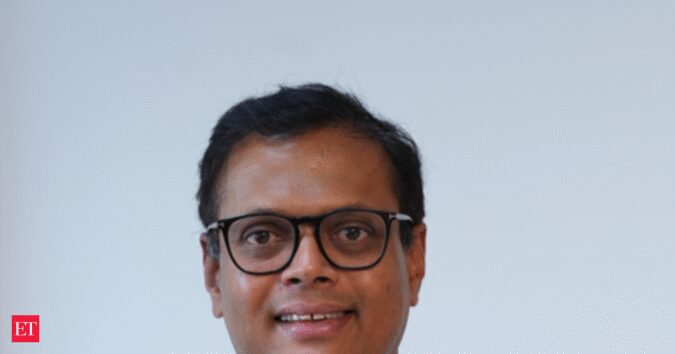
In an interview with The Economic Times Digital, Madhya Pradesh Agriculture Secretary Nishant Warwade, who spearheaded the rollout of e-Vikas across the state, said the platform has already benefitted around 1.3 million farmers and facilitated distribution of nearly 2 lakh tonnes of fertiliser, virtually eliminating long lines. Warwade said the system is also driving behavioural change, with farmers increasingly aligning fertiliser purchases with crop requirements and ICAR-recommended norms. He also talked about concerns over operational and structural challenges, including digital access and allocation limits. Edited excerpts:
The Economic Times (ET): You took charge as agriculture secretary around nine months ago. What was the situation on the ground then in terms of fertiliser distribution? And how did the idea of e-Vikas emerge?
Nishant Warwade (NW): When I took charge last July, the Kharif season was at its peak. While the Government of India ensures adequate fertiliser supplies to states, the real challenge in Madhya Pradesh, as elsewhere, lies in distribution. Farmers need fertilisers at specific times, and any mismatch in their timely availability leads to crowding, long queues, and inequitable access, often hurting smaller farmers the most.
We faced issues such as demand spikes during sowing, uneven availability across outlets, and inefficiencies in last-mile delivery. To address these issues, we worked on two fronts. First, Madhya Pradesh already had an “Advanced Upliftment” scheme aimed at pushing fertiliser distribution ahead of the season so supplies reach farmers before peak demand, rather than during it.
Second, we strengthened the distribution mechanism through technology using an AgriStack-based system called e-Vikas, short for Electronic Vikas Vitran Krishi Uravarak Aapurti Samadhan. Under this system, a farmer registered on AgriStack can apply for fertiliser of their choice from a retailer of their choice. Allocation is linked to the farmer’s landholding and crop pattern. Farmers who are not yet on AgriStack are covered through an exception-handling mechanism so they continue receiving supplies while being gradually onboarded.
We piloted the system in three districts in October 2025. Based on encouraging results, it was expanded to all 55 districts from April 1, 2026. As of May 4, around 1.3 million farmers have benefitted, and nearly 2 lakh tonnes of fertiliser have been distributed through the platform. Most importantly, long queues in front of retail outlets have virtually disappeared.
We are also seeing a behavioural shift. Farmers are no longer booking fertilisers blindly but increasingly basing demand on crop requirements and ICAR-recommended norms. There is no restriction on additional purchases; farmers can always reapply if they need more fertiliser, yet fewer than 5% have sought additional quantities. Of course, these are still early days; it has only been eight months since implementation began. But the initial results are encouraging, and we are hopeful about its long-term success.
ET: Is e-Vikas one of its kind in the country?
NW: Yes, e-Vikas is unique in both its comprehensiveness and inclusiveness. It is perhaps the only model introduced with such an advanced technological framework while ensuring that no farmer is left behind. The system has been designed to accommodate a wide range of real-world scenarios, including disputed landholdings, absentee landowners, tenant farmers, tribal landholders, and other exceptional cases that typically fall outside conventional systems. In essence, every possible scenario that could affect access to fertiliser has been factored into the design to ensure that no genuine farmer is excluded.
ET: Since the system relies heavily on AgriStack, how do you ensure the accuracy of land and crop data?
NW: AgriStack in Madhya Pradesh is built around three key registries: Farmer ID, Farm ID with geolocation, and, most importantly, Crop ID. The Crop ID is dynamic. Traditionally, patwaris from the revenue department physically verified cropping patterns on the ground. Since 2024, however, Madhya Pradesh has implemented a fully digital crop survey across the state.
As a result, we now have near-real-time visibility into which crop is being cultivated on which parcel of land, along with productivity trends across the state. This technological integration has created a strong foundation not only for fertiliser distribution, but also for procurement planning, farmer advisories, and the implementation of other agricultural schemes. Nearly 90% of farmers in the state have already been onboarded onto the platform.
At the same time, fertiliser is an essential input, and it cannot be denied to a farmer because of a lack of data or an ID. Under the directions of Chief Minister Mohan Yadav, we built a robust exception-handling mechanism into the system. Any farmer can apply, get verified within 24 hours, and receive fertiliser. Technology is meant to be an enabler, not a barrier.
No farmer should run from pillar to post for fertiliser because of missing data or incomplete records. Through e-Vikash, a farmer can simply log into the system, following which the application is automatically routed to the concerned revenue officer for verification. Once approved, usually within 24 hours, a lead token is generated, which allows the farmer to collect fertiliser of their choice from the designated retailer.
Importantly, even if the farmer’s AgriStack ID is not generated by the next visit, fertiliser is not denied. The farmer continues to receive supplies because agricultural operations cannot be held back for want of technology.
ET: Some concerns have emerged from the ground that farmers may feel constrained by the recommended fertiliser quantities or perceive the system as a form of rationing. There are also apprehensions that delays in reapplication could discourage farmers from seeking additional supplies when genuinely needed. How do you respond to these concerns?
NW: There is absolutely no restriction on fertiliser purchases under the e-Vikas distribution model. The recommended quantities are purely advisory, not mandatory. Farmers are free to apply multiple times and procure as much fertiliser as they genuinely require.
Our extension teams counsel farmers on optimal and balanced nutrient usage, but that is aimed at awareness and efficiency, not enforcement. In fact, the data itself is revealing; fewer than 5% of farmers have reapplied for additional fertiliser, which suggests broad acceptance of the system rather than resistance to it.
As for concerns around delays in reapplication, there can occasionally be minor technical lags, particularly during periods of peak demand in the early stages of execution. However, these issues are being continuously addressed and streamlined. The fact that nearly 1.3 million farmers have already adopted the system demonstrates that it is functioning effectively and at a significant scale.
ET: How are you addressing digital access issues, especially in remote areas where farmers may not have smartphones or awareness?
NW: We approached this at multiple levels, drawing on lessons from the pilot phase over the past few months. First, Madhya Pradesh launched extensive Information, Education and Communication (IEC) campaigns focused on behavioural change and awareness generation. These campaigns have been conducted through community engagement programmes, workshops, gram sabhas, villages, and local institutions to ensure farmers understand the system and its benefits.
We also involved elected representatives at every level—from gram panchayats and janpad panchayats to block-level functionaries—to support and guide farmers. Members of Parliament and MLAs were also sensitised about the initiative. Under the leadership of PM Narendra Modi and CM Mohan Yadav, all cabinet ministers and legislators were briefed in a large plenary session to ensure coordinated implementation across the state.
Second, we created multiple access points for farmers. They can use the mobile app, the web portal, cooperative societies free of cost, or local kiosks that charge a nominal fee of Rs 15. Madhya Pradesh also benefits from a strong cooperative movement, which has significantly aided outreach and implementation.
Importantly, the state already has considerable experience with digital agricultural systems. Online slot booking for wheat procurement, for instance, has been in place since around 2010. As a result, farmers in Madhya Pradesh are already familiar with digital processes, which has made adoption of the e-Vikas system much smoother.
ET: Which are the centres or retail outlets from where farmers can collect their fertiliser stocks under the e-Vikas system?
NW: Once a farmer books fertiliser through the system, they receive an e-token with a QR code. Using this, they can collect fertiliser from any retailer of their choice, whether private or cooperative, at a time convenient to them. As the platform provides real-time stock visibility, farmers can check availability in advance and choose to collect fertilisers from either MARKFED outlets, cooperative societies, or private retailers of their choice before visiting.
We have also piloted a home-delivery model in three districts, under which farmers can book delivery slots and receive fertilisers at their doorstep by paying a nominal premium. Based on the encouraging response, this facility is planned to be expanded more widely from the next cycle onwards.
The broader idea is to provide farmers with complete flexibility: what to buy, where to buy, and when to buy, while making fertiliser access more convenient, transparent, and efficient.
ET: During the initial phase of implementation, was there any resistance or apprehension from fertiliser retailers? How did the government ensure compliance and smooth adoption of the system?
NW: Initially, yes, there were concerns from private retailers regarding the new system. When e-Vikas was introduced, we engaged extensively with nearly 10,000 retailers through multiple rounds of consultations and discussions, and several valid suggestions from them were incorporated into the system design.
Some retailers also approached the High Court, and the matter remains under consideration. At the same time, we worked to ensure a level playing field for all stakeholders. For instance, we coordinated with fertiliser companies to streamline supply logistics and help reduce operational costs for retailers. We also conducted large-scale training programmes, established helplines, and kept the system responsive to stakeholder feedback. Over time, confidence in the system improved significantly. Today, all retailers are onboarded, and the platform is functioning smoothly across the state.
ET: Looking ahead, how do you see e-Vikas evolving over the next year?
NW: e-Vikas is not just a fertiliser distribution reform but also a behavioural change initiative. The focus now is on strengthening awareness, so farmers adopt balanced fertiliser use based on scientific recommendations. Such change takes time and sustained engagement, but if successful, it can improve input efficiency, soil health, and farm productivity. These are still early days, but the initial results are encouraging, and we are confident about its long-term impact.
(The reporter was in Madhya Pradesh on an invite from the State’s Agriculture Department)