The company said internal data collection and satellite communication will begin within weeks, while commercial datasets will follow after calibration and commissioning.
“If everything goes well, this could be one of those satellites whose data will be extensively used. In a way, Mission Drishti could mark an inflection point in the commercialisation of private space tech in India. Until now, much of the work was experimental and prototype-driven. This is where things start becoming more real and scalable,” Singh said.
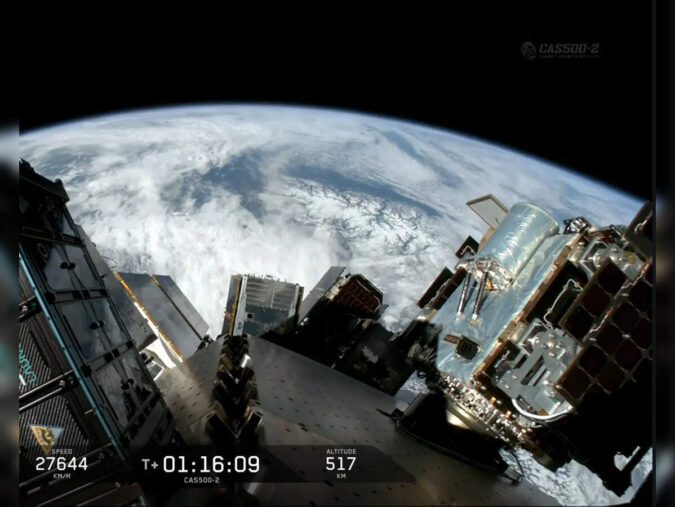
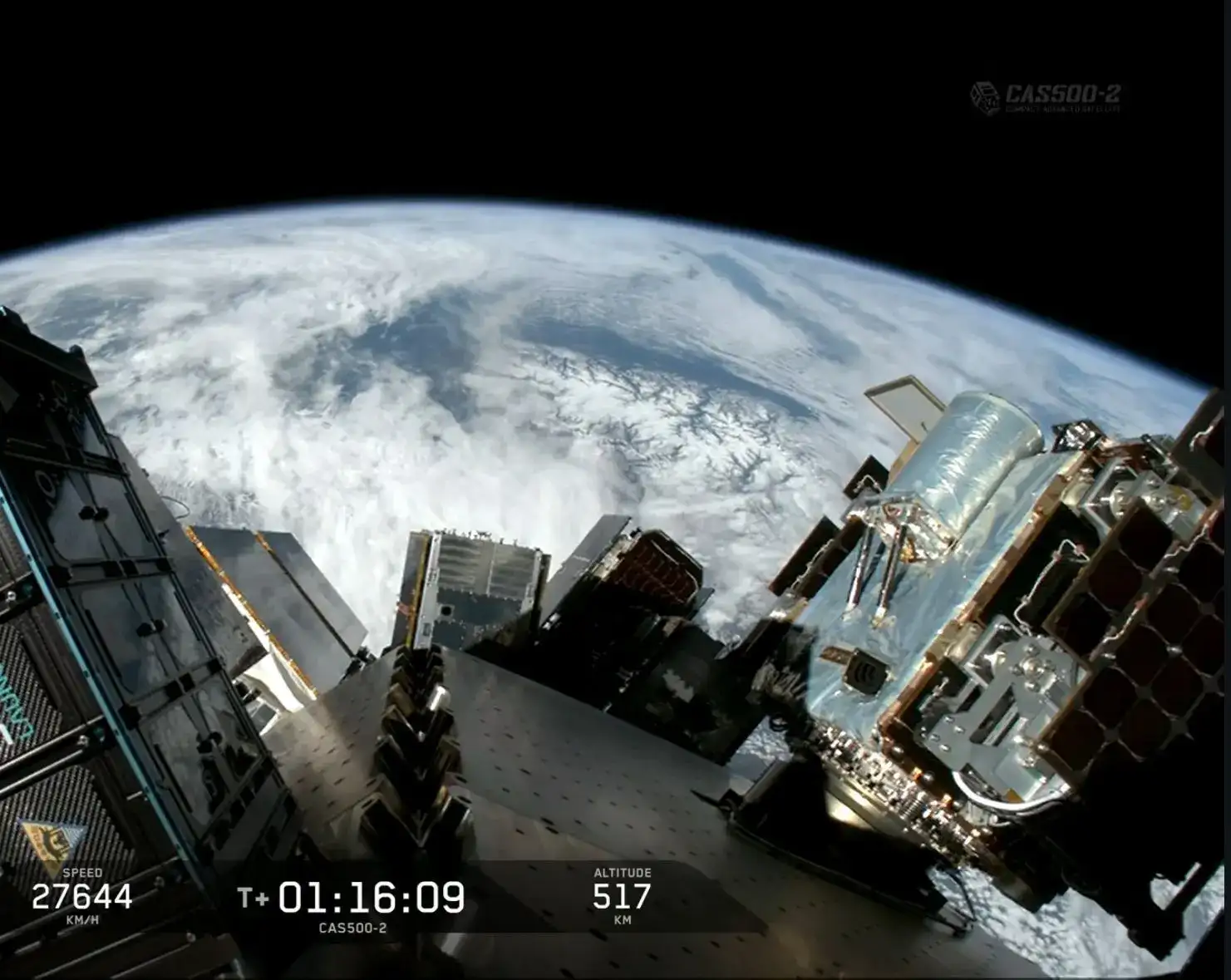
The startup on Sunday launched its first earth observation (EO) satellite via a Falcon 9 rocket operated by SpaceX from Vandenberg, California. Its proprietary satellite carries both Synthetic Aperture Radar (SAR) and Multispectral Imaging (MSI) sensors on one platform.
The launch underscores a broader shift in India’s private space sector, where startups such as Pixxel, Digantara, SatSure and Dhruva Space are moving beyond building space assets to monetising satellite data and downstream applications.
“We expect demand to be led by defence and security customers, amid rising global spending on geospatial intelligence driven by geopolitical tensions,” Singh said, adding that defence accounts for roughly 70-75% of current interest.
The company is positioning its OptoSAR-based dataset as a dual-use offering rather than building exclusively for government requirements. “We are not trying to chase governments and ask what they want us to build. We believe this is a differentiated dataset that can serve both defence and commercial users,” he said.
The IIT-Madras-based startup said its system can generate up to three times more information than conventional EO satellites by fusing multiple imaging modes with AI.
Industry executives say this allows startups to tap into both large defence contracts and scalable commercial use cases, even as the strategic nature of satellite data shapes customer selection.
Geographically, Galaxeye is prioritising the US, West Asia, Africa and Europe, where demand for satellite intelligence is expanding across defence and infrastructure sectors.
At the same time, the company is taking a calibrated approach to scaling its constellation, focusing first on validating data quality before accelerating deployments. “More than launching more satellites, it’s important to get the data right. Once that is proven, scaling becomes a matter of replication,” Singh said.
According to Mordor Intelligence, the global satellite-based earth observation market is estimated at $4.3 billion in 2025 and is projected to reach $6.3 billion by 2030, growing at a CAGR of 7.9%. The expansion is being driven by rising commercial demand for applications such as ESG reporting, supply chain monitoring and climate risk analysis.
Galaxeye plans to deploy a constellation of about 10 satellites in the next two and a half years and has raised around $18.8 million from investors including Infosys, Mela Ventures, Zerodha’s venture capital arm backed by Nithin Kamath -Rainmatter, and Speciale Invest.
It has also partnered with NewSpace India Limited (NSIL) to distribute its satellite imagery globally.“What stands out is not just the technology, but its broader impact on how downstream applications will increasingly define value in the space economy, particularly in EO where timely, decision-grade insights are critical,” Lt. Gen AK Bhatt (Retd), Director General, Indian Space Association (ISpA).