WITH EVERY day of disruption in the Strait of Hormuz, the economic damage mounts. Iran’s willingness to weaponise a waterway is an attempt to hold the global economy hostage. It also lays bare once more the strategic vulnerabilities at the heart of global trade and reminds us that—in this new era of geoeconomics—we urgently need to reinforce our economic security.
By hitting fuel, food and fertiliser, the Hormuz crisis is hurting families and businesses across the globe. While oil prices shift day by day, the agricultural fallout will compound over weeks and months, playing out through planting seasons and future crop yields. The World Food Programme has warned that 45m people in the poorest countries could be pushed into acute hunger if the conflict is not resolved by mid-year.
As Britain’s foreign secretary, I have spent this month working to build international pressure for a full and swift reopening of the Strait—restoring freedom of navigation, with no restrictions, conditions or tolls. Plans by Iran to bring in tolls would fundamentally undermine the law of the sea and set damaging precedents for maritime trade across the world.
The Hormuz crisis is no outlier. This is the third time in six years that international events have sent economic tremors around the world. The covid-19 pandemic, Russia’s invasion of Ukraine, and now the Iran conflict. Instability and volatility are the new normal and countries across the world are increasingly reaching for economic tools to exert global leverage, whether to coerce or constrain.
Supply chains once purely commercial are now eyed as strategic vulnerabilities. Competition is intensifying for control of the critical minerals essential for future vehicles, defence systems and the energy transition, with China determined to maintain and exploit its current production advantage, and challenges from export restrictions and controls. In addition, tariffs are rising, with American duties at levels not seen since the 1930s.
These are generation-defining shifts. For much of the past few decades the democratic world operated on assumptions that economic globalisation and free trade would widen opportunity, lower barriers and spread prosperity more broadly. A shared framework of rules and standards would give economies the stability they needed to grow.
These assumptions were always inadequate. Too many people did not experience the benefits of globalisation and concluded that promises made in its name were not kept. But now those assumptions are being overturned as part of a wider and more fundamental challenge to open economies and the rules-based order.
In the face of this upheaval, we cannot simply give up on rules and accept a world in which might is right and coercion becomes normalised. But neither should we seek to reconstitute the old order. Instead, we must work to ensure we remain economically open, with benefits felt by all, without being economically exposed. Several implications follow.
First, prosperity and security can no longer be treated separately. Because when countries become over-dependent on single suppliers, on fragile transit routes or on concentrated technologies, that goes beyond economic weakness to become a strategic vulnerability. Resilient supply chains are not a technical concern but essential for national strength and core to foreign policy. That is why I have told the Foreign Office to prioritise not just economic growth but economic resilience in our dealings around the world.
Second, amid great-power competition, countries like Britain need to position skilfully around the world’s major blocs. For us, that includes strengthening co-operation with our nearest neighbours. Having already reset our relationship with the EU, we are now targeting further collaboration—including on security and defence and alignment to drive down food and energy costs. Our partnerships with America, from trade to intelligence to NATO, remain indispensable, and our engagement with China delivers economic benefits. But in every decision, we will assess what is in our national interests, protecting ourselves and preserving our agency.
Third, trading nations outside of those biggest blocs need to work together in new and agile ways. Britain is not a stand-alone superpower, but we have real economic weight, technological strength and global reach, bolstered by membership of key economic groupings such as the Comprehensive and Progressive Agreement for Trans-Pacific Partnership, a high-standard free-trade group, whose membership we are working to expand.
Britain is in good company with other powers that are reappraising their own economic resilience: countries that are also prepared to stand up for a rules-based order that reflects their interests and values. Take the recent international groundswell of support for freedom of navigation and upholding the laws of the sea. And I see great potential to make more of the collective weight among like-minded partners. That was the focus of my recent visit to Japan, where I met ministers working on economic security, and is why I have invited foreign ministers from countries including Australia, Canada and the Republic of Korea to discussions on the most pressing geoeconomic challenges. This involves working together to defend an open international economy while adapting it to a more contested age.
Fourth, we must seize the moment for a clean-energy transition. For a century, global energy has been based on concentrated resources, production cartels and geographic choke-points. The Hormuz crisis underlines how unstable that is. We have a historic opportunity to reduce our dependence on volatile fossil fuels, and to lead and drive that transition globally. Every wind turbine, solar panel and nuclear power station strengthens our energy resilience and protects families and businesses from future shocks.
Finally, frontier technology is at the heart of future economic power—with America and China already surging ahead. AI will determine the direction of jobs, investment and growth, but also the resilience of our societies and critical national infrastructure. So the British government is going much further to strengthen the national capabilities on which our sovereignty and prosperity depend. This month, for example, we launched the next phase of the UK’s Sovereign AI Unit, backed by a £500m ($675m) commitment to build core national AI capabilities. But economic diplomacy is crucial here, too: we must continue working to shape the global standards and rules needed for effective governance of these powerful and unprecedented new forces.
In a world of profound change, economic choices now shape security and sovereignty as much as they shape prosperity. For countries like Britain, the answer is not retreating from openness but being more hard-headed about what openness means, and about the diplomatic shifts needed to ensure that our partnerships abroad make us safer and more prosperous at home.
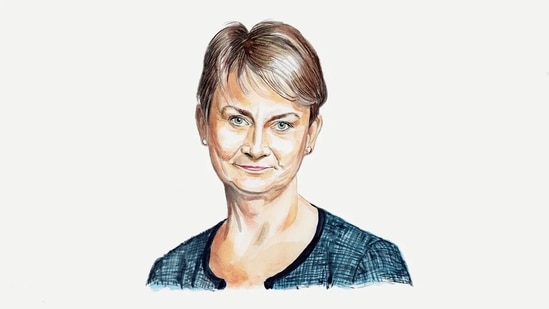
Yvette Cooper is Britain’s foreign secretary.