The question that therefore imposes itself with unusual clarity is not whether these developments were foreseeable, but whether India, with the benefit of that foresight, could have prepared differently, and whether it is still not too late to correct course.
Consider first the domain of energy security, where hindsight offers both clarity and caution. India has, over the past decade, made credible strides in diversifying suppliers and expanding renewable capacity. Yet diversification, as current events demonstrate, is not synonymous with resilience unless it matures into redundancy.
Also read | India is making a big move to outflank China in Sri Lanka
A more anticipatory strategy might have entailed substantially larger strategic petroleum reserves, calibrated not merely for short-term disruptions but for prolonged geopolitical shocks. It would have accelerated investments in storage infrastructure, strengthened long-term contracting mechanisms insulated from spot market volatility, and more aggressively reduced oil intensity within the broader energy mix.
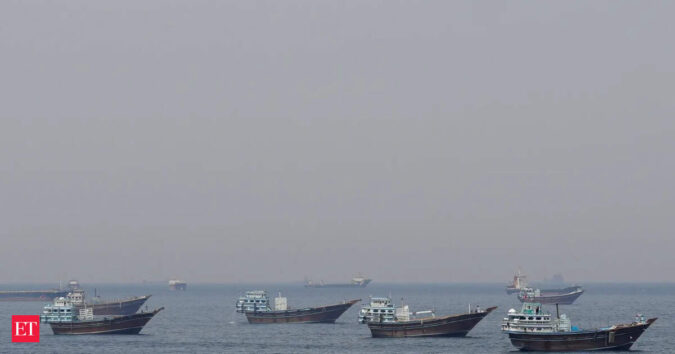
The current disruption in Hormuz does not simply expose vulnerability; it reveals the cost of treating energy security as an incremental reform agenda rather than a structural imperative.
A second counterfactual emerges in the realm of trade and logistics. India’s dependence on a narrow set of maritime routes has long been recognised, yet insufficiently mitigated. While port modernisation and logistics reforms have improved efficiency, they have not fundamentally altered exposure to chokepoint risks. A more forward-looking approach would have prioritised the operationalisation of alternative corridors, whether through regional connectivity initiatives, deeper engagement with transcontinental trade routes, or investments in multimodal infrastructure capable of absorbing shocks. The lesson is neither novel nor ideological. Resilience requires that alternatives exist not as strategic concepts, but as functional systems ready to be deployed under stress.
Also read | Rural India braces for West Asia affect; Centre sets in motion series of countermeasures
Financial resilience, too, invites a nuanced reflection. India’s commitment to maintaining openness within the global financial system is both prudent and necessary. However, openness without optionality can impose constraints in moments of volatility. With hindsight, greater emphasis could have been placed on developing parallel buffers, expanding bilateral currency arrangements, deepening domestic capital markets, and strengthening institutional mechanisms to manage external shocks.
The objective is not insulation from global systems, but the ability to navigate them with greater autonomy when they become instruments of pressure.
Equally, and perhaps more subtly, the digital economy introduces a layer of vulnerability that has yet to be fully internalised within policy frameworks. As India’s economic activity becomes increasingly dependent on undersea cables, cloud infrastructure, and cross-border data flows, the risks associated with these systems acquire a strategic dimension.
A more anticipatory approach would have embedded digital resilience into national planning, through redundancy in critical infrastructure, enhanced security protocols, and coordinated international frameworks for safeguarding connectivity. In a world where economic activity is mediated through digital networks, disruption in these domains can be as consequential as a blockade of physical trade routes.
Yet, this is no indulgence in retrospective censure, but a considered effort to illuminate the pathways that still lie within our grasp. The most important lesson of recurring crises is precisely that they recur. The present disruption, however acute, is unlikely to be the last. The question, therefore, is not whether India missed an opportunity to prepare for this crisis, but whether it will use this moment to prepare for the next.
This requires, above all, a shift in policy orientation, from reactive agility to structured anticipation. Resilience must be treated not as an ancillary outcome of growth, but as a deliberate objective embedded within economic strategy. This entails institutionalising scenario planning across sectors, conducting regular stress tests of critical systems, and integrating risk assessment into decision-making processes at both the macroeconomic and sectoral levels.
It also demands a more coordinated approach, recognising that vulnerabilities in energy, trade, finance, and digital infrastructure are not discrete but deeply interconnected.
At the same time, the pursuit of resilience must be carefully calibrated to avoid the pitfalls of overcorrection. Excessive insulation can erode competitiveness just as overexposure can amplify vulnerability. The challenge lies in constructing a framework that balances integration with preparedness, openness with flexibility. India’s unique geopolitical positioning, its ability to engage across competing blocs, offers a distinct advantage in this regard, provided it is leveraged with strategic coherence.
The deeper lesson, therefore, is not simply that anticipation was insufficient, but that it was not institutionalised. In an era where disruptions are increasingly signalled before they unfold, the failure to prepare is less a matter of uncertainty and more a matter of prioritisation.
The cost of that failure is now visible, not only in elevated risk premiums or disrupted supply chains, but in the narrowing of policy space at precisely the moment it is most needed.
Hindsight, in this sense, is both a luxury and a warning. It clarifies what might have been done, but it also sharpens the urgency of what must still be done. The discipline of statecraft in the coming decade will not be judged solely by how effectively governments respond to crises, but by how deliberately they prepare for those they can already foresee. For India, the window for such preparation remains open, but it will not remain so indefinitely.
The authors work for CUTS International, a 40+ year old global public policy research and advocacy group.