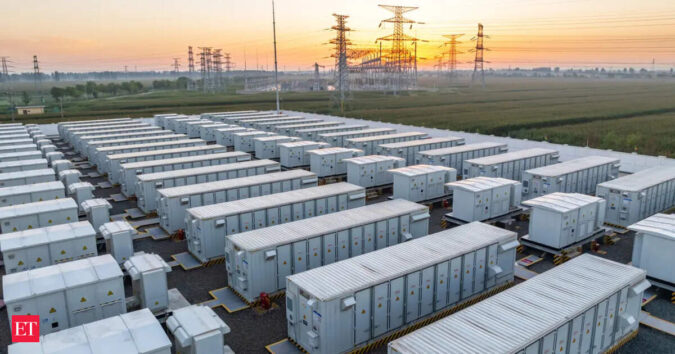
This follows concerns raised by the renewable energy sector about the scheme creating an uneven playing field during actions between developers who are using the warehousing route and those importing equipment under the normal customs duty system.
The Manufacture and Other Operations in Warehouse Regulations (MOOWR), 2019 scheme allows companies to import goods without paying customs duty or goods and services tax upfront. The taxes are deferred until the goods are cleared for use in the domestic market or exported.
The Associated Chambers of Commerce and Industry of India and the India Energy Storage Alliance (IESA) in separate submissions to the Department of Revenue and the Central Board of Indirect Taxes and Customs (CBIC) claimed that some developers were importing fully assembled battery systems under the MOOWR scheme and deploying them directly in domestic power projects.

The scheme allows deferment of about 44% of customs duty and around 12% GST incidence, significantly reducing upfront capital costs and giving some developers a pricing advantage in auction-based procurement, the industry argued, and sought restrictions on the use of MOOWR benefits for grid-scale battery imports.
The revenue department is examining any “misuse” of the scheme and is open to plugging any policy gaps to ensure that the duly relief reaches where it is intended, a senior official said.
“We have received representation from the industry and are examining their concerns,” the official told ET, adding that an inter-ministerial meeting may be initiated next week.
“Any final call on this will be taken only after proper consultation with both the concerned ministries,” the official said, adding that the decision will be aligned with India’s energy security goals.
MOOWR Misuse
In its March 2 letter to the Department of Revenue, Assocham described the use of MOOWR in the battery storage segment as a “misuse” of the warehousing framework, claiming that imported systems are being cleared and deployed directly in domestic projects without any export linkage.
The IESA, in an April 3 submission to the CBIC, sought an explicit clarification on the applicability of the scheme to grid-scale storage projects. It cautioned that duty deferment structures may be getting embedded into tariff bids and could influence price discovery in renewable-plus-storage auctions, where battery storage is increasingly being bundled with solar and wind capacity.
The scheme gives a cash-flow advantage to developers who import battery storage to quote lower tariffs in auction bids, compared with those paying full duties upfront, they pointed out.